Key takeaways
- A 50-basis-point Fed rate cut pushed the 6-month US Treasury bill yield from 4.65% to below 4.35%, highlighting how quickly risk-free returns drop.
- High-yield savings account yields degrade almost immediately after Fed cuts, while Treasury bills lock in your exact yield for the duration of the term.
- Treasury bill interest is exempt from state and local taxes, offering a superior tax-equivalent yield to high-yield savings accounts in high-tax states.
- Extending portfolio duration into intermediate fixed income captures capital appreciation, because bond prices rise when the Federal Reserve lowers interest rates.
During the first week of September 2024, the yield on the 6-month US Treasury bill hovered near 4.65%. Within three weeks, following a jumbo 50-basis-point interest rate cut by the Federal Open Market Committee, that same yield plummeted below 4.35%. For an investor holding $100,000 in short-term government debt, that 30-basis-point drop translated to a quiet, invisible pay cut of $150 every single month.
This is the mechanical reality of central bank policy. The macroeconomic decisions made inside the Marriner S. Eccles Federal Reserve Board Building do not just move stock markets; they dictate the exact yield paid on your idle cash. With the upcoming release of the Federal Reserve meeting minutes and the latest Consumer Price Index (CPI) inflation data prints, the financial system is bracing for the next phase of monetary easing. The era of 5% risk-free returns is ending, and the instruments you use to park your cash require immediate, tactical recalibration.
The central bank’s dual mandate—maximum employment and price stability—directly controls the federal funds rate, which serves as the floor for consumer savings rates. When inflation runs hot, the Fed holds rates high, and banks compete for deposits by offering lucrative Annual Percentage Yields (APYs). When inflation cools and the Fed cuts rates, those APYs fall with a lag of 30 to 60 days. For the past two years, conservative investors enjoyed an anomaly: risk-free returns that outpaced most dividend stocks and matched long-term equity market averages. That window is closing. The current macroeconomic environment demands a strict, tiered playbook for managing liquidity.
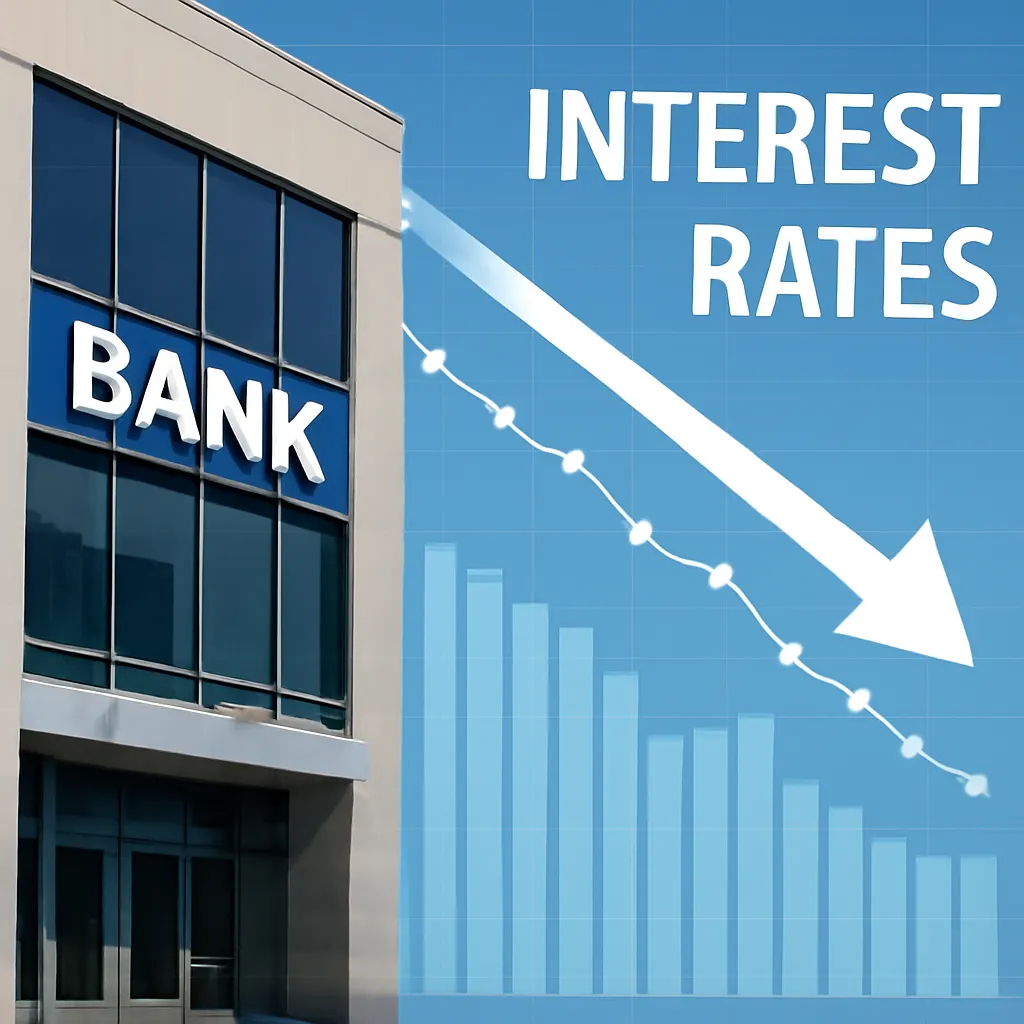
Reading the Federal Reserve's Next Move
To deploy cash effectively, you must understand the data points dictating the moves. The Federal Reserve has explicitly stated that future policy decisions will remain "data dependent." The two primary data sets dictating this dependency are the Bureau of Labor Statistics' CPI print and the Personal Consumption Expenditures (PCE) price index. If core inflation continues trending toward the Fed's 2% target, the central bank will execute consecutive rate cuts through the remainder of the year and into the next.
However, the velocity of those cuts is determined by the labor market. Recent nonfarm payroll reports and unemployment upticks have forced the Fed to pivot from a singular focus on quashing inflation to a dual focus on preventing a labor market hard landing. When the Fed cuts rates defensively to stave off recession, short-term yields drop rapidly. Conversely, if inflation unexpectedly re-accelerates—a scenario often termed "sticky inflation"—the Fed may pause its cutting cycle, keeping short-term yields elevated longer than the market currently prices in. The meeting minutes from the FOMC are your literal translation of these data points into action. They reveal the committee's bias, the intensity of the debate between dovish and hawkish members, and the exact economic thresholds required to trigger the next rate adjustment.
The Vulnerability of High-Yield Savings Accounts
High-yield savings accounts (HYSAs) are the most accessible, yet currently the most vulnerable, cash vehicles. During the peak of the Fed's rate hike cycle, aggressive online banks and fintech platforms pushed APYs to 5.25% or higher. The problem is structural: HYSAs offer floating rates. They adjust downward almost immediately after the Fed cuts the benchmark rate.
According to recent Federal Deposit Insurance Corporation (FDIC) data, the national average savings rate sits at a dismal 0.46%, highlighting the disparity between traditional brick-and-mortar banks and online platforms. If the Fed cuts rates by 100 basis points over the next twelve months, your 5.00% APY will mathematically compress to 4.00%. On a $50,000 emergency fund, that is a loss of $500 in annual interest income.

HYSAs should only house funds you need absolute, immediate liquidity for within the next 30 days. Pay your bills, cover your living expenses, and keep a small buffer here. Do not treat a high-yield savings account as a long-term wealth preservation tool in a falling rate environment. Once the Fed signals a sustained cutting cycle, the value of these accounts diminishes by the month.
Locking in Yields with Treasury Bills
If HYSAs are for immediate liquidity, Treasury bills (T-bills) are your primary tactical weapon for the next twelve months. T-bills are short-term government debt obligations issued with maturities of four, eight, 13, 17, 26, and 52 weeks. The critical advantage of a T-bill is that you lock in the yield at the time of purchase. If you buy a 6-month T-bill yielding 4.50%, you will earn that exact 4.50% for the entirety of the six months, regardless of what the Federal Reserve does tomorrow, next week, or next month.
Building a T-bill ladder is the standard institutional strategy for capturing these yields before they disappear. A ladder staggers the maturity dates, balancing the desire for higher long-term rates with the need for periodic liquidity. You can purchase T-bills directly through TreasuryDirect.gov without paying any management fees or markups, or you can execute trades through major brokerages like Fidelity or Charles Schwab in the secondary market.
Furthermore, T-bills offer a distinct tax advantage over bank deposits. The interest earned on T-bills is exempt from state and local income taxes. For investors in high-tax jurisdictions like California or New York, where top marginal state tax rates exceed 9% and 10% respectively, the tax-equivalent yield of a T-bill drastically outpaces a high-yield savings account offering the exact same nominal rate.
Certificates of Deposit vs. Money Market Funds
For cash you want to keep within the banking system but can afford to lock away, Certificates of Deposit (CDs) offer another method to freeze current rates before the Fed lowers them. A 12-month or 18-month CD secured at a 4.75% APY guarantees that return until maturity. The trade-off is liquidity: withdrawing funds from a CD early typically triggers a penalty equivalent to several months of interest.
Alternatively, Money Market Funds (MMFs) offered by brokerages hold a portfolio of ultra-short-term government and corporate debt. Unlike a CD or a T-bill, MMFs have floating yields that fluctuate daily. They will pay out handsomely right now, but they will degrade quickly when the Fed cuts rates. According to the Investment Company Institute, total assets in retail and institutional money market funds have sat near record levels of $6.5 trillion, as investors parked cash on the sidelines. If you are using an MMF, treat it as a holding pen. It is not a fixed-income allocation; it is a tactical parking spot waiting for deployment.
Extending Duration: The Fixed-Income Pivot
The most critical maneuver in a falling rate environment is extending duration. "Duration" measures the sensitivity of a bond's price to interest rate changes. When interest rates fall, the price of existing bonds with higher coupons rises. This inverse relationship means that if you lock in long-term government or high-quality corporate bonds before the Fed finishes its cutting cycle, you capture two wins: a steady stream of high coupon payments and capital appreciation on the bond's principal.
Instead of concentrating entirely on 3-month T-bills, a tactical investor shifts a portion of their capital into 2-year, 5-year, or 10-year Treasury notes, or utilizes aggregate bond exchange-traded funds (ETFs). For example, the Vanguard Total Bond Market ETF (BND) provides exposure to thousands of US investment-grade bonds. When the Fed executes a 50-basis-point cut, funds like BND see an immediate increase in their net asset value, offsetting the declining yields seen on the short end of the curve.
This is the core thesis of the pivot. You are trading the absolute peak of short-term liquidity yields for the capital preservation and price appreciation potential of intermediate fixed income. You secure cash flow that will outlast the central bank's easing cycle.
The Tactical Deployment Playbook
To stop earning 5% on your cash is unavoidable as the macroeconomic cycle turns. The objective is to manage the decay of those yields intelligently. Your execution depends entirely on your timeline for deploying the capital.
For funds needed in zero to 30 days, maintain an online high-yield savings account. Accept that the yield will drop in tandem with the Federal Reserve's actions, but prioritize frictionless access to your capital. For funds needed in three to twelve months, construct a Treasury bill ladder. This secures the highest tax-advantaged yields currently available, locking in today's rates before the next round of FOMC cuts erodes them. For capital you absolutely will not need for two to five years, extend duration by purchasing intermediate-term Treasury notes, high-quality corporate bonds, or fixed-income ETFs to capture price appreciation as rates fall.
The Federal Reserve's upcoming minutes and the next inflation data print will confirm the speed of the easing cycle. Do not wait for the lag to hit your bank account. Deploy your cash tactically today to protect your yields tomorrow.
The article shows the pattern. The app trains the response.
Continue in Tikva to turn the insight into a repeated response.
Open TikvaSources and review notes
Tikva separates educational content from medical, legal, investment, and personalized financial advice. Sensitive pages should be reviewed by qualified professionals before high-scale publication.
- Federal Reserve FOMC Statements — interest rate decisions and monetary policy shifts
- US Department of the Treasury — daily Treasury par yield curve rates and bill auctions
- Federal Deposit Insurance Corporation (FDIC) — national average savings rates and bank deposit data
- Investment Company Institute (ICI) — retail and institutional money market fund asset totals
- US Bureau of Labor Statistics — Consumer Price Index (CPI) inflation data prints
FAQ
How fast will my high-yield savings account APY drop after a Fed rate cut?
High-yield savings account rates typically adjust downward within 30 to 60 days following a Federal Reserve rate cut. The exact speed depends on the specific bank's liquidity needs, but unlike Treasury bills, a high-yield savings account provides no locked-in rate guarantee.
What is the tax advantage of buying Treasury bills instead of using a high-yield savings account?
The interest earned on Treasury bills is exempt from state and local income taxes, though you still owe federal taxes. For investors living in high-tax states, this significantly boosts the tax-equivalent yield compared to bank deposits, where interest is taxed at both the federal and state level.
Is it still worth building a T-bill ladder if the Federal Reserve is cutting rates?
Yes. Building a Treasury bill ladder immediately locks in today's yields before the next central bank cuts take effect. Even as rates decline, a staggered ladder ensures you constantly have maturing capital to either reinvest at new rates or use for immediate liquidity needs.
What does extending duration mean for a retail investor?
Extending duration means moving capital from ultra-short-term instruments like 3-month T-bills into longer-term debt like 5-year or 10-year Treasury notes. When the Fed cuts rates, the market value of these longer-term bonds increases, allowing the investor to capture both the fixed yield and capital appreciation.