Key takeaways
- Foundayo (orforglipron), the first oral GLP-1 pill FDA-approved for weight loss, delivered 27.3 lb (12.4%) average loss over 72 weeks in the ATTAIN-1 trial — versus 2.2 lb on placebo.
- Medicare’s GLP-1 Bridge, launched July 1, 2026, covers Foundayo, Wegovy, and Zepbound for Part D beneficiaries at about $50/month through December 31, 2027.
- Qualifying requires a BMI of 30 or higher, or 27 or higher with a condition such as prediabetes, hypertension, or cardiovascular disease.
- AstraZeneca’s oral elecoglipron hit 11.8% weight loss at 36 weeks in the VISTA trial (published in The Lancet) but is only now entering Phase 3 — not yet available.
- Without insurance, manufacturer cash-pay prices run about $349/month for Wegovy and $299–$449 for Zepbound, well below the ~$1,000-plus list.
For the better part of a decade, the GLP-1 weight-loss market ran on a brutal equation: prescription, needle, and a four-figure monthly bill. A month of Wegovy or Zepbound has regularly topped $1,000 out of pocket, delivered by injection — and if you were over 65, it was often uncovered entirely, because a decades-old provision in federal law barred Medicare from paying for anything categorized as a “weight-loss” drug.
That equation just broke in three places at once. The FDA has approved Foundayo (orforglipron), the first oral GLP-1 pill cleared for weight management — a once-daily capsule with no needles and none of the strict fasting rules that saddle the older oral option, Rybelsus. On July 1, Medicare began covering it. And on July 9, The BMJ confirmed what clinicians had been tracking since the ADA 2026 scientific sessions: for the first time, the United States has opened federally backed coverage of GLP-1 weight-loss drugs to older adults.
Two storylines collided at this year’s American Diabetes Association sessions. On the science side, oral GLP-1s — small-molecule pills, not peptides that need a syringe or a refrigerated pen — finally delivered the kind of weight loss once reserved for injectables: roughly 12% of body weight for orforglipron and nearly 12% for AstraZeneca’s elecoglipron, presented at ADA 2026 and published in The Lancet. On the policy side, the Centers for Medicare & Medicaid Services launched its “GLP-1 Bridge,” a temporary program that slashes the cost of weight-loss GLP-1s — including the new pill — to about $50 a month for eligible seniors, running through the end of 2027.
Together, those two shifts turn 2026 into the year the GLP-1 era went oral and went covered. Here is what the data actually show, who qualifies, and what it will cost you.
The pill that finally cleared the bar
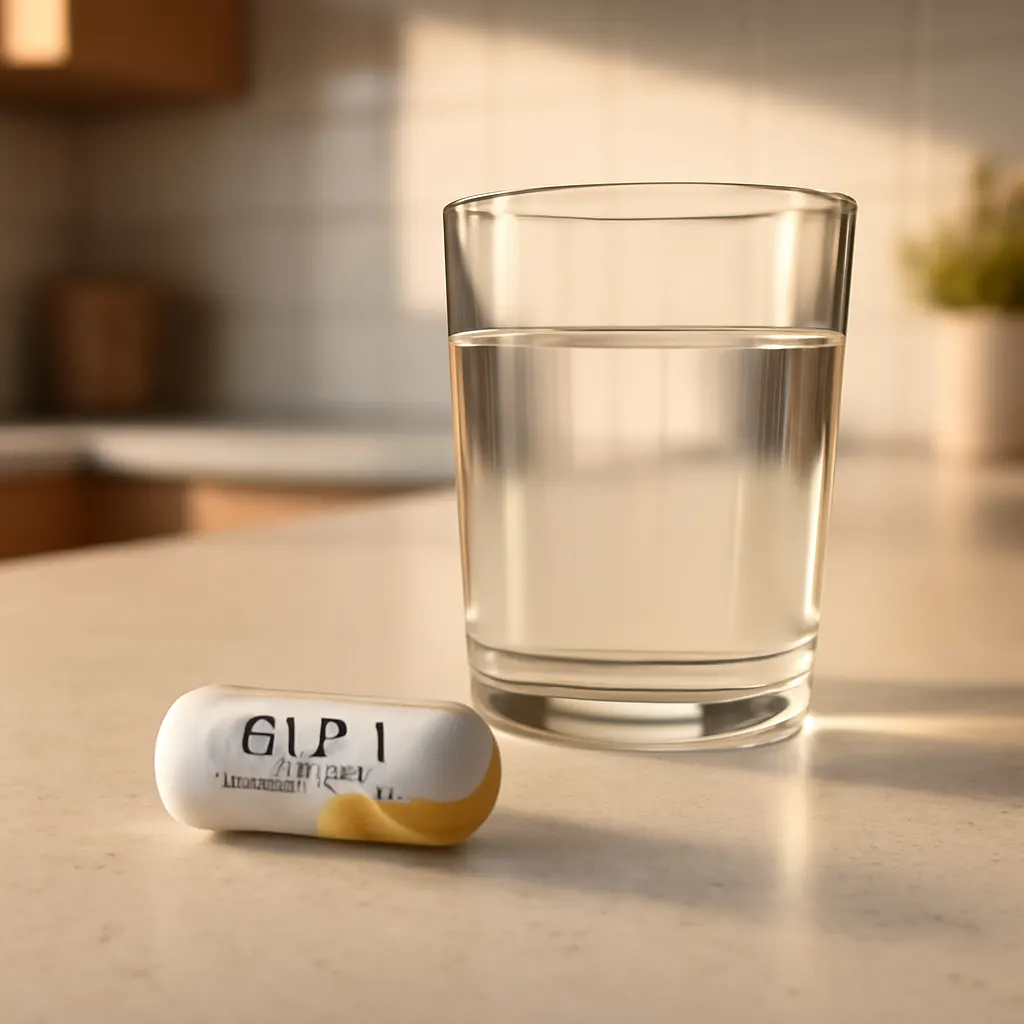
Orforglipron, made by Eli Lilly and sold as Foundayo, is the drug that made the leap. It is a small-molecule GLP-1 receptor agonist — the unsexy phrase that explains why it can survive the digestive tract as a pill rather than requiring the cold chain and subcutaneous injection of semaglutide and tirzepatide.
The pivotal trial behind the approval, ATTAIN-1, tested the highest dose in adults with obesity over 72 weeks. People who stayed on treatment lost an average of 27.3 pounds — 12.4% of body weight — compared with 2.2 pounds for placebo, results the FDA reviewed for the label. Longer-duration data tracking patients toward 80 weeks pushed the average loss closer to 36 pounds.
The pill also went head-to-head against the existing oral option. In the ACHIEVE-1 trial in type 2 diabetes, orforglipron at its 36 mg dose produced 8.2% weight loss (about 19.7 pounds) versus 5.3% (about 11 pounds) for oral semaglutide, the active ingredient in Rybelsus — a 73.6% greater relative reduction — while also lowering A1C by roughly two percentage points.
The practical gap matters as much as the percentage. Rybelsus comes with a notorious dosing ritual: take it on an empty stomach, with no more than four ounces of water, then wait at least 30 minutes before eating or drinking anything else. Foundayo can be taken with or without food, at any time of day, and does not require refrigeration. That difference alone predicts whether people actually keep taking the drug.
The next pill is already in the pipeline
Orforglipron will not hold the oral category alone for long. At ADA 2026, AstraZeneca presented Phase 2 data on elecoglipron, its own once-daily oral GLP-1, from the VISTA trial of 310 adults with obesity.
The numbers were competitive. At the 75 mg dose, elecoglipron produced 10.5% weight loss at 26 weeks and 11.8% at 36 weeks, against 0.3% for placebo — and, notably, the weight-loss curve had not plateaued by week 36, implying more loss with continued treatment. Nearly 89% of patients on the highest dose lost at least 5% of their body weight, versus 15.6% on placebo. The full results were published in The Lancet in July.
Elecoglipron is roughly two years behind Foundayo: AstraZeneca is only now moving it into Phase 3. For patients that lag is frustrating, but for the market it is the point. A second oral GLP-1 — and behind it candidates from Pfizer and other developers — is the mechanism that turns a scarce, expensive category into a competitive one. Every additional entrant puts downward pressure on price and loosens supply.
The money: who qualifies, and what it costs
This is where 2026 stops looking like a clinical story and starts looking like a wallet story.
For two decades, a clause in the Social Security Act has forbidden Medicare Part D from covering drugs prescribed for “anorexia, weight gain, or weight loss.” The GLP-1 Bridge — formally a CMS demonstration — is the workaround: a time-limited program that lets participating manufacturers sell Wegovy, Zepbound (KwikPen only), and Foundayo to Part D beneficiaries at a net price near $245, leaving the patient roughly $50 a month. It opened July 1, 2026 and is set to close December 31, 2027, after which a permanent CMS model called BALANCE is slated to take over.
To qualify through Medicare, you need a Part D plan and you need to meet the clinical bar: a BMI of 30 or higher, or a BMI of 27 or higher with a weight-related condition such as prediabetes, hypertension, dyslipidemia, sleep apnea, or established cardiovascular disease. The same thresholds govern coverage for adults under 65 on commercial insurance, though private plans vary widely in what they require.
For everyone not on Medicare, the price picture has shifted too — but not as dramatically. The list price of Wegovy remains about $1,349 a month; Zepbound lists around $1,059. What changed is that both manufacturers now run their own cash-pay channels: Novo Nordisk offers Wegovy directly for around $349 a month (standard doses), and Eli Lilly offers Zepbound for $299 to $449 depending on formulation. Those prices require forgoing insurance and come with eligibility limits, but they have redrawn the ceiling for people paying out of pocket.
The catches: side effects, muscle, and the 2027 cliff
None of this is a free lunch. The most common orforglipron side effects are gastrointestinal — nausea, diarrhea, vomiting, constipation — and in head-to-head data it produced more of these than oral semaglutide. Dose titration manages most of it, but the discomfort is real and is a leading reason people discontinue.
The muscle question is the one strength-focused readers should take seriously. Rapid weight loss on any GLP-1 strips lean mass along with fat — studies of the category put the lean-tissue share of weight lost between roughly 25% and 40%, which matters disproportionately for older adults already at risk for sarcopenia and falls. The countermeasure is not exotic: adequate protein intake and resistance training, maintained through the course of treatment. The pill is leverage, not a substitute for the load-bearing work that keeps a body durable.
Then there is the calendar. The GLP-1 Bridge ends December 31, 2027. CMS has indicated the BALANCE model will provide a permanent pathway, and bipartisan legislation — the Treat and Reduce Obesity Act, reintroduced across multiple sessions of Congress — would strike the Medicare exclusion outright. Neither is guaranteed, and anyone starting a GLP-1 in 2026 should know that the $50 copay is a temporary price, not a permanent one.
What to do this month
The convergence of an FDA-approved oral GLP-1 and Medicare coverage is a narrow window, and windows like this close. If you are a candidate, the checklist is concrete:
- Check your BMI against the threshold (30 alone, or 27 with a qualifying condition) and gather the labs — A1C, lipids, blood pressure — that document it.
- If you are on Medicare Part D, confirm your plan is participating in the GLP-1 Bridge and ask specifically whether it covers Foundayo in tablet form.
- If you are on commercial insurance, ask your prescriber for a prior-authorization letter citing the ATTAIN-1 data; if denied, the manufacturer cash-pay programs are the fallback.
- Whatever you start, pair it with protein and resistance training. Protect the lean mass.

The needle era is not over — injectables still lead on raw efficacy, and tirzepatide in particular remains the most potent drug in the class, with weight loss at or above 20% in extended studies. But “oral” and “covered” are the two words that have, until now, kept GLP-1s out of most American medicine cabinets. In 2026, both gave way.
The article shows the pattern. The app trains the response.
Continue in Tikva to turn the insight into a repeated response.
Open TikvaSources and review notes
Tikva separates educational content from medical, legal, investment, and personalized financial advice. Sensitive pages should be reviewed by qualified professionals before high-scale publication.
- Eli Lilly / FDA approval of Foundayo (orforglipron) and ATTAIN-1 results
- The BMJ — US expands GLP-1 health coverage to include elderly Americans
- Medicare.gov — GLP-1 weight-loss drug coverage starting July 1, 2026
- CMS — Medicare GLP-1 Bridge program details for Part D plans
- The Lancet (Davies et al., 2026) — elecoglipron VISTA Phase 2 trial
- KFF — BALANCE model and GLP-1 coverage in Medicare and Medicaid
FAQ
Is the GLP-1 pill as effective as the injections?
Close to it, but not the top of the field. Orforglipron (Foundayo) produced about 12% weight loss at 72 weeks in its pivotal trial — comparable to injected semaglutide and within range of tirzepatide, though tirzepatide (Zepbound, Mounjaro) still leads the class with weight loss at or above 20% in extended studies. The pill trades a few percentage points of efficacy for a daily capsule with no needles and no fasting ritual.
Does Medicare really cover weight-loss GLP-1s now?
Yes, conditionally and temporarily. As of July 1, 2026, Part D beneficiaries who meet the BMI criteria — 30 or higher, or 27 or higher with a qualifying condition — can get Foundayo, Wegovy, or Zepbound through the GLP-1 Bridge for about $50 a month. The program is scheduled to end December 31, 2027; CMS plans a permanent BALANCE model to follow, but that is not yet locked into law.
Can I get the oral GLP-1 if I’m not on Medicare?
Yes. Commercial coverage depends on your plan and usually requires prior authorization. Without insurance, the manufacturers run cash-pay channels: Wegovy for around $349 a month and Zepbound for $299 to $449, well below the $1,000-plus list price — though eligibility rules and dose availability apply.
What’s the main downside of switching to the pill?
Gastrointestinal side effects — nausea, vomiting, diarrhea — were more frequent with orforglipron than with oral semaglutide in head-to-head data, and rapid GLP-1 weight loss can strip lean muscle along with fat. Pairing the drug with adequate protein and resistance training is the standard way to protect muscle and durability.