Key takeaways
- NerdWallet's Financial Resilience Index hit a record 63.1 out of 100 in July 2026, up from 60.4 in May, with recession expectations dropping to 60%—the lowest since tracking began in August 2025.
- The FRI survey was fielded July 7–9, 2026, days before the US-Iran ceasefire collapsed on July 8, sending oil prices climbing again and threatening the household financial gains the index captured.
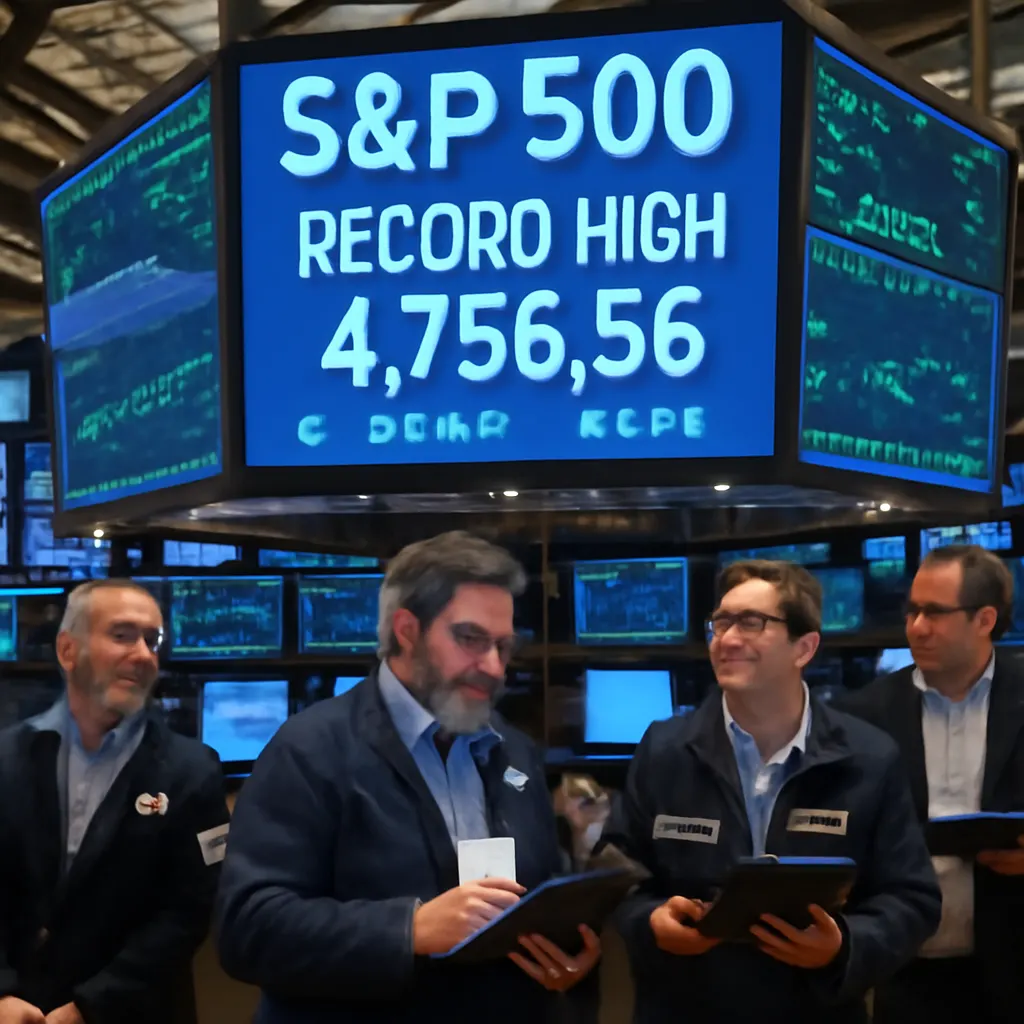
- The S&P 500 crossed 7,000 for the first time on July 23, 2026, marking its 23rd record close of the year, but the rally remains concentrated in megacap technology stocks most exposed to a consumer spending pullback.
- Gen Z financial resilience declined even as the overall index rose, as younger households in energy-sensitive sectors saw less benefit from the brief ceasefire-era optimism.
- Energy stocks, consumer staples, healthcare, and high-quality fixed income provide portfolio resilience against the inflation shock that renewed Middle East conflict would trigger through sustained high oil prices.
On July 21, 2026, NerdWallet released the July reading of its Consumer Financial Resilience Index (FRI), and the number landed at a record high of 63.1 out of 100. The index, which tracks US household financial capacity rather than mere sentiment, has now climbed for three consecutive months since its inception in May 2026. Recession expectations dropped to 60%—the lowest since NerdWallet began tracking the metric in August 2025, when it stood at 61%. The S&P 500 has followed suit, hitting 23 record closes in 2026, most recently crossing the 7,600 mark.
But the date matters. The FRI survey was fielded July 7–9, 2026. Days later, the US-Iran ceasefire—struck in late June after weeks of tit-for-tat strikes that at one point sent Brent crude to $94.80 a barrel—collapsed. The resumption of hostilities sent oil prices climbing again, halting a monthlong slide that had brought pump prices down from wartime highs. As Politico reported on July 8, the reversal put energy markets "back on edge" and wiped out the relief that American households had just begun to feel.
This is the tension defining the summer of 2026: household balance sheets are stronger than they've been in years, and markets are pricing in a soft landing—but the entire setup rests on a geopolitical ceasefire that has already fallen apart once. Investors and savers who mistake the July snapshot for a permanent trend are making a dangerous bet.

What the Financial Resilience Index Actually Measures
NerdWallet launched the FRI in May 2026 specifically because traditional consumer confidence indexes—the Conference Board's Consumer Confidence Index, the University of Michigan's Surveys of Consumers—were swinging wildly on news cycles without capturing whether households could actually absorb a financial shock. The FRI tracks three things: economic outlook, financial security, and financial behavior. It measures what Americans are doing with their money, not just how they feel about it.
The May 2026 inaugural reading was 60.4. At that point, 66% of Americans expected a recession within 12 months and 37% said they would have to rely on credit to manage at least some of their expenses that month. By July, the index had climbed 2.7 points, recession expectations had eased to 60%, and the share of Americans relying on credit had dropped. The improvement was real and broadly based—except among Gen Z, whose resilience actually declined even as the overall index rose. Younger households, disproportionately employed in sectors sensitive to energy costs and discretionary spending cuts, saw the ceasefire-era optimism pass them by.
The Conference Board's Consumer Confidence Index told a related but distinct story. After plummeting 9.7 points in January 2026 to 84.5 (1985=100)—the lowest level in years—it had recovered to 91.2 by mid-summer, with the Expectations Index edging up as gas prices briefly retreated. The two measures together paint a picture of a consumer who is both feeling better and actually operating from a stronger position than at any point since the pandemic-era stimulus faded.
Why Markets Are Shrugging Off Recession Risk
The stock market's 2026 rally has been built on three pillars: falling recession odds, easing inflation expectations (once oil stopped its vertical climb), and corporate earnings that have broadly exceeded expectations. The S&P 500 crossed 7,000 for the first time on July 23, 2026, capping a run that saw the broad index hit 23 fresh closing highs in the year. The Nasdaq Composite gained 1.7% in the week ending July 10 alone, while the Dow slipped 0.5%, snapping a four-week winning streak—a reminder that the rally has been concentrated in megacap technology and AI-adjacent names.
Predictions markets have tracked the same shift. Polymarket's "US recession by end of 2026" contract, which had drawn $1.7 million in total trading volume since its September 2025 launch, saw recession odds drift lower through June and early July as the ceasefire took hold. The logic was straightforward: if oil prices stayed contained, inflation would continue cooling toward the Federal Reserve's 2% target, rate cuts would remain on the table for late 2026 or early 2027, and the consumer—the engine of roughly 70% of US GDP—would keep spending.
The FRI data gave that thesis empirical backing. It's one thing for consumers to tell survey-takers they feel good about the economy; it's another for them to report less reliance on credit cards, stronger emergency savings, and greater confidence in their ability to absorb a $400 expense. The July FRI reading suggested the soft-landing scenario wasn't just a Wall Street narrative—it was showing up in household behavior.
The Geopolitical Wipeout Scenario
Then the ceasefire broke.
On July 8, 2026, President Donald Trump declared the US ceasefire with Iran over, citing Iranian violations. The announcement came roughly two weeks after the initial pause had sent Brent crude tumbling 13% to $94.80—a level that, while down from wartime peaks, remained far above prewar baselines. Within hours of the collapse, oil futures spiked, gasoline prices reversed their monthlong decline, and the relief that had powered the FRI's July surge evaporated.
The mechanics are simple and brutal. American households spend roughly $300 billion a year on gasoline. Every $10 increase in the price of a barrel of crude translates to roughly 24 cents per gallon at the pump, which flows directly into consumer budgets with no lag. Multiplied across 130 million households, a sustained oil price spike acts as a tax hike—one that hits lower-income households hardest, because fuel consumes a larger share of their disposable income.
But the second-order effects are more dangerous. Sustained high oil prices feed into core inflation through transportation costs, manufacturing inputs, and the price of every good that moves by truck, rail, or ship. If inflation re-accelerates in the back half of 2026, the Federal Reserve—already cautious about cutting rates with goods inflation sticky—will likely hold steady. That means mortgage rates stay near 7%, auto loan financing remains expensive, and the credit card APRs that 33% of Americans rely on to cover monthly expenses stay elevated. The entire chain, from the Strait of Hormuz to a household's minimum payment, is direct.
As NPR reported on July 8, the ceasefire collapse added "fresh uncertainty to the global economy"—uncertainty that the FRI's July survey, conducted days before the breakdown, does not capture.
How to Position a Portfolio for Resilience, Not Just Optimism
The FRI's record high is not meaningless. It reflects genuine improvements in household balance sheets: lower credit reliance than in May, reduced recession anxiety, and a consumer base that entered the summer in better shape than many economists expected. But investing as if the July reading is the permanent state of the world—rather than a snapshot taken during a two-week ceasefire—ignores the lesson of the past 18 months.
The case for defensive positioning does not require abandoning equities. It requires recognizing that the same forces driving the S&P 500 to record highs are the forces most exposed to a geopolitical shock. Megacap technology stocks, which have carried the 2026 rally, are not immune to a consumer spending pullback; their valuations assume continued revenue growth that depends on the very household resilience the FRI measures. A portfolio that is 100% concentrated in the sectors that have already run the furthest is a portfolio making an all-in bet that the ceasefire holds.
A more resilient approach spreads exposure across three buckets. First, energy and commodities: if oil prices stay elevated, energy stocks and broad commodity exposure provide a direct hedge against the inflation that would otherwise erode fixed-income returns and equity multiples. Second, consumer staples and healthcare: these sectors have historically outperformed during periods of consumer stress because their revenues are tied to non-discretionary spending. Third, high-quality fixed income: with Treasury yields still elevated by historical standards, short-to-intermediate duration bonds offer yield without requiring investors to correctly time the next recession.
The goal is not to bet against the American consumer. The FRI data makes clear that US households have built genuine financial capacity. The goal is to avoid requiring that capacity to be tested by an oil shock before adjusting exposure. Investors who rebalanced toward defensives when the FRI was at 60.4 in May have watched the index climb to 63.1—and their portfolios have participated in the rally because they held equities, not because they went all-in on the most concentrated corners of the market.
The Bottom Line for Households and Investors
The record-high Financial Resilience Index is a reason for measured optimism, not complacency. The improvement from 60.4 in May to 63.1 in July represents real progress: fewer Americans expect a recession, fewer are relying on credit cards to bridge monthly expenses, and consumer confidence has recovered from its January lows. But the survey was conducted during a ceasefire that no longer exists. The collapse of the US-Iran truce on July 8 has already reversed the drop in oil prices that powered the optimism, and the next FRI reading—scheduled for August—will almost certainly reflect the damage.
For investors, the takeaway is straightforward: the strongest position is one that can survive both scenarios. A diversified portfolio with energy exposure, defensive sectors, and high-quality bonds will participate in the rally if the soft landing holds—and cushion the blow if the geopolitical situation deteriorates further. Betting everything on the July snapshot is not a strategy. It's a gamble on a ceasefire that has already broken once.
The article shows the pattern. The app trains the response.
Continue in Tikva to turn the insight into a repeated response.
Open TikvaSources and review notes
Tikva separates educational content from medical, legal, investment, and personalized financial advice. Sensitive pages should be reviewed by qualified professionals before high-scale publication.
- NerdWallet Investor Relations — July 2026 Financial Resilience Index hits record 63.1, ceasefire collapse risks
- NerdWallet Financial Resilience Index — methodology, survey dates (July 7–9), recession expectations data
- Politico — US-Iran ceasefire collapse on July 8, 2026, oil markets back on edge
- NPR — Iran tensions add fresh uncertainty to the global economy after ceasefire ends
- Reuters — S&P 500 at 7,575.39 on July 10, 2026, market performance context
- Business Wire — May 2026 inaugural FRI of 60.4, 66% recession expectations, 37% credit reliance
FAQ
What is the NerdWallet Financial Resilience Index and how is it different from consumer confidence?
The FRI, launched in May 2026, measures actual household financial capacity—economic outlook, financial security, and financial behavior—rather than just sentiment. The Conference Board's Consumer Confidence Index asks how people feel; the FRI asks whether they can absorb a shock, tracking credit reliance, emergency savings, and recession expectations. The July 2026 reading of 63.1 is the highest since inception.
How does the US-Iran ceasefire collapse affect household finances?
The collapse on July 8, 2026 reversed a monthlong decline in oil prices. Higher crude prices directly raise gasoline costs for consumers—a $10/barrel increase adds roughly 24 cents per gallon at the pump. Sustained high oil prices also feed into core inflation through transportation and manufacturing costs, which can keep interest rates elevated and delay Federal Reserve rate cuts.
Should I change my investment strategy because of the record-high Financial Resilience Index?
The record FRI reading is a positive signal, but it was captured before the ceasefire collapsed. Rather than going all-in on equities, maintaining exposure to energy stocks (as an inflation hedge), defensive sectors like consumer staples and healthcare, and high-quality bonds provides resilience if the geopolitical situation deteriorates and oil prices stay elevated.
Why did Gen Z financial resilience decline when the overall index rose?
Younger households are disproportionately employed in sectors sensitive to energy costs and discretionary spending cuts. Even during the brief ceasefire-era optimism that lifted the overall FRI from 60.4 to 63.1, Gen Z respondents reported lower resilience, suggesting they saw less direct benefit from lower gas prices and improved consumer confidence.