Key takeaways
- Houthi strikes on two Saudi tankers on July 22–23, 2026, pushed Brent crude to a six-week high of $98 and WTI to $90.22—a roughly $10 weekly gain.
- The attacks mark the first direct targeting of Saudi energy exports in five months, forcing the market to price in a sustained geopolitical risk premium of $10–$12 above prior Wall Street consensus.
- The Energy Select Sector SPDR ETF (XLE) has returned roughly 33% year-to-date in 2026, far outpacing the S&P 500's 8.8% return, driven by its heavy weighting in integrated majors like Exxon Mobil and Chevron.
- A sustained move above $95 Brent threatens the Fed's “last mile” on inflation, delaying rate cuts and pressuring long-duration growth stocks—a second-order effect most portfolios are not positioned for.
- Defensive hedging through dividend-paying integrated majors (yield ~3.4%) and midstream pipeline operators (yields 6–8%) offers exposure to higher energy prices without the downside risk of chasing leveraged ETFs.
On July 22, 2026, Yemen's Houthi rebels claimed responsibility for coordinated drone and missile strikes on two Saudi Arabian oil tankers transiting the Red Sea. By the opening bell of the 23rd, Brent crude had surged past $98 a barrel—a six-week high—while West Texas Intermediate (WTI) climbed to $90.22. It was the fifth consecutive session of gains for crude, a rally driven by the sudden realization that the Middle East's sprawling conflict map has just expanded into Saudi energy exports. Brent is now up roughly $10 over the past week alone, erasing months of bearish consensus about a 2026 supply glut.
The incident, which marks the first direct Houthi assault on Saudi-linked crude shipping in nearly five months of Red Sea escalation, effectively weaponizes a maritime choke point that roughly 10% of global crude flows through. The message from Sanaa is clear: Saudi ports and the tankers that service them are now in the crosshairs. For regular investors, this is not background noise. A sustained move above $100 Brent would arrive with cascading effects on everything from diesel margins to airline earnings to the consumer price index, which already ran hot through the spring. Hedging for energy inflation is no longer a theoretical exercise—it is a defensive necessity.
Why the Red Sea Attack Punches Above Its Weight
To understand why a single strike on two tankers can move global crude by 4–5% in a session, you have to understand what the Red Sea actually is: the non-negotiable front door to the Suez Canal. According to a landmark UNCTAD report on the crisis, Houthi aggression has already triggered a 40% collapse in Suez Canal transit revenues and forced diversions that have lengthened cargo and tanker routes by as much as 53%. When ships must round the Cape of Good Hope, they burn more fuel, tie up fleet capacity for weeks longer, and effectively shrink the available supply of global shipping. The Guardian's July 21 reporting noted that the Houthis explicitly warned shipping companies against using Saudi ports in the days leading up to the attack—a red flag that tanker markets largely dismissed until Tuesday's strike.
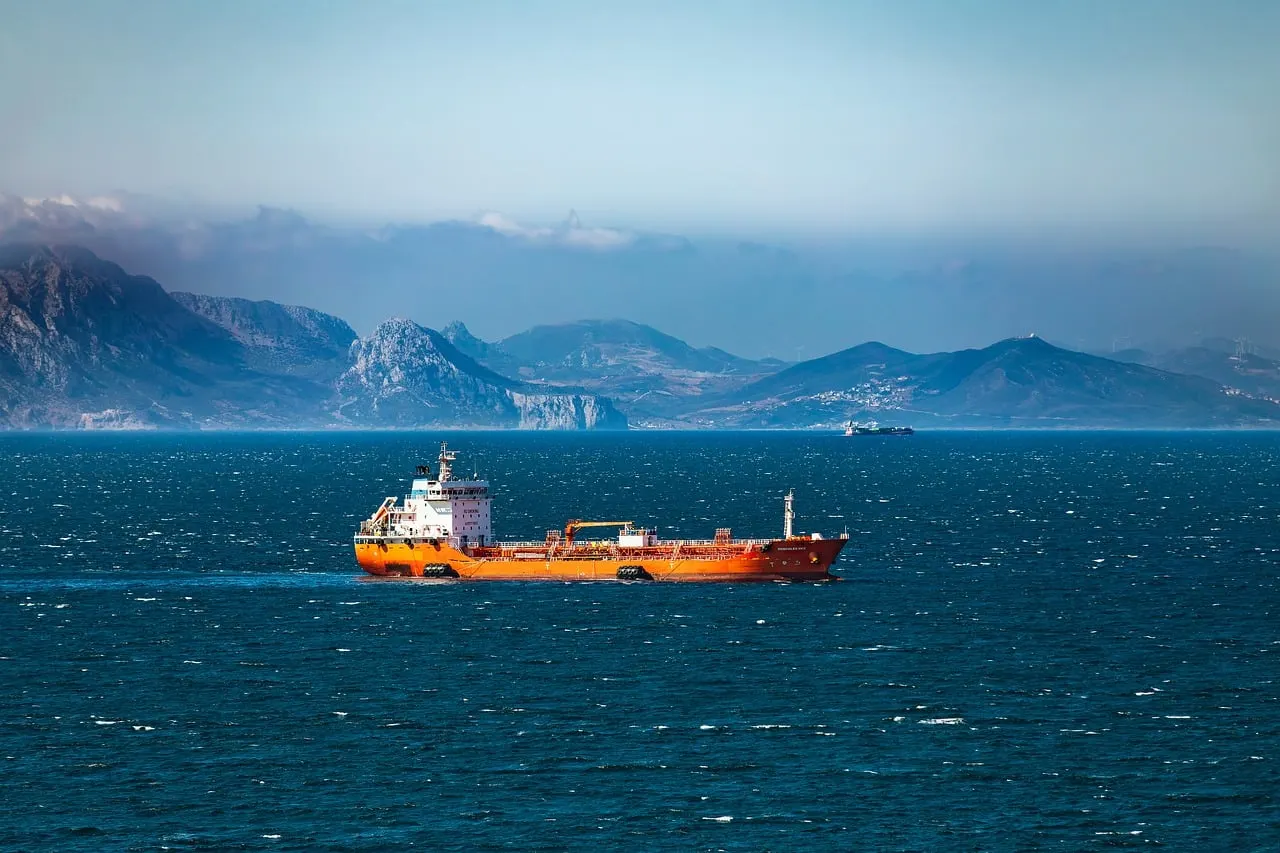
The specific targeting of Saudi tankers is an escalation because it bypasses the established playbook. For two years, Houthi attacks primarily focused on vessels with weak or no ties to Israeli, American, or British interests—a strategy aimed at isolating those nations without provoking the Gulf's major producers. That line is now gone. According to CNBC's reporting on July 23, the Houthis claimed the strikes were retaliation for the tankers' alleged violation of their maritime blockade. The subtext is far broader: any ship serving Saudi Aramco's export apparatus is now a candidate for interception. That realization is why traders did not wait for confirmation of damage before bidding crude higher. The mere threat of a Saudi export pause—however temporary—is enough to create a price floor in the mid-$90s.
Compare this to prior Red Sea disruptions. As Reuters noted on July 20, oil prices could climb above $115–$120 per barrel if Saudi flows are systematically disrupted. The same report cautioned that logistical workarounds could blunt the impact. But that analysis was published before the strikes. Workarounds require time, re-routing, and insurance premiums that have already been rising sharply. A sustained tanker blockade of Saudi ports would add a permanent geopolitical risk premium to a market that had been pricing in a 2026 glut.
The Macro Backdrop: Why $98 Hits Harder Now
The psychological impact of $98 oil is heightened by what the market had been expecting. Heading into the third quarter, the International Energy Agency's July Oil Market Report documented that refined product cracks and margins had surged to four-year highs in early July, even as crude supplies rose and prices fell. Translation: the supply of raw crude was expected to be abundant, but the capacity to turn it into usable fuel was already constrained. A shock to crude supply—in this case, a geopolitical one—stacks directly on top of an existing refining bottleneck.
Wall Street's prior consensus reflected that bearish outlook. J.P. Morgan Global Research had forecast Brent crude to average $86 per barrel in Q3 2026, $80 in Q4, and $78 at year-end. Those projections assumed stable logistics through critical chokepoints. They did not model a Houthi campaign against Saudi Aramco's tanker fleet. With Brent now trading roughly $12 above Morgan's Q3 estimate, institutional desks are being forced to reprice not just oil, but the entire inflation trajectory for late 2026. As The New York Times reported on July 22, Brent has gained about $10 a barrel over the past week as the Middle East conflict has intensified, creating a feedback loop where energy prices threaten broader consumer inflation just as central banks were preparing to ease.
This is the core problem for regular investors. If oil holds above $95 through August, the so-called “last mile” of inflation will not be conquered. Federal Reserve rate cuts—already priced into equity markets with aggressive optimism—would be delayed or reduced in scope. Treasury yields, which hovered near 2026 highs as the tanker news broke, would remain elevated. That creates a hostile environment for long-duration growth stocks, mortgage borrowers, and any business model that depends on cheap capital. Energy inflation is the wedge that re-opens every other inflation wound.
How to Position Your Portfolio Without Chasing the Spike
The instinct of many investors after a geopolitical price spike is to chase the rally—buy oil futures, pile into leveraged energy ETFs, or load up on the most volatile small-cap drillers. That is precisely how capital gets destroyed. A recent analysis by Investing.com documented that leveraged and commodity-focused energy structures dominated 2026's ETF leaderboard in the first half, but these instruments are designed for short-term tactical trades, not for surviving a geopolitical whipsaw. When tensions ease, the downside in these products is brutal.
The better approach is to position for the second-order effects of sustained higher energy prices. Here is the playbook.
Anchor with Integrated Majors, Not Pure Explorers
The Energy Select Sector SPDR ETF (XLE) has returned roughly 33% year-to-date through mid-2026, crushing the S&P 500's 8.8% return over the same period. That run is not a fluke. XLE's portfolio is heavily weighted toward integrated majors—Exxon Mobil (XOM), Chevron (CVX), and ConocoPhillips (COP)—which combined account for nearly half of the fund's holdings. Integrated oil companies have the balance sheets to weather price volatility, the refining capacity to profit from the four-year-high product margins noted by the IEA, and the dividend coverage to provide a cushion if crude retreats. Per Kiplinger's analysis, XLE's current dividend yield sits around 3.4%, making it one of the rare inflation hedges that pays you to wait. Investors who want targeted exposure without the idiosyncratic risk of a single driller should anchor their energy allocation here, not in speculative E&P names.

Hedge the Downside with Midstream and Pipelines
When crude prices spike on a supply disruption, the initial beneficiaries are producers. But the companies that actually transport oil and gas through pipelines—midstream operators—derive revenue from volume and long-term transport contracts, not from the spot price of crude. A June 2026 ETF Trends report noted that midstream exposure is an ideal diversifier for investors concerned that a sudden oil glut or a geopolitical de-escalation could tank producer earnings. Midstream MLPs and pipeline operators offer high distribution yields—often in the 6–8% range—and their cash flows are largely insulated from the daily swings of Brent pricing. If you are worried that the Houthi strike is a temporary spike that will reverse within a quarter, midstream is where you park capital to benefit from broader energy demand without betting on oil staying at $98.
Underweight the Most Energy-Dependent Consumers
Investors rarely think about the other side of the trade: what $98 oil breaks. Airlines, which saw jet fuel costs spike sharply in the first half of 2026, face renewed margin pressure. Consumer discretionary names, particularly those with heavy exposure to suburban driving patterns or global shipping logistics, are directly exposed to the 25–35% freight rate increases documented by shipping analysts like DocShipper in the wake of Red Sea diversions. If you own broad index funds, you already have exposure to these sectors. The strategic move is to avoid adding fresh capital to the most vulnerable names until there is clarity on the Strait of Hormuz and the Red Sea corridor. The market has not yet priced in the possibility that tanker insurance premiums—the hidden cost of every shipping route—are climbing in a way that will compress margins for months, even if the headlines quiet down.
What History Tells Us About Oil Shocks
It is tempting to treat every geopolitical spike as the beginning of a secular bull market for crude. The historical record suggests caution. As a July 2026 TradingView analysis pointed out, experts have repeatedly misjudged the terminal price of oil during crises—in prior conflicts, predictions of $150 crude proved wildly off the mark, as demand destruction and supply workarounds eventually capped the rally. The same report suggested that even an extended Middle East conflict might only sustain WTI in the $80 range over the medium term, not $120. The lesson is not that oil will fall tomorrow. It is that the price of oil is fundamentally cyclical, and geopolitical premiums have a historical tendency to fade once alternative supply routes are activated and demand begins to adjust.
That historical context is why the recommended posture is defensive hedging, not speculative aggression. You want exposure to the upside if the Strait of Hormuz closes or if Saudi production is taken offline. You also want protection if the crisis proves temporary and crude reverts to the $75–$80 range that major banks like J.P. Morgan had forecast. Anchoring in integrated majors with strong dividends, diversifying into midstream infrastructure, and avoiding the temptation to chase leveraged ETFs is how you thread that needle.

The Bottom Line for July 2026
The Houthi strike on two Saudi oil tankers is not a one-off event to be shrugged off when the next news cycle begins. It is the first direct assault on Saudi energy exports in this phase of the conflict, and it forces the market to price in a risk premium that was absent a week ago. With Brent topping $98 and WTI at $90.38 as of July 23, 2026, the market is signaling that the risk of a broader Middle East supply disruption is real. Whether that disruption materializes depends on factors no individual investor can control—Saudi retaliation, US naval posture, the durability of the Houthi blockade.
What you can control is the structure of your portfolio. Add disciplined energy exposure through dividend-paying integrated majors. Diversify with midstream operators whose cash flows do not depend on oil staying at $98. Avoid chasing the speculative names that will bleed capital if the geopolitical premium fades. And recognize that energy inflation, if it sustains, will ripple through the broader economy in ways that affect every asset class you own. The smartest move right now is not to bet on the price of oil. It is to ensure your portfolio is resilient regardless of where oil goes next.
The article shows the pattern. The app trains the response.
Continue in Tikva to turn the insight into a repeated response.
Open TikvaSources and review notes
Tikva separates educational content from medical, legal, investment, and personalized financial advice. Sensitive pages should be reviewed by qualified professionals before high-scale publication.
- WSJ Live Coverage — Oil prices jump after Houthis claim Red Sea tanker attacks
- UNCTAD Report — Red Sea crisis impact on global trade and Suez Canal revenues
- The Guardian — Houthi threat to Saudi tankers and shipping companies
- IEA July 2026 Oil Market Report — Refined product margins and crude supply outlook
- J.P. Morgan Global Research — Q3/Q4 2026 oil price forecasts ($86/$80 Brent)
- Trading Economics — Crude oil price data ($90.38 WTI on July 23, 2026)
FAQ
Why did oil spike above $98 after the Houthi tanker attacks?
The Houthis explicitly targeted two Saudi oil tankers in the Red Sea on July 22–23, 2026, marking the first direct assault on Saudi energy exports in five months of escalation. Because roughly 10% of global crude flows through this chokepoint and alternative routes via the Cape of Good Hope add up to 53% to travel distances, the threat to Saudi supply forced traders to price in a significant geopolitical risk premium, pushing Brent above $98.
How can regular investors hedge against energy inflation in 2026?
The most effective hedge is anchoring in dividend-paying integrated oil majors through ETFs like XLE, which has returned roughly 33% YTD in 2026 and yields around 3.4%. Pair this with midstream pipeline operators whose cash flows are insulated from daily crude price swings. Avoid chasing leveraged energy ETFs, which carry extreme downside risk if geopolitical tensions ease.
What happens to the broader market if oil stays above $95?
Sustained oil above $95 threatens to stall the Fed's progress on inflation, delaying or reducing rate cuts that equity markets have already priced in. Treasury yields would remain elevated near 2026 highs, pressuring long-duration growth stocks and mortgage rates. Consumer discretionary and airline sectors face the most direct margin pressure from higher fuel and freight costs.
Is $98 oil a new normal or a temporary spike?
Historical precedent suggests geopolitical premiums tend to fade once supply workarounds are activated and demand adjusts. J.P. Morgan's pre-attack forecast was for Brent to average $86 in Q3 2026, indicating the current price reflects a risk premium rather than a structural shortage. However, if Houthi attacks on Saudi tankers persist or the Strait of Hormuz is disrupted, prices could climb toward $115–$120 according to Reuters analysis.