Key takeaways
- Exercise triggers the liver to release GPLD1, an enzyme that strengthens the blood-brain barrier by removing TNAP from brain blood vessel cells, directly reducing neuroinflammation and improving memory.
- In UCSF mouse studies, boosting GPLD1 alone—without exercise—reversed age-related cognitive decline and reduced amyloid pathology in Alzheimer's models, published in Cell in 2026.
- High physical activity in midlife and late life is associated with up to a 45% lower risk of all-cause dementia, per a 2025 JAMA Network Open study led by epidemiologist Phillip Hwang.
- The Lancet Commission's 2024 report identified physical inactivity as one of 14 modifiable risk factors accounting for roughly 45% of global dementia cases.
- Drug developers are now targeting the GPLD1/TNAP pathway, but until a therapy reaches the clinic, exercise remains the only reliable way to activate this brain-defense mechanism.
On July 24, 2026, scientists at UC San Francisco crystallized what may be the most actionable dementia-prevention insight of the decade: the cognitive benefits of exercise can be traced to a single liver-derived protein called GPLD1. The enzyme, released into the bloodstream during physical activity, repairs the brain's vascular barrier and improves memory in both aging and Alzheimer's models. For the roughly 6.9 million Americans living with Alzheimer's disease—and the tens of millions more trying to avoid joining them—the mechanism matters because it converts a vague prescription ("exercise more") into a biological pathway pharmaceutical companies are already scrambling to target.
The announcement, covered widely this week, builds on a Cell paper published earlier this year by Saul Villeda and colleagues at UCSF. That work traced how exercise prompts the liver to release GPLD1, which then clips a harmful protein called TNAP from the surface of cells lining the brain's blood vessels. The result is a reinforced blood-brain barrier, reduced neuroinflammation, and measurable improvements in cognition.

The Protein Pathway: How a Liver Enzyme Reaches the Brain
Scientists have known for years that exercise improves brain function. What they hadn't pinned down was how. The brain is protected by the blood-brain barrier—a tightly regulated layer of endothelial cells that keeps toxins and pathogens out while allowing nutrients in. As we age, that barrier degrades. Harmful proteins leak in, inflammation rises, and cognitive decline accelerates. Vascular dysfunction is now understood to be one of the earliest drivers of Alzheimer's disease, preceding the buildup of amyloid plaques by years or even decades.
The UCSF team, led by Villeda and first author Gerhardt Bieri, zeroed in on GPLD1 (glycosylphosphatidylinositol-specific phospholipase D1). In a 2020 Science study, the same group had shown that exercise raises GPLD1 levels in the liver and that genetically engineering old mice to overproduce the enzyme mimicked the cognitive benefits of exercise. But they didn't know the mechanism. The enzyme, it turns out, cannot cross the blood-brain barrier itself. So how was it conferring benefits?
The answer, detailed in the Cell paper, is that GPLD1 works on the outside of the barrier. It circulates in the blood and clips TNAP (tissue-nonspecific alkaline phosphatase) off the surface of endothelial cells lining the brain's vasculature. High levels of TNAP on those cells weaken the blood-brain barrier. By removing it, GPLD1 restores barrier integrity, reduces neuroinflammation, and improves memory in aged mice and in mouse models of Alzheimer's disease. The team also showed that increasing GPLD1 or inhibiting TNAP reduced amyloid-beta pathology and improved cognitive function.
The implication is direct: the brain benefits of exercise are not some diffuse, untraceable phenomenon. They are mediated, at least in substantial part, by one enzyme produced by one organ, acting on one specific structural target.
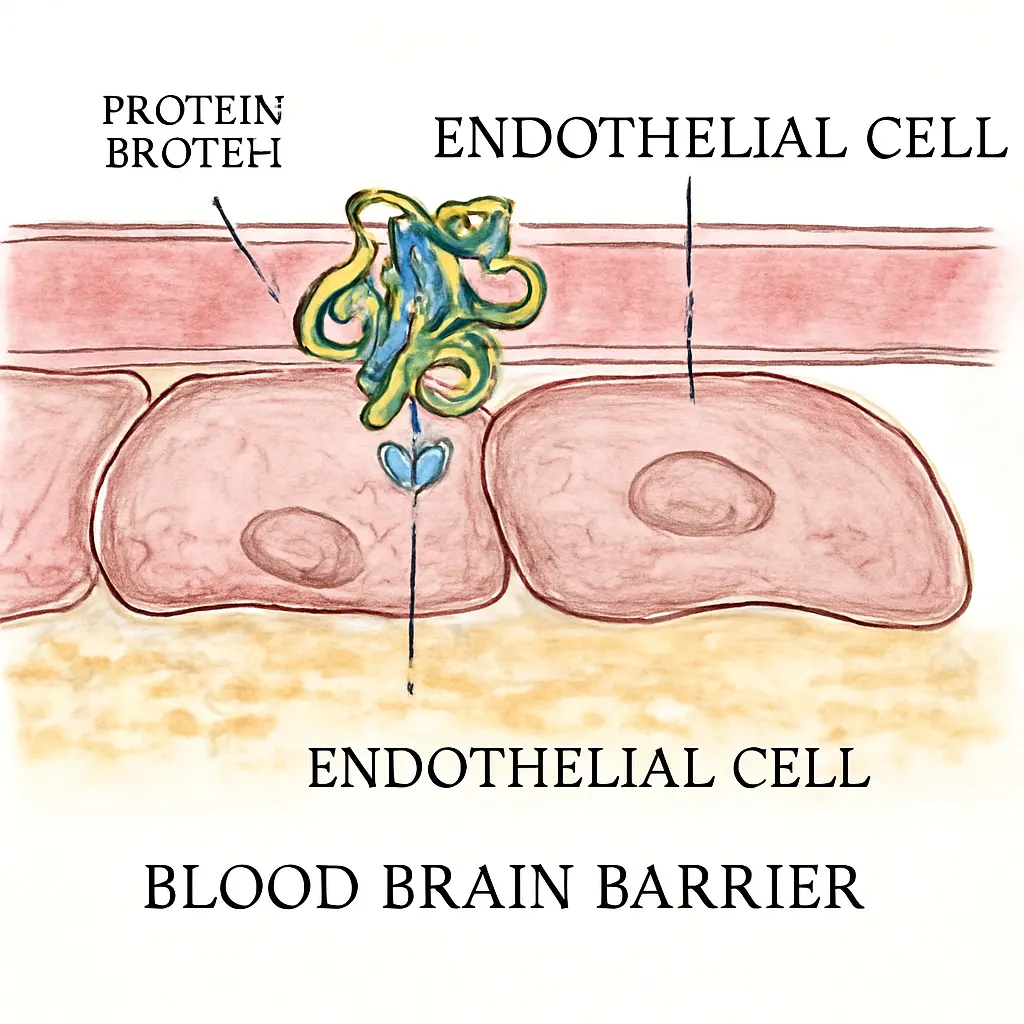
Why the Blood-Brain Barrier Is Ground Zero for Dementia
The blood-brain barrier is not a wall. It is a dynamic, living interface—roughly 400 miles of capillaries threaded through the human brain, made up of endothelial cells locked together by tight junctions. When those junctions loosen, the barrier becomes leaky. Blood proteins that should never enter brain tissue begin to seep in, triggering immune responses and damaging neurons.
This isn't a marginal process. According to the Alzheimer's Association, vascular problems are among the most common contributors to cognitive decline. A 2025 Johns Hopkins Bloomberg School of Public Health analysis found that participants in the top 10 percent for moderate-to-vigorous physical activity had a 60 percent lower risk of dementia compared to sedentary peers. A November 2025 study in JAMA Network Open, led by epidemiologist Phillip Hwang, found that high physical activity in midlife and late life was associated with a 41 percent and 45 percent lower risk of all-cause dementia, respectively. The mechanism uncovered by Villeda's group provides a biological explanation for those epidemiological correlations.
It also reframes the target. For three decades, Alzheimer's drug development has focused primarily on clearing amyloid plaques from the brain—an approach that has yielded a small number of FDA-approved drugs (lecanemab and donanemab among them) but limited clinical impact. The vascular angle is different. It suggests that protecting the brain's blood vessels—through exercise, through diet, or through drugs that mimic GPLD1—may prevent the cascade of damage before amyloid pathology fully takes hold.
What the Mice Showed—and What Humans Still Need
In the UCSF experiments, aged mice given access to running wheels showed elevated GPLD1 in the liver and blood, improved blood-brain barrier integrity, reduced neuroinflammation, and better performance on memory tasks. When researchers overexpressed GPLD1 in the livers of old, sedentary mice, the animals showed the same cognitive improvements as the exercisers—without exercising. In Alzheimer's-model mice, boosting GPLD1 or blocking TNAP reduced amyloid deposits and improved cognition.
That is a striking finding. It suggests that GPLD1 alone may be sufficient to capture a meaningful share of the brain benefits of exercise, at least in rodents. Whether the same holds in humans remains an open question—and it is the question pharmaceutical companies are now racing to answer. A drug that raises GPLD1 or inhibits TNAP could, in theory, deliver the cognitive protection of exercise to people who cannot exercise due to disability, illness, or age-related frailty.
But humans are not mice. The epidemiological data is strong—physical activity is one of the most robustly evidence-backed dementia-prevention levers available—but translating a mouse finding into an approved drug typically takes a decade or more and fails more often than it succeeds. The Lancet Commission's 2024 dementia prevention report identified physical activity as one of 14 modifiable risk factors accounting for roughly 45 percent of global dementia cases. Exercise addresses several of those risk factors simultaneously, including hypertension, obesity, diabetes, and depression. No single drug is likely to replicate that breadth.

The Actionable Bottom Line: Move Now, Refine Later
For the average reader, the science has not yet changed the prescription. It has explained it. Exercise remains the most powerful, most accessible, and most thoroughly validated tool for protecting the aging brain. The new research tells us why it works: your liver, in response to physical exertion, releases a protein that repairs the barrier protecting your brain from the circulatory system's chemical chaos. That barrier, when intact, keeps neuroinflammation low and cognitive function high.
How much exercise is enough? The evidence converges on a clear range. The World Health Organization and the American Heart Association both recommend at least 150 minutes of moderate-intensity aerobic activity per week, or 75 minutes of vigorous activity, plus two sessions of strength training. The 2025 Johns Hopkins analysis found that even small amounts of moderate-to-vigorous activity were associated with significantly lower dementia risk, with benefits scaling up sharply for those in the top activity tiers. The JAMA Network Open study suggests the protective effect is strongest when exercise is sustained through midlife into late life—so starting now, regardless of age, is better than waiting.
For those who cannot exercise due to physical limitations, the research points to a future where a GPLD1-targeting drug or TNAP inhibitor could offer an alternative route to the same vascular protection. That drug does not yet exist in approved form. Until it does, the most reliable way to trigger the mechanism is to move. Walk, run, swim, lift, cycle—intensity matters, but consistency matters more. The liver does not care whether you are running a 5K or walking briskly for 30 minutes. It responds to sustained physical demand by releasing the proteins that, in turn, shore up the brain's defenses.
July 24, 2026 may not have produced a cure. It produced something more useful: a clear line from a specific action to a specific biological outcome. Exercise → liver releases GPLD1 → GPLD1 clips TNAP from brain endothelial cells → blood-brain barrier strengthens → neuroinflammation drops → cognition holds. That is not a metaphor. It is a pathway. And it is one you can activate this afternoon.
The article shows the pattern. The app trains the response.
Continue in Tikva to turn the insight into a repeated response.
Open TikvaSources and review notes
Tikva separates educational content from medical, legal, investment, and personalized financial advice. Sensitive pages should be reviewed by qualified professionals before high-scale publication.
- UCSF News — Mechanism by which exercise-induced liver protein GPLD1 protects the blood-brain barrier
- Cell (Bieri et al., 2026) — GPLD1 reverses aging- and Alzheimer's-related vascular dysfunction and cognitive decline
- Alzforum — Detailed mechanism of GPLD1-mediated TNAP cleavage and blood-brain barrier repair
- Boston University — Mid- and late-life exercise linked to up to 45% lower dementia risk (Hwang et al.)
- Johns Hopkins Bloomberg School of Public Health — Small amounts of MVPA associated with 60% lower dementia risk in top tier
- ScienceDaily — Exercise prompts liver to release enzyme that removes harmful protein weakening the blood-brain barrier
FAQ
What is GPLD1 and where does it come from?
GPLD1 (glycosylphosphatidylinositol-specific phospholipase D1) is an enzyme produced by the liver. It is released into the bloodstream during physical exercise and circulates to the brain's blood vessels, where it clips a protein called TNAP from the surface of endothelial cells. This action strengthens the blood-brain barrier and reduces neuroinflammation, improving cognitive function.
How much exercise is needed to activate this brain-defense mechanism?
Major health organizations recommend at least 150 minutes of moderate-intensity aerobic activity or 75 minutes of vigorous activity per week, plus strength training. Research from 2025 shows that even small amounts of moderate-to-vigorous activity significantly reduce dementia risk, with benefits scaling up sharply for those who accumulate more. The protective effect is strongest when exercise is sustained from midlife into late life.
Will there be a drug that mimics the brain benefits of exercise?
Pharmaceutical interest in the GPLD1/TNAP pathway is intensifying, and the 2026 Cell paper provides a clear molecular target. However, translating a mouse finding into an approved human drug typically takes a decade or more, with a high failure rate. Until such a drug exists, exercise remains the only reliable way to activate this protective mechanism.
Is the blood-brain barrier really that important for preventing dementia?
Yes. The blood-brain barrier protects brain tissue from harmful substances in the bloodstream. As it degrades with age, harmful proteins leak in, inflammation rises, and cognitive decline accelerates. Vascular dysfunction is now considered one of the earliest drivers of Alzheimer's disease, often preceding amyloid plaque buildup by years. Protecting the barrier through exercise addresses a root cause of cognitive decline, not just a symptom.