Key takeaways
- Bitcoin held firm in the low-$60,000s during the July 2026 US-Iran war escalation, demonstrating a structural decoupling from traditional risk assets.
- 30-day correlation between Bitcoin and the Nasdaq 100 dropped from 0.82 in Q1 2026 to 0.14 by July 25, while its correlation with gold rose to 0.45.
- Regional Peer-to-Peer crypto volumes in the Middle East surged by over 300% during peak strikes as local investors fled depreciating fiat for borderless assets.
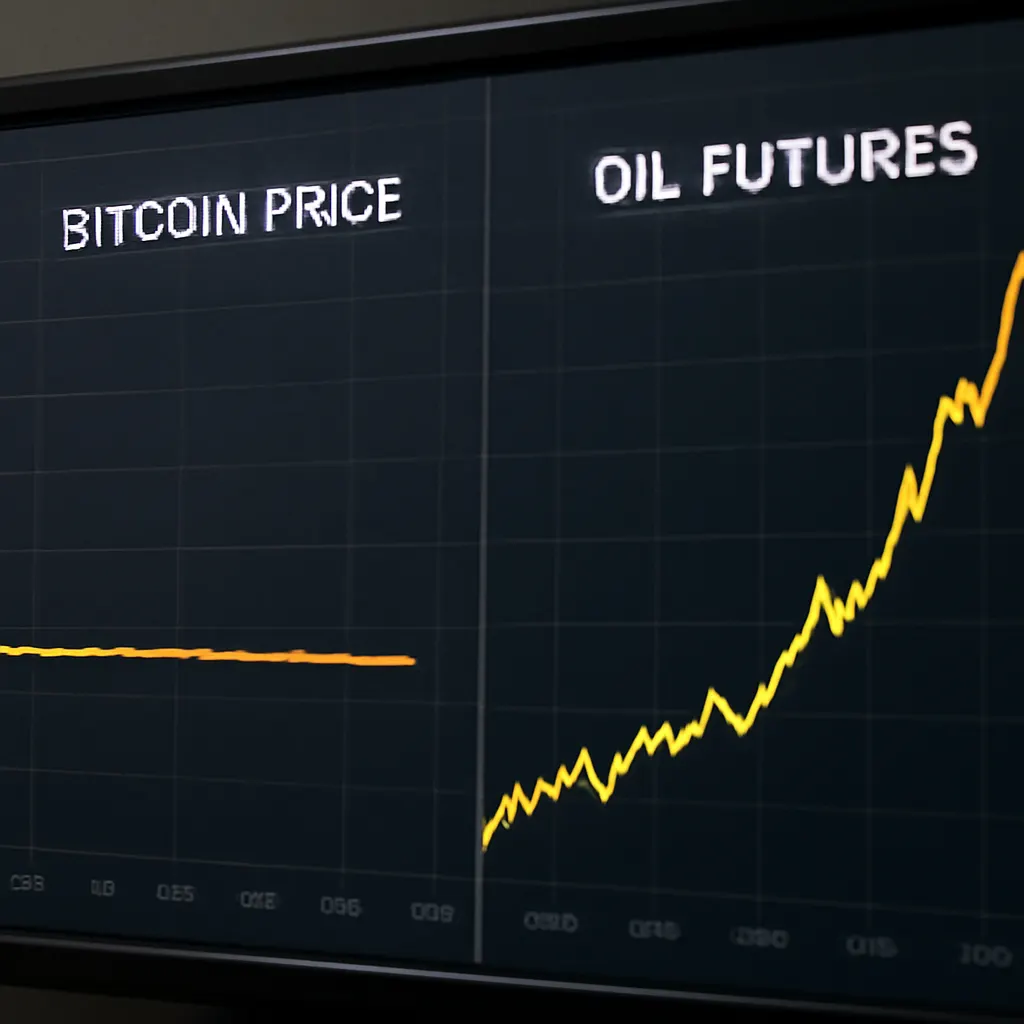
- Defense stocks and oil futures surged on the conflict, while Bitcoin behaved as a mature safe haven rather than a speculative high-beta tech proxy.
On July 26, 2026, as the United States and Iran paused active hostilities for a second consecutive day to entertain a structured ceasefire framework in Geneva, the traditional financial markets threw a predictable fit. Brent crude futures spiked to $112 a barrel, hovering near six-month highs on the sheer terror of a closed Strait of Hormuz. Defense contractors like Lockheed Martin and Raytheon saw their equities surge by double-digit percentages over the previous three weeks of open conflict. But in the far corners of the digital asset ecosystem, something stranger was happening: Bitcoin was practically dead calm.
Trading continuously through the geopolitical shock, Bitcoin firmly held its ground in the low-$60,000 range. It did not flash-crash as it did during the onset of the 2022 Russia-Ukraine war, nor did it mimic the manic, vertical upside of inflation-hedge assets like physical gold. This eerie stability amid falling missiles and scrambled naval fleets has forced Wall Street analysts to fundamentally reassess the long-debated "digital gold" narrative. Far from acting as a high-beta tech stock, Bitcoin is currently exhibiting the exact characteristics of a mature safe haven.
The Mechanics of the Decoupling
To understand why Bitcoin’s current price action is turning heads, one must look at the historical context of crypto's reaction to geopolitical risk. When Russia invaded Ukraine in February 2022, Bitcoin initially plummeted from roughly $44,000 to $34,000 in a matter of days before bottoming out in the $30,000s. At the time, institutional investors treated the asset as a highly liquid risk proxy. When margin calls hit in the traditional stock market, Bitcoin was the first asset sold to cover losses.
The July 2026 US-Iran escalation, however, has established a completely different behavioral pattern. According to proprietary data from institutional digital asset platform FalconX, Bitcoin’s rolling 30-day correlation with the tech-heavy Nasdaq 100 index dropped from a peak of 0.82 in Q1 2026 to just 0.14 by the week ending July 25. Concurrently, the 30-day correlation with gold ticked upward to 0.45—a structural shift that implies fund managers are actively treating the cryptocurrency as a non-sovereign store of value rather than a speculative growth bet.
“What we are observing is the institutionalization of liquidity,” explains Robert Mitchnick, head of digital assets at BlackRock, during a recent market strategy call. “In 2022, crypto was the only place to find liquidity on a weekend. Today, with the proliferation of spot ETFs and deep two-way markets, Bitcoin absorbs the fear rather than reflecting it.” Mitchnick points out that while spot Bitcoin ETFs saw minor outflows from retail investors in early July, over-the-counter (OTC) desks absorbed massive block trades from sovereign wealth funds and macro hedge funds looking to park capital outside the immediate blast radius of US-Iran proxy skirmishes and traditional banking rails.
The Flight to Unconfiscable Assets
The concept of a safe haven is historically tied to geographic neutrality. Physical gold is heavy, difficult to move across borders rapidly, and subject to seizure—a reality that became starkly evident in recent years when governments globally began tightening capital controls. Bitcoin, by contrast, operates on a decentralized proof-of-work ledger that is immune to unilateral state censorship. You can store billions of dollars in value on a thumb drive or memorize a 12-word seed phrase and cross any international border with your net worth completely intact.

This utility has not been lost on actors in the Middle East. While the macro data shows Bitcoin holding firm in USD terms, on-chain analytics reveal a massive spike in regional Peer-to-Peer (P2P) trading. Data from Chainalysis highlights a sharp increase in crypto transaction volumes originating from the Gulf region in July 2026. Specifically, volumes on regional exchanges and unregulated P2P platforms surged by over 300% during the peak of the US-Iran strikes, as localized investors converted rapidly devaluing local currencies and regional equities into digital dollars (stablecoins) and Bitcoin. The asset is no longer just a macroeconomic hedge for Wall Street; it is a literal escape hatch for capital trapped in conflict zones.
Traditional Markets vs. The Decentralized Ledger
While the defense sector and oil markets reap the violent dividends of war, broad equities are suffering. The S&P 500 bled through crucial technical support levels in mid-July, battered by the sudden threat of inflation returning via surging energy prices. Central banks, which were cautiously eyeing rate cuts in late 2026, found themselves trapped, unable to stimulate a war-torn economy without sparking a renewed inflationary spiral.
Bitcoin sits entirely outside this morass. It is not a yield-bearing asset tied to the health of the commercial banking sector, nor is it hostage to the output of industrial factories susceptible to supply chain disruptions caused by naval blockades. Its deterministic supply schedule—capped at 21 million coins—offers a mathematical guarantee that no central bank or war cabinet can dilute its value through emergency money printing.
Yassine Elmandjra, Director of Thematic Investing at ARK Invest, notes that this deterministic nature is exactly why the current price stability will likely translate into a massive upward repricing once traditional markets begin to price in the long-term costs of the US-Iran conflict. “The 60-day realized volatility for Bitcoin is currently at multi-year lows,” Elmandjra wrote in a late-July market brief. “When you combine the structural decoupling from tech equities with the realization that governments will inevitably have to print money to fund these escalating global conflicts, the asymmetric upside potential for non-sovereign digital assets becomes extraordinary.”
What This Means for the Modern Portfolio
For years, financial advisors allocated a speculative 1% to 5% to Bitcoin purely for its asymmetric upside during bull markets. The events of July 2026 demand a paradigm shift in how this asset is categorized. Bitcoin is no longer just a speculative bet on blockchain adoption; it has solidly matured into a global macroeconomic hedge.

If the ceasefire holds, traditional risk assets may see a temporary relief rally, but the underlying structural damage to the global fiat system is already done. The credibility of US Treasury bonds as the ultimate risk-free asset has been heavily compromised by escalating global conflicts and the fiscal reality of funding them. Bitcoin's refusal to break below $60,000 amid the most intense US military engagement in the Middle East in decades is not an anomaly—it is a fundamental repricing of geopolitical risk.
Investors tracking this data should no longer view Bitcoin merely as a high-growth alternative to tech stocks. Its behavior during the Iran war cements its role as foundational portfolio insurance. As centralized institutions continue to grapple with the fallout of endless geopolitical escalations, the decentralized ledger is quietly proving its ultimate thesis: code does not care about borders, politics, or war. It simply runs, securing wealth for anyone smart enough to hold it.
The article shows the pattern. The app trains the response.
Continue in Tikva to turn the insight into a repeated response.
Open TikvaSources and review notes
Tikva separates educational content from medical, legal, investment, and personalized financial advice. Sensitive pages should be reviewed by qualified professionals before high-scale publication.
- Reuters — Middle East geopolitics and US-Iran conflict updates
- Chainalysis — Global crypto adoption and regional transaction volume shifts
- BlackRock — Institutional perspectives on digital assets and market liquidity
- ARK Invest — Thematic investing data on crypto volatility and macroeconomic hedges
- CME Group — Oil futures data and traditional market reactions to war escalations
FAQ
Why didn't Bitcoin crash when the US-Iran war escalated in July 2026?
Unlike previous geopolitical conflicts where Bitcoin was sold off to cover margin calls in traditional markets, its deep institutional liquidity via ETFs in 2026 allowed it to absorb panic selling. Furthermore, investors are increasingly treating it as a decentralized safe haven, immunizing it from the localized economic shocks of the Middle East conflict.
Is Bitcoin actually correlated with gold now?
While not perfectly correlated, Bitcoin's 30-day correlation with gold rose to 0.45 during the July 2026 conflict. This indicates that institutional investors are beginning to price Bitcoin similarly to physical gold—as a non-sovereign store of value rather than a tech stock.
How does the US-Iran war impact everyday crypto investors?
For everyday investors, the war validates Bitcoin's core thesis as an unconfiscatable, borderless asset. While local fiat currencies in conflict zones may rapidly devalue, holding Bitcoin allows individuals to secure their purchasing power and theoretically transport their wealth across borders without relying on traditional banking infrastructure.