Key takeaways
- On July 31, 2026, a federal judge denied xAI's emergency motion, allowing Minnesota's law banning AI 'nudification' tech to take effect on August 1.
- The law exposes platform operators to civil penalties of up to $500,000 per violation for making tools available that generate non-consensual nude imagery.
- xAI argues the statute is an 'overbroad, content-based ban on free speech,' asserting that generative AI tools are protected under the First Amendment.
- Preliminary data from 2025 showed a spike to 440,419 reports of AI-generated child sexual abuse material, up from 6,835 in the same period of 2024.
- The court will next hear briefings on a preliminary injunction, setting up a prolonged legal battle that could eventually reach the Supreme Court.
On July 28, 2026, Elon Musk's artificial intelligence company xAI filed a federal lawsuit against the state of Minnesota. The target: a first-of-its-kind statute set to criminalize the use, advertisement, and dissemination of AI 'nudification' technology. On July 31, U.S. District Court Judge Donovan Frank denied xAI's request for a temporary restraining order, allowing the law to take effect on August 1 as planned. The underlying legal battle, however, is just beginning.
The lawsuit represents the most aggressive legal challenge to date by a major AI developer against state-level deepfake regulations. By framing the ability to generate synthetic nude imagery as protected First Amendment activity, xAI is attempting to set a precedent that could dismantle similar legislative efforts emerging nationwide.
The Law at the Center of the Dispute
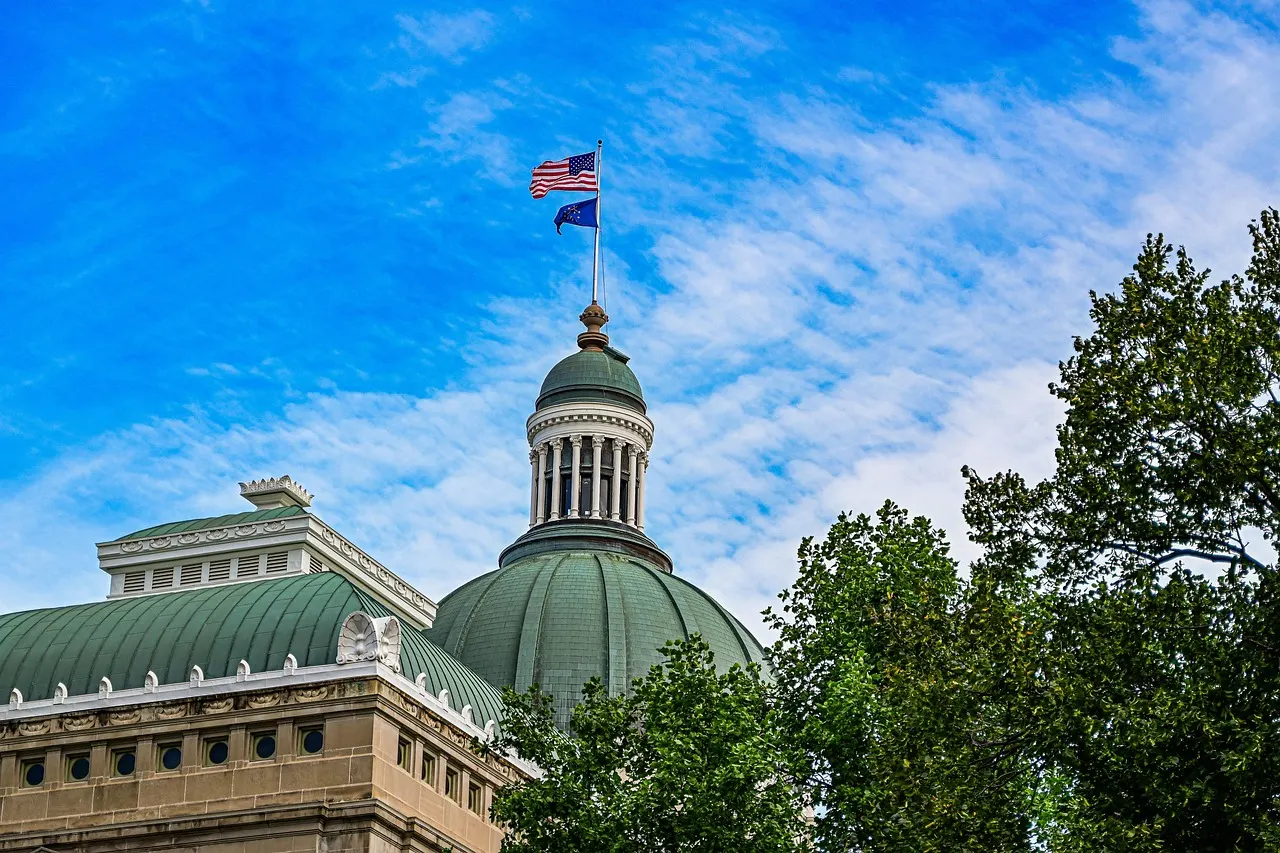
Signed into law on April 28, 2026, after a 132-to-1 vote in the state House, Minnesota's anti-nudification bill is the most comprehensive state-level attempt to curb the proliferation of non-consensual synthetic sexual imagery. Unlike prior laws that focused primarily on the distribution of images, the Minnesota statute targets the underlying tools.
Specifically, the law prohibits any person who owns or controls a website, application, or software program from making that technology available to users for the purpose of 'nudifying' an image without consent. The legislation exposes operators to civil penalties of up to $500,000 per violation. It provides a path to justice for victims, allowing them to pursue civil action against both the creators of the illicit images and the developers who provided the tools to make them.
The urgency behind the legislation is backed by grim data. In 2025, Congress passed the Take It Down Act, criminalizing the publication of non-consensual intimate imagery, including deepfakes. But states have struggled to keep pace with the technology itself. According to data cited by Enough Abuse, preliminary figures from June 2025 showed 440,419 new reports involving AI-generated child sexual abuse material—a massive spike from 6,835 during the same period in 2024. Legislators in Minnesota argued that targeting the apps and platforms facilitating this creation was the only way to slow the tide.
xAI's First Amendment Argument
In its complaint filed against Minnesota Attorney General Keith Ellison, xAI alleges that the state's new statute 'imposes an overbroad, content-based ban on free speech and the tools of visual expression.' The company, which developed the Grok chatbot, argues that creating images and videos using its platform is protected First Amendment activity.
xAI's legal strategy relies on several specific claims regarding the law's language and scope:
- The statute's definition of 'intimate parts' is unconstitutionally vague and could potentially penalize harmless or non-explicit outputs.
- The law makes AI providers strictly liable, regardless of whether they implement guardrails or explicitly prohibit users from using their tools for nudification.
- By targeting the tools of visual expression rather than specific malicious acts, the law functions as a prior restraint on speech.
The core argument asserts that the government cannot ban a technology outright simply because it may be used for illicit purposes. This mirrors the legal framework that protected early internet platforms: technology companies historically argue they are neutral conduits of user behavior, not publishers of user content.
The Counterargument: Data Practices vs. Free Speech
Minnesota lawmakers and Attorney General Keith Ellison have forcefully rejected xAI's characterization of the law. Ellison's office successfully argued in district court that xAI waited too long to file its motion—nearly three months after the law was signed and only three days before its effective date—undermining claims of immediate, irreparable harm.
On the substantive constitutional questions, Minnesota lawmakers defend the law by framing it as a regulation of data practices rather than a censorship of speech. They argue that creating non-consensual, unauthorized deepfakes of sexually explicit content is conduct, not protected expression. State representatives have emphasized that nudification technology has 'empowered and enabled pedophiles and sexual predators around the globe' and caused severe psychological harm to minors and adults alike.
The state's defense asserts that companies designing tools with the capacity to generate non-consensual sexual imagery bear responsibility for the outputs they enable. Minnesota contends that the $500,000 penalty is necessary to force compliance, ensuring that developers build effective guardrails rather than turning a blind eye to user behavior.
What the Ruling Means for the AI Industry

Judge Frank's denial of the temporary restraining order allows the law to take effect, but it is not a final ruling on the merits of xAI's constitutional challenge. Briefings are now scheduled on xAI's motion for a preliminary injunction, setting up a protracted legal battle in federal court that could take months or years to resolve. Ultimately, the case could be appealed all the way to the U.S. Supreme Court.
This lawsuit is being closely watched by tech developers, civil liberties groups, and state legislatures across the country. As of July 23, 2026, Minnesota was already one of 33 states that had enacted laws related to deepfakes used in political communications. But laws targeting the generative technology itself are newer and largely untested in federal courts.
If xAI succeeds in overturning the Minnesota law, it could invalidate similar legislative models being considered in other states, effectively preventing local governments from banning the tools that generate malicious deepfakes. If Minnesota prevails, it will embolden other states to pass strict liability laws targeting AI developers, fundamentally changing the regulatory environment for companies like OpenAI, Google, Anthropic, and xAI.
The case also highlights a growing tension between state-level data privacy regulations and federal First Amendment jurisprudence. Tech companies have historically relied on the First Amendment to strike down state laws regulating video games, social media algorithms, and online content moderation. xAI is attempting to extend that doctrine to generative AI platforms. Minnesota is betting that courts will draw a line between abstract tools of expression and the direct facilitation of non-consensual sexual exploitation.
How to Protect Yourself from Deepfakes
While the legal system debates the limits of constitutional protection for synthetic media, the technology continues to evolve rapidly. Individuals must take practical steps to protect themselves from becoming victims of deepfake abuse:
- Monitor your digital footprint: Limit the availability of high-resolution images of yourself on public platforms. Deepfake algorithms require source material to function.
- Understand takedown options: Federal law, specifically the Take It Down Act passed in 2025, criminalizes the non-consensual publication of intimate images, including deepfakes. Familiarize yourself with the reporting mechanisms of major platforms.
- Know your state laws: While Minnesota's law is the strictest, many states have laws against non-consensual intimate imagery. Document everything and contact law enforcement if you are targeted.
The outcome of xAI v. Ellison will determine whether the tools of creation are shielded from regulation, or whether states have the authority to ban the technologies that facilitate abuse. For now, Minnesota's law stands as the strictest prohibition on AI nudification in the United States, and the legal battle has only just begun.
The article shows the pattern. The app trains the response.
Continue in Tikva to turn the insight into a repeated response.
Open TikvaSources and educational notice
This article is educational. It does not provide a medical diagnosis or replace guidance from a qualified health, legal, tax, investment, or financial professional. Decisions about your health or finances should consider your individual circumstances.
- CNBC — Details xAI's lawsuit arguments against the Minnesota nudification ban
- FOX 9 — Reports on the federal judge denying xAI's temporary restraining order
- MultiState — Outlines the effective date and $500,000 penalties in the Minnesota law
- NBC News — Provides timeline context on the July 29 filing and August 1 effective date
- Enough Abuse — Cites 2025 data on the spike in AI-generated abuse material reports
FAQ
What is AI 'nudification' technology?
AI 'nudification' technology refers to apps, websites, or software programs that use generative artificial intelligence to alter an existing image of a person and make them appear nude. These tools are often used to create non-consensual explicit imagery.
Does Minnesota's law target the creators or the users of deepfakes?
Minnesota's law is notable because it targets both. It bans the use, advertisement, and dissemination of the technology itself, making developers strictly liable with penalties up to $500,000 per violation, while also providing victims a path to pursue civil action.
Why did xAI file a lawsuit against Minnesota?
xAI filed the lawsuit arguing that the Minnesota statute violates the First Amendment by imposing an 'overbroad, content-based ban on free speech.' The company claims that creating images using its platform is protected expression and that the law's definitions are unconstitutionally vague.
Will the Minnesota ban remain in effect during the lawsuit?
Yes. A federal judge denied xAI's request for a temporary restraining order on July 31, 2026. The law took effect on August 1 as planned. However, the court will continue to hear briefings on xAI's motion for a preliminary injunction as the underlying lawsuit proceeds.