Why most people quit
The pattern is well-known: full excitement the first week, heavy training, extreme muscle soreness, shortness of breath, embarrassment for not knowing how to do the exercises. By the second week, the soreness has not left. By the third week, one missed day becomes an excuse not to go. After two weeks away, the guilt is so heavy that quitting feels easier. This pattern is not personal failure. It is the result of starting with a plan made for someone who has been training for years, not for someone just beginning.
- A beginner's biggest mistake is trying to do the workout of someone who already trains. The body needs weeks to adapt.
- Extreme muscle soreness in the first week is not a "gain" -- it is a barrier to coming back the next day.
- Embarrassment about not knowing how to do an exercise correctly is one of the biggest causes of dropout.
- What separates those who continue from those who quit is not strength -- it is consistency in the first 4 weeks.
Progressive overload for behavior, not just muscle
In traditional strength training, progressive overload means increasing weight as the muscle adapts. This works for muscle, but ignores behavior. A beginner needs behavioral progressive overload: start with few exercises, viable frequency (2-3x per week), light loads until mastering the movement and only then increase intensity. Tikva applies this principle: each workout is designed to be viable for someone just starting, with progression that respects both muscle and motivation.
- Weeks 1-2: focus on showing up and learning the movement, not on lifting weight.
- Weeks 3-4: increase reps before increasing load.
- Month 2: introduce real load progression, but gradually.
- What matters in the first month is not the weight on the bar -- it is how many times you showed up.
How Tikva helps you build the habit
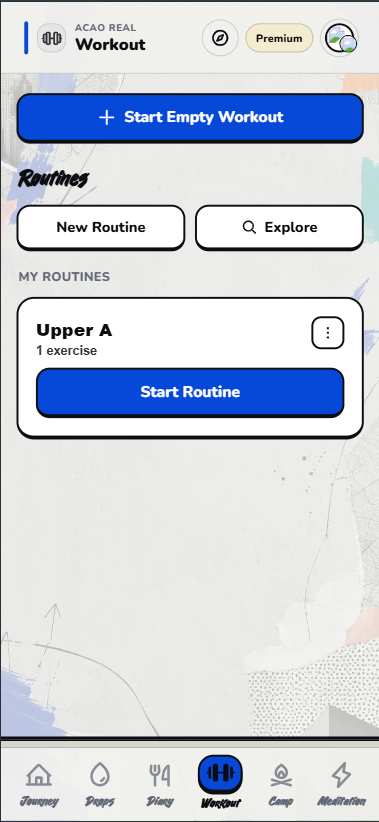
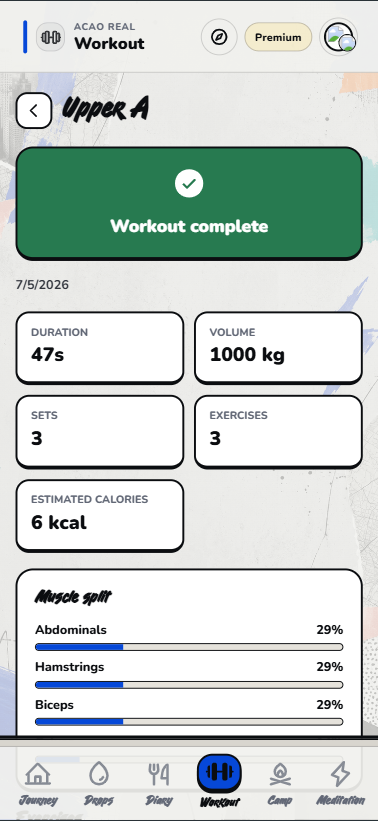
Tikva approaches training through three fronts. First, ready-made beginner routines: complete workouts with exercises, sets and suggested loads, no planning required. Second, tracking: you log sets, reps and loads, and the app shows your progress over time -- nothing is more motivating than seeing the numbers go up. Third, the behavioral approach: Tikva understands that missed days happen and does not punish you for them. The lessons and tools in the training Journey help you handle low-motivation days without guilt.
- 1 free training routine on the free plan -- start without commitment.
- Exercises with clear instructions for beginners.
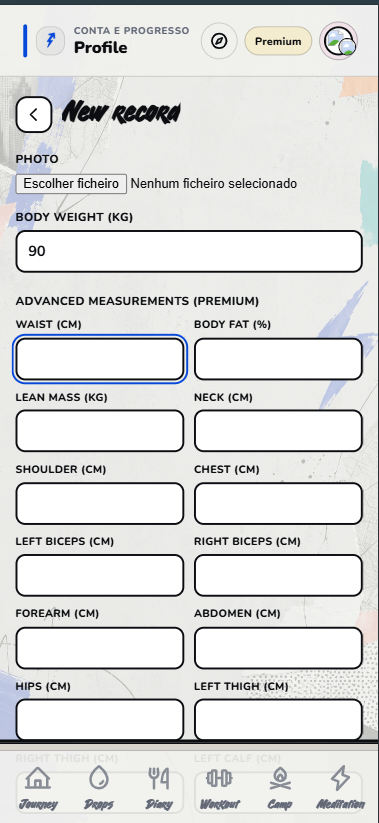
- Track sets, loads and measurements to follow your evolution.
- Complete training programs on Premium with automatic progression.
What to expect in the first 30 days
In the first month, your goal is not visible muscle gain. It is building the habit of showing up. In the first few days, you will feel muscle soreness (normal) and may feel clumsy with movements (also normal). The important things: (1) do not train to total failure -- stop while you still have energy for the next workout; (2) focus on execution, not on weight; (3) celebrate each completed workout, not the aesthetic result. By the end of the first month, you will feel the movement is more natural and "going to train" is becoming part of your routine. And that is the real gain.
- Week 1: 2 workouts. Focus on learning movements. Light load.
- Week 2: 2-3 workouts. Movements feel more natural. Increase reps if easy.
- Week 3: 3 workouts. Introduce moderate load on exercises you already master.
- Week 4: 3 workouts. Evaluate progress and prepare for the next month.
Strength training and mental health
Training strength does not just change your body. It changes your mind. There is a strong correlation between regular training and reduced anxiety, improved mood and increased self-efficacy (the feeling of "I can do it"). For many people, training becomes the anchor of their day -- the moment they do something intentionally for themselves. Tikva integrates training with other areas of your life: the same consistency you build at the gym transfers to your finances, your eating and your overall discipline.