Key takeaways
- The CME FedWatch snapshot of July 18, 2026 puts roughly an 85% probability on a hold at 3.50% to 3.75% for the July 29 meeting, about 13% on a cut, and roughly 2% on a hike — a cut is a minority outcome, not the base case.
- The Fed has already cut 175 basis points from the 5.25% to 5.50% peak of July 2023 (a 22-year high); top HYSAs have repriced from about 5% down to a 4.0% to 4.5% cluster.
- The FDIC’s June 15, 2026 national rate for savings is 0.38% — a deposit-weighted simple average — so the roughly 10x gap to a 4.15% top online account is the market, not an error.
- CDs held to maturity do not reprice down; a one-, two-, three-, and five-year ladder converts floating, falling cash into contracted yield at roughly 4%.
- A 0.90% fixed-rate I-bond (4.26% composite through Oct 31, 2026; $10,000 annual cap) is the only permanent real-yield floor the Treasury offers, while Treasuries beat top CDs on an after-tax basis in high-tax states.
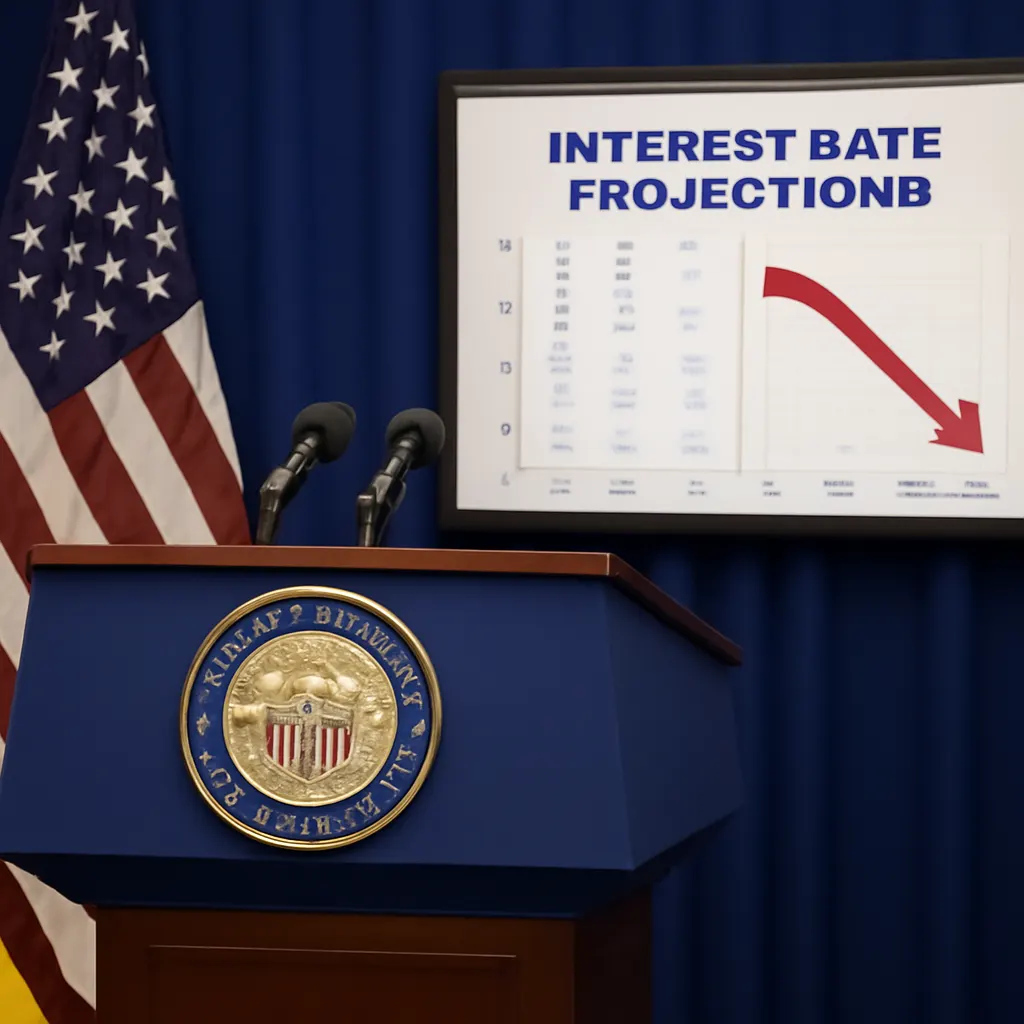
When the Federal Open Market Committee wraps its two-day meeting on July 29, the bond market is not bracing for a cut. According to the CME FedWatch snapshot from July 18, 2026, traders assign roughly an 85% probability to the committee leaving the federal funds rate exactly where it is, about 13% to a quarter-point cut, and around 2% to a hike. For anyone holding cash, that mostly-hold headline obscures the real story: the era of 5% high-yield savings is already over, and the open question is how much longer 4% lasts.
The Fed has already done the heavy lifting on the way down. Between late 2024 and the end of 2025, it lowered the target range from a 22-year high of 5.25% to 5.50% — set in July 2023 — to the current 3.50% to 3.75%, a cumulative 175 basis points of easing. Cash yields followed the policy rate down. The top high-yield savings accounts that briefly advertised 5% in 2023 and early 2024 now cluster between 4.0% and 4.5%. Whether the committee cuts next week, holds, or eventually reverses course, the clearest signal from its own projections is that the long-run neutral rate sits near 3% — which means the 4% still available today is, in all likelihood, a number you will remember fondly in a couple of years.
Here is what the July meeting actually changes, what it does not, and exactly where to move cash before the window narrows.
What July is actually pricing
The FedWatch odds tell you the base case before you read a single pundit. As of the July 18 snapshot, the implied probability of a hold at 3.50% to 3.75% was about 85%; a 25-basis-point cut to 3.25% to 3.50% sat near 13%; a hike registered around 2%. Those numbers move daily — earlier in July, CNBC reported that hike odds had briefly spiked near 47% before fading — but the mid-month consensus is clearly “no move.”
That consensus lines up with the committee’s own posture. At the June 17 to 18 meeting — Kevin Warsh’s first as chair — the FOMC voted unanimously to hold and left the interest rate on reserve balances at 3.65%. The updated Summary of Economic Projections leaned hawkish: of 18 officials with published dots, eight expected no change in 2026, nine saw at least one hike, and only one wanted a cut. That is a sharp pivot from March, when the median dot still implied one cut in 2026 and two in 2027.
Read that carefully. A July cut is a live but minority outcome. The base case is a hold, and the internal bias has shifted toward patience, not easing. Anyone building a plan that assumes the Fed cuts next week is building it on a fiction.
How cash reprices — and why 5% is already gone
High-yield savings and money market rates are floating instruments: they track the federal funds rate with a lag of days to weeks. As the Fed trimmed 175 basis points off its target over 2024 to 2025, online HYSAs repriced from roughly 5% down to the 4% range where they sit today. Curinos, the deposit-rate data firm, puts the average online savings yield near 4% in mid-2026, against roughly 0.45% at traditional brick-and-mortar banks.
The mechanics cut both ways. If the Fed cuts on July 29, expect the headline APY on your HYSA and your money market fund to drift lower within a week or two. If it holds — the likely outcome — those rates sit still but do not recover what they have already lost. Either way, the only cash that is immune is yield you have already contracted: a CD you own keeps paying its stated rate to maturity regardless of what the committee does.
That distinction — floating cash that reprices down versus locked cash that does not — is the entire ballgame for the next 12 months.
The FDIC numbers, without the spin
Deposit-rate comparisons get garbled fast, so here are the verified figures. As of the FDIC’s June 15, 2026 release, the national rate for savings was 0.38% and for money market accounts 0.61%. The widely cited 1.65% figure is the national average on a 12-month CD. These are simple, deposit-weighted averages across every FDIC-insured institution — which means they are dragged to the floor by the thousands of big-bank accounts still paying roughly nothing.
The FDIC also publishes a “rate cap,” but it is widely misunderstood. The cap is the higher of the national rate plus 75 basis points or 1.4 times the national rate, and it applies only to banks that are less than well capitalized. It is not a ceiling on what a healthy bank can pay you. So the gap between a 0.38% national savings average and a 4.15% top online account is not an error and not a paradox — it is the difference between the deposit most Americans actually hold and the deposit the market is offering. If your cash is still earning under 1%, the highest-yield move in personal finance is a ten-minute transfer.
Lock the floor: CDs and the ladder
The top of the CD market is still above 4%. As of mid-July, Bankrate lists Popular Direct at 4.17% APY on a 12-month CD (with a $10,000 minimum), Limelight Bank at 4.15%, and Newtek Bank at 4.30% on a 13-month term; Forbes pegs the top nationally available one-year CD near 4.84%. National averages sit near 1.65%, which is exactly why shopping matters.
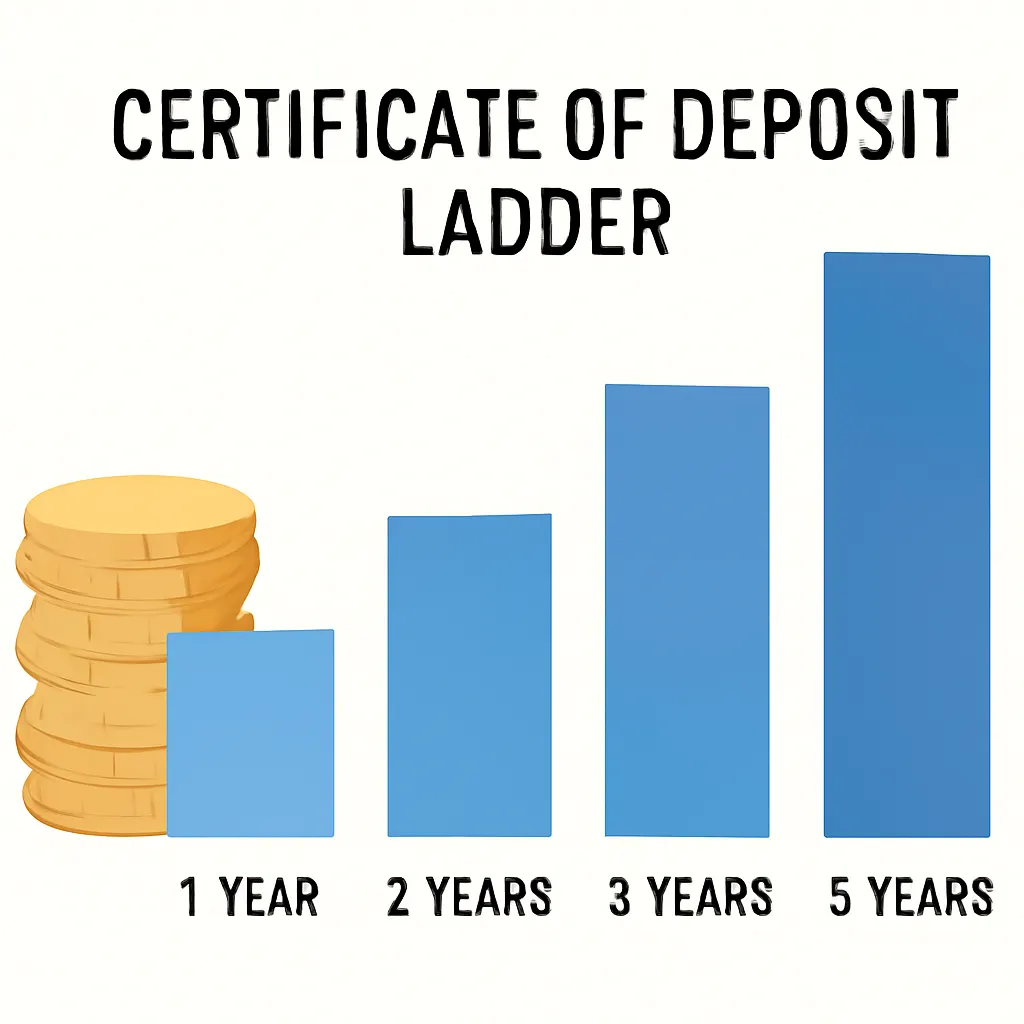
A CD converts repricing risk into someone else’s problem. The rate you sign is the rate you keep to maturity, even if the Fed cuts three more times. For cash you will not touch for one to five years, build a ladder. A $40,000 reserve, for example, splits into four $10,000 rungs maturing in one, two, three, and five years; as each rung comes due, you reinvest at whatever the prevailing rate is. That blends today’s roughly 4% with the option to roll forward if rates surprise to the upside, and it staggers your liquidity so no single year locks you out of all your cash. You give up some access; you buy certainty at a yield the market is signaling will not be here indefinitely.
Treasuries: the tax angle that quietly beats CDs
Short-term Treasuries are yielding about the same as top CDs, with a tax advantage most people ignore. In mid-July 2026 the 3-month T-bill was near 3.70%, the 6-month near 3.94%, and the 1-year around 3.85% to 4.00%. Treasury interest is exempt from state and local taxes. In a high-tax state — California, New York, New Jersey — a lower-headline T-bill routinely beats a flashier CD on an after-tax basis, because CD interest is fully taxable at every level.
Do the math for a California household in the 37% federal bracket, facing California’s 13.3% top state rate. A 3.94% six-month T-bill, taxed only federally, keeps about 2.48%. A 4.20% CD, taxed at roughly 50.3% combined, nets closer to 2.09%. The lower headline wins. You can buy bills at TreasuryDirect.gov in $100 increments or through any brokerage, where they are also easy to sell early if you need liquidity. The deepest, most liquid market on the planet is a bonus.
I-bonds: an inflation floor that compounds
Series I savings bonds are the one place the U.S. Treasury hands you a permanent real-yield floor. Through October 31, 2026, new I-bonds pay a 4.26% composite rate built on a 0.90% fixed rate. The fixed component stays with the bond for its full 30-year life; the inflation component resets every six months. With CPI running warm, the November 1 reset is projected near 4.42%.
The catch is the straitjacket. You are capped at $10,000 per person per year on TreasuryDirect (with the option to direct up to $5,000 of a federal tax refund into paper I-bonds), you cannot redeem for the first 12 months, and you forfeit three months of interest if you cash out in years one through five. So treat the I-bond as a one-to-five-year inflation sleeve, not transactional cash. For a household with two adults, that is $20,000 of capital pinned to a 0.90% real yield for up to three decades — the kind of floor no CD or HYSA can offer.

What to actually do this week
The decision that mattered for your cash already happened — those 175 basis points of cuts in 2024 to 2025 are baked into today’s roughly 4% yields, and the structural next move is toward 3%. Treat July 29 as a deadline, not a starting gun.
- Move idle cash out of any sub-1% legacy account and into a roughly 4% online HYSA. This is the single highest-return, lowest-effort move available right now.
- Fund your 2026 I-bond allotment before October 31 if you want to lock the 0.90% fixed rate; the November reset may change it.
- Build a CD ladder with cash you will not need for one to five years. Lock 4% or better while the top of the market is still there.
- If you live in a high-tax state, tilt the longer rungs toward Treasuries to capture the state-tax exemption.
- Keep a genuine emergency fund in the liquid HYSA. Do not lock everything — the ladder is for money you can commit.
The July meeting will almost certainly produce a headline that reads “Fed holds steady.” That is not permission to wait. The window on 4% cash is open now, and the entire weight of the Fed’s own projections says it is closing.
The article shows the pattern. The app trains the response.
Continue in Tikva to turn the insight into a repeated response.
Open TikvaSources and educational notice
This article is educational. It does not provide a medical diagnosis or replace guidance from a qualified health, legal, tax, investment, or financial professional. Decisions about your health or finances should consider your individual circumstances.
- Federal Reserve — FOMC statement, monetary policy report, and current federal funds target range of 3.50% to 3.75%
- CME Group FedWatch Tool — July 29, 2026 rate-change probabilities (85% hold / 13% cut / 2% hike, July 18 snapshot)
- FDIC National Rates and Rate Caps — June 2026 national averages (savings 0.38%, money market 0.61%) and the rate-cap methodology
- U.S. Treasury Daily Treasury Bill Rates — 3-month, 6-month, and 1-year bill yields for July 2026
- TreasuryDirect — Series I bond composite and fixed rates (4.26% composite, 0.90% fixed through Oct 31, 2026)
- CNBC — June 2026 FOMC decision, dot-plot split, and 2026 rate-path outlook
FAQ
Will my high-yield savings rate drop if the Fed cuts?
Yes. HYSAs and money market funds are floating-rate and typically reprice within days to a couple of weeks of any Fed move. As of mid-2026 the top accounts cluster around 4.0% to 4.5%, already down from the roughly 5% peak. Money locked in a CD or Treasury is the exception: it keeps its stated yield to maturity regardless of what the Fed does.
If the Fed mostly holds on July 29, do I still need to act?
Yes. A hold does not restore the yield cash has already lost, and the Fed’s own projections put the long-run rate near 3%. Even without a July cut, the structural direction is down — so locking roughly 4% in a CD, Treasury, or I-bond now protects against the next leg lower.
Are Treasuries or CDs better right now?
Headline CD rates are slightly higher (top 12-month CDs near 4.15% to 4.84%), but Treasury interest is exempt from state and local tax. In a high-tax state such as California or New York, a 3.94% six-month T-bill can beat a 4.20% CD after tax. Pick by your state bracket and your liquidity needs.
How much can I put into I-bonds?
Up to $10,000 per person per calendar year on TreasuryDirect, with the option to direct up to $5,000 of a federal tax refund into paper I-bonds. You cannot redeem for the first 12 months and you forfeit three months of interest if you cash out in years one through five, so treat the allocation as medium-term savings, not transactional cash.