Key takeaways
- A 30–40 g casein-style protein snack before bed is the evidence-backed answer to late-night hunger in a deficit — and it is not stored as fat because of the clock.
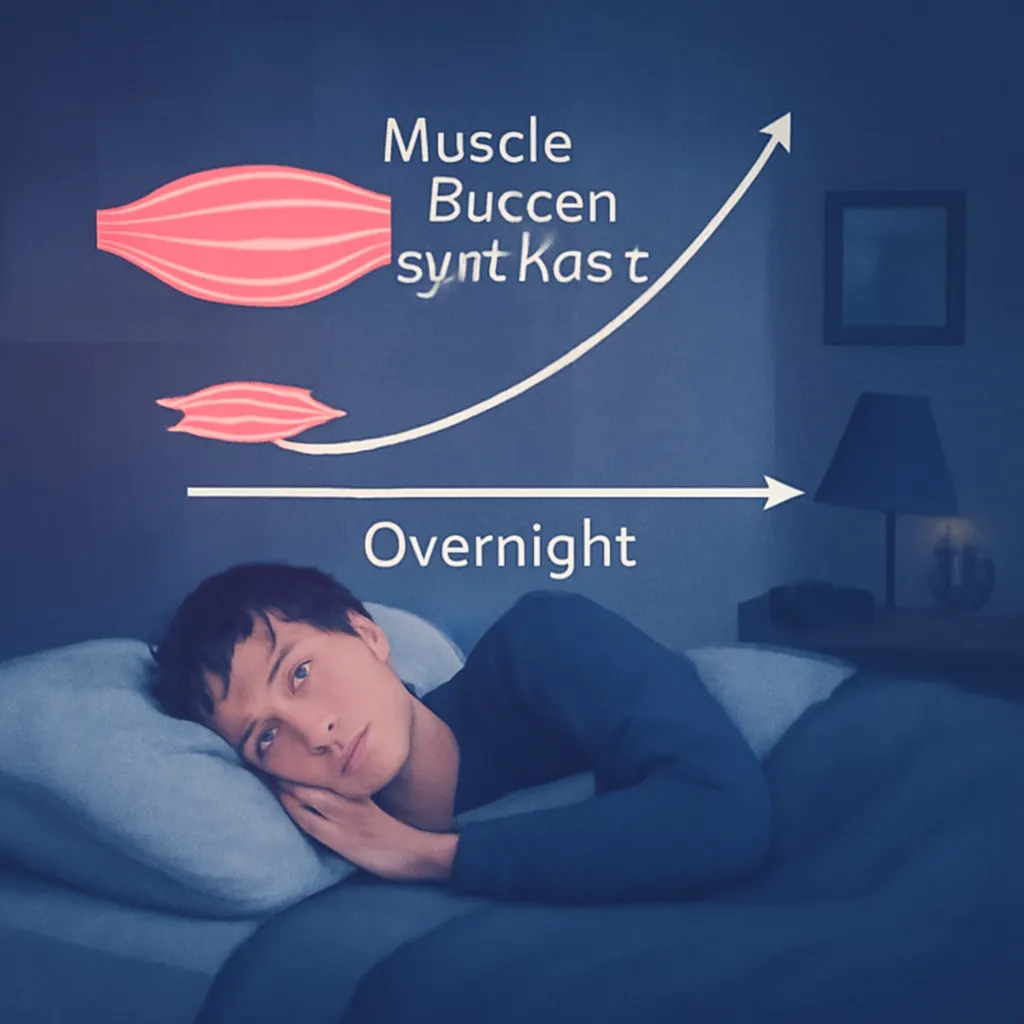
- In a 2017 Journal of Nutrition RCT, 40 g of casein before sleep significantly raised overnight muscle protein synthesis in older men; 20 g did not.
- A 2016 trial found 60 g of pre-sleep protein did not blunt the next morning's muscle response to a 20 g breakfast — overnight and morning feeds are additive.
- A 2023 Sports Medicine trial showed 45 g of whey and casein raised overnight muscle protein synthesis equally, so Greek yogurt, cottage cheese, and milk are casein-rich whole-food options.
- Budget the ~200–320 kcal bedtime portion inside your daily deficit; realistic fat loss runs 0.5–1% of body weight per week.
Protein before bed weight loss hinges on one question: does the clock turn a late snack into fat? It doesn't. A 30–40 g slow-digesting (casein-style) protein snack before sleep feeds overnight muscle repair and blunts next-day hunger, and it is not stored as fat simply because it is late. Fat loss is set by your total daily energy deficit — not by when your last bite lands.
This matters because the most popular diet rule of the last decade — nothing after 8 p.m. — attacks the wrong variable. It treats the wall clock as a metabolic switch, and it isn't one. When you are in a fat-loss deficit and training to keep muscle, the hours of sleep are a repair shift, and your body runs that shift on whatever you left it. Cut food after dinner and you don't turn off fat storage; you lengthen the overnight fast, stack up next-day hunger, and hand your deficit a muscle-loss problem.
The 'Nothing After 8 p.m.' Rule Is Slowing Fat Loss, Not Speeding It Up
The no-food-after-8 rule was never built on evidence that the hour itself stores fat. It was a blunt calorie cap for people who did most of their overeating in the evening — and for that person it can work. If your real problem is a nightly 700-kcal bowl of ice cream, the fix is the surplus you're carrying, not the time stamp on your dinner.
Applied to a structured deficit, though, an early cutoff creates two costs. First, it widens the overnight fast to 12–14 hours — exactly when muscle protein breakdown rises and overnight whole-body protein balance tips negative. Research from the Maastricht group shows that protein ingested before sleep can shift that balance positive, so your body ends the night in repair rather than net breakdown. Second, a long unbroken fast front-loads hunger into the next morning and evening, which is how disciplined days end in 11 p.m. pantry raids.
What you eat before bed also scales the repair work done while you sleep. In a 2016 Journal of Nutrition trial, physically active older men who took 40 g of casein before bed raised overnight muscle protein synthesis by roughly 27–31% compared with the same protein without evening activity. Evening movement plus pre-sleep protein amplifies the overnight response. Skip the snack and you forfeit that window for nothing.

Protein Before Bed Weight Loss: What the Evidence Shows
The clean answer to does eating at night make you gain weight is: not by itself. In a 2015 review in Nutrients, researchers concluded that nighttime consumption of small, nutrient-dense foods — roughly 150 kcal — does not appear harmful and may support muscle protein synthesis. The harms historically tied to night eating come from large mixed meals and chronic calorie excess, not from the hour on the clock.
Protein is also the least fattening thing you can eat late, for three measurable reasons. It has the highest thermic effect of the macronutrients — roughly 20–30% of its calories are spent digesting it. It is the most satiating macronutrient, which matters when appetite peaks after dinner in a deficit. And in a calorie deficit it protects lean mass. A 30–40 g bedtime portion lands around 200–320 kcal depending on the source. That only adds body fat if your whole day already ends in surplus. In a proper deficit, it is not extra food; it is a scheduled part of the protein you were going to eat anyway.
None of this is permission for a second dinner. The evidence against night eating is real where the night eating is big, fast, and full of refined carbs and fat. A protein-forward bedtime snack is not that. The difference between the two is calories and composition — not the position of the hands on the clock.
How Much Protein Should You Eat Before Bed? The 30–40 g Casein Rule
The dose has a direct evidence trail. In a 2017 randomized controlled trial in the Journal of Nutrition, 48 older men ingested 40 g casein, 20 g casein, 20 g casein plus extra leucine, or a placebo before sleep. Overnight muscle protein synthesis was significantly higher with 40 g than with placebo — and 20 g, even leucine-fortified, did not do it. That trial is why casein protein before bed at roughly 40 g became the benchmark in this literature.
The practical range for most adults is 30–40 g: enough to keep amino acids in circulation across the roughly 7–8 hours of sleep without turning a snack into a meal. Older adults and heavier lifters can sit at the top of the range; lighter and less active people do fine at the bottom. If you are already eating roughly 1.6–2.2 g of protein per kg of body weight across the day — the consensus target in a deficit — the bedtime portion relocates some of that protein; it does not add to it.
The old fear that a big late dose spoils tomorrow's muscle response is retired. In a 2016 randomized trial, 16 young men took 60 g of protein before sleep — 50% above even this rule — and the next morning their muscles still responded fully to a normal 20 g breakfast dose. No negative feedback loop. The overnight feed and the morning feed are additive, not competitive.
Best Protein Snack Before Bed: What to Eat — and Whether It Slows Your Metabolism
The best choice is the source you will actually eat that fits your calorie budget. The classic option is casein, the slow-digesting milk protein that clots in the stomach and releases amino acids across several hours — which is why the trials above used it. Greek yogurt and cottage cheese are casein-rich whole foods; a glass of milk is the budget version; casein powder is the concentrated one.
But the idea that you need casein powder or nothing is outdated. In a 2023 randomized trial in Sports Medicine, 36 young men took 45 g of whey, 45 g of casein, or a placebo 30 minutes before sleep after evening exercise. Both proteins raised overnight myofibrillar and mitochondrial protein synthesis versus placebo — and whey and casein were statistically identical. The essential ingredient is protein before sleep, not a specific powder.
On the metabolism question: a bedtime protein snack does not slow your metabolic rate. Basal metabolic rate is set by body size, muscle mass, age, and thyroid function — not by whether you ate 90 minutes before lights-out. What reliably stalls fat loss is chronic sleep deprivation, which raises hunger signals and makes a deficit harder to hold, and a day that quietly ends in surplus. A protein snack that helps you sleep and keeps you satisfied is the rare evening habit that supports both directions at once.
The 7-Night Bedtime Protein Protocol
Efficient fat loss is engineered across the day, not rescued by a single snack. Here is the sequence that makes the bedtime portion work for you:
- Set your target. In a deficit, aim for roughly 1.6–2.2 g of protein per kg of body weight per day, and reserve 30–40 g of it for the last hour before bed.
- Choose the vehicle. A 200–250 g tub of Greek yogurt delivers roughly 20–25 g; cottage cheese is comparable; yogurt plus a large glass of milk, or a casein shake, gets you to the 30–40 g zone. Keep added sugar near zero.
- Budget, don't stack. Subtract the snack from the day's protein and calories so the deficit stays intact. Adding 300 kcal nightly on top of maintenance is how the healthy snack becomes the stall.
- Expect the correct speed. Realistic fat loss runs about 0.5–1% of body weight per week. If the scale is flat for two or more weeks, trim a few hundred daily calories or add daily steps — do not blame or delete the bedtime protein.
- Protect the night. Sleep 7–9 hours and finish the snack 30–60 minutes before bed rather than at the pillow, so digestion doesn't disturb sleep quality.
If you have a medical condition, are pregnant, or take medication — including GLP-1 drugs — check with a clinician before changing how much or when you eat.
That is the honest math of protein before bed weight loss: the clock was never the enemy. The empty stomach was. Feed the overnight repair window, hold the daily deficit, and let the body do the rest.
The article shows the pattern. The app trains the response.
Continue in Tikva to turn the insight into a repeated response.
Open TikvaSources and educational notice
This article is educational. It does not provide a medical diagnosis or replace guidance from a qualified health, legal, tax, investment, or financial professional. Decisions about your health or finances should consider your individual circumstances.
- Kouw et al. 2017, Journal of Nutrition — 40 g pre-sleep casein raised overnight muscle protein synthesis vs placebo while 20 g did not
- Wall et al. 2016, American Journal of Physiology-Endocrinology and Metabolism — 60 g pre-sleep protein did not compromise the next morning's muscle protein synthetic response
- Trommelen et al. 2023, Sports Medicine — 45 g whey or casein before sleep raised overnight myofibrillar and mitochondrial protein synthesis vs placebo
- Holwerda et al. 2016, Journal of Nutrition — evening physical activity amplified the overnight muscle protein synthetic response to 40 g pre-sleep casein by 27–31%
- Kinsey & Ormsbee 2015, Nutrients — review finding small pre-sleep protein snacks are not harmful; night-eating harms are tied to large mixed meals and calorie excess
FAQ
Does eating protein before bed make you gain weight?
No, not on its own. Weight change is governed by total daily energy balance, not by eating near sleep. A 30–40 g protein snack lands around 200–320 kcal and is only fattening if your entire day ends in surplus. Reviews conclude that small, nutrient-dense pre-sleep snacks are not harmful and may support muscle.
Is eating before bed bad for weight loss?
Only when the snack is large and calorie-heavy. A 2015 Nutrients review linked the harms of night eating to big mixed meals and chronic excess, not to the hour itself. A casein-style protein snack before bed supports overnight muscle repair and can make a deficit easier to hold.
How much protein should I eat before bed to build muscle?
Aim for 30–40 g of slow-digesting protein. In a 2017 randomized trial, 40 g of casein before sleep significantly increased overnight muscle protein synthesis, while 20 g did not. Older adults and heavier lifters can use the top of the range, and the portion should sit inside your total daily protein target.
What is the best protein to eat before bed?
Casein-rich foods — Greek yogurt, cottage cheese, or milk — are the classic choice because they digest slowly across the night. A 2023 Sports Medicine trial found whey raised overnight muscle protein synthesis just as well as casein, so any convenient protein source that fits your calorie budget works.
Does eating late at night slow your metabolism?
No. Basal metabolic rate is set by body size, muscle mass, age, and thyroid function, not by when you eat. A bedtime protein snack does not slow resting metabolism. What reliably stalls fat loss is sleep deprivation and a day that ends in surplus — not the time of your last meal.