Key takeaways
- The 2026 ACSM position stand (137 systematic reviews, 30,000+ participants) found that performing exercises early in a session is one of the few prescription variables that consistently boosts strength gains.
- Train your two hardest compound lifts first at loads of at least 80 percent of one-rep max, two to three sets each, at least twice a week, through a full range of motion.
- Exercise order barely affects hypertrophy: growth requires roughly 10+ hard sets per muscle group per week, not a specific sequence.
- Isolation first caps your compounds — in a 2020 trial, bench-press-first lifters gained 10.6 percent pec mass versus 5.6 percent when triceps extensions came first.
- Warm-up sets do not count as working sets; rest two to four minutes between heavy compound sets and keep the same order for six to eight weeks.
Put your two hardest compound lifts at the very start of every session, before any isolation work. That free ordering rule is one of the few variables the American College of Sports Medicine's 2026 evidence review — 137 systematic reviews and more than 30,000 participants — found consistently boosts strength gains. Exercise order barely moves the needle for muscle growth, which changes how you build the rest of the workout.
So what order should you do exercises in? Not by convenience or equipment availability: hardest and most important movements first, while your nervous system is fresh, then smaller, lighter assistance work. Lifters who bury a priority lift at the end of a session train it tired, and the exercise they care about most is the one that improves slowest.
Most lifters get this backwards. They open with curls and leg extensions, then grind through squats and presses once fatigue has dulled their force output and their technique. The mistake costs nothing to fix. The new ACSM Position Stand, published in Medicine & Science in Sports & Exercise in April 2026, lists placing exercises at the beginning of a session among the handful of prescription variables with a consistent effect on strength — alongside loads of at least 80 percent of one-rep max, two to three sets per exercise, full range of motion, and at least two sessions a week.
What Order Should You Do Exercises In? Use This 5-Slot Template
The principle is simple: fatigue is cumulative, so the highest-quality work belongs earliest. Rank every exercise by difficulty — how heavy it is relative to your max, how much muscle it recruits, how technical it is — and train in roughly that order. A typical session runs down five slots.
- Priority movement patterns first. The squat, deadlift, hip hinge, or horizontal push and pull that you most want to improve.
- Their closest compound variations next. Overhead press, pull-up, split squat, Romanian deadlift — still heavy, still technique-dependent.
- Medium compound work. Dips and lunges you can push hard without demanding precise technique.
- Isolation exercises. Curls, lateral raises, leg extensions, calf raises — single-joint work that finishes muscles already partly fatigued.
- Core and prehab last. Planks, rotator-cuff work and balance drills that do not need a fresh nervous system.
The rule survives without a gym. Train at home with bands or bodyweight and the logic is identical: your hardest movement pattern — the squat or push-up variation closest to your limit — comes first, and the pump work comes last. The ACSM review found no consistent difference between free weights, machines, bands and bodyweight for strength or muscle gain. Structure, not equipment, is what you are fixing.
Should You Do Compound or Isolation Exercises First?
Yes — compound first, and the reason is not tradition. Multi-joint lifts such as the squat, deadlift, bench press and row need your freshest nervous system to move the heaviest loads with clean technique, and that freshness is exactly what strength gains are built from. The 2009 ACSM position stand made the same point: sequence large muscle groups before small ones and multi-joint before single-joint exercises to preserve exercise intensity.
Isolation first does not just waste that freshness; it actively caps your compound lifts. In a 2020 trial in the Journal of Strength and Conditioning Research, Brandão and colleagues compared bench press followed by triceps extensions against the reverse order over ten weeks. The bench-first group gained roughly 10.6 percent pectoralis cross-sectional area versus 5.6 percent in the triceps-first group. Pre-fatiguing the triceps with isolation work left less force for the press, so the chest received a weaker stimulus. That transfer applies whenever a small muscle works as a synergist in a bigger lift.
The one exception is the priority principle: if a lagging or injury-relevant muscle is your main goal, that work can reasonably open the session. The exercise you most want to improve should be the one you perform first. For most people, the priorities are the compound patterns — which is why the default answer stays the same.
Does Exercise Order Matter for Muscle Growth?
Barely — and this is the one case where sequencing does not matter much. The 2026 ACSM review found hypertrophy was not consistently affected by exercise order. A 2021 meta-analysis by Nunes and colleagues in the European Journal of Sport Science pooled the training studies and reached the same conclusion: exercises done first gained more strength, but muscle growth came out roughly equal whether compound or isolation exercises led the session.
Volume does the work for size. The ACSM review linked greater hypertrophy to at least ten hard sets per muscle group per week, with sets taken close to failure — within about two to three reps of it. Load mattered little across roughly 30 to 100 percent of one-rep max. A muscle trained second or fourth still grows, provided it receives its weekly volume.
Two nuances. First, a 2019 six-week trial by Avelar and colleagues found thigh thickness grew only in the group that started with multi-joint leg work — a 7.2 percent gain versus 3.9 percent when single-joint work came first — so muscles trained while you are freshest tend to get the better stimulus. Use order deliberately to prioritise a lagging body part. Second, pre-exhaustion does not work as a trick: deliberately tiring a muscle with isolation work before a compound does not produce superior growth, because it lowers the load you can handle on the main lift and cuts total tension.

How to Structure a Strength Workout: Sets, Reps, Rest and Frequency
Once order is set, the other variables follow the same logic. For strength, the ACSM review supports loads of at least 80 percent of one-rep max for two to three sets per exercise, at least twice a week, through a full range of motion. For muscle growth, target ten-plus weekly sets per muscle group across the week; frequency matters little once volume is matched, so two or three sessions a week both work.
Rest between sets: the 2026 review found rest interval length did not consistently change strength outcomes, so stop overthinking it. Practically, rest two to four minutes between heavy compound sets so your next set can hit its target weight and reps, and sixty to ninety seconds between isolation sets. Recovery is a scheduling question too: leave about 48 hours between sessions that hammer the same muscle groups.
How many exercises per muscle group? Work backwards from weekly sets. Two exercises of three hard sets, done twice a week, delivers 12 sets — above the 10-set threshold — so two to three exercises per muscle per session is enough for most lifters. Do warm-up sets count as working sets? No. Ramp up with two or three light sets to about 75 percent of your working weight; they prepare the movement without adding meaningful stimulus, so they do not count toward the two to three working sets the prescription calls for.
Training to failure is optional. The ACSM review found training to momentary muscle failure did not consistently improve strength or hypertrophy over stopping two to three reps short, while failure training adds fatigue and slows recovery. For most lifters, ending a set with two to three reps in reserve is the higher-yield choice.
If you are pregnant, managing a medical condition, or taking medication — including GLP-1s — check with your clinician before changing your training routine.
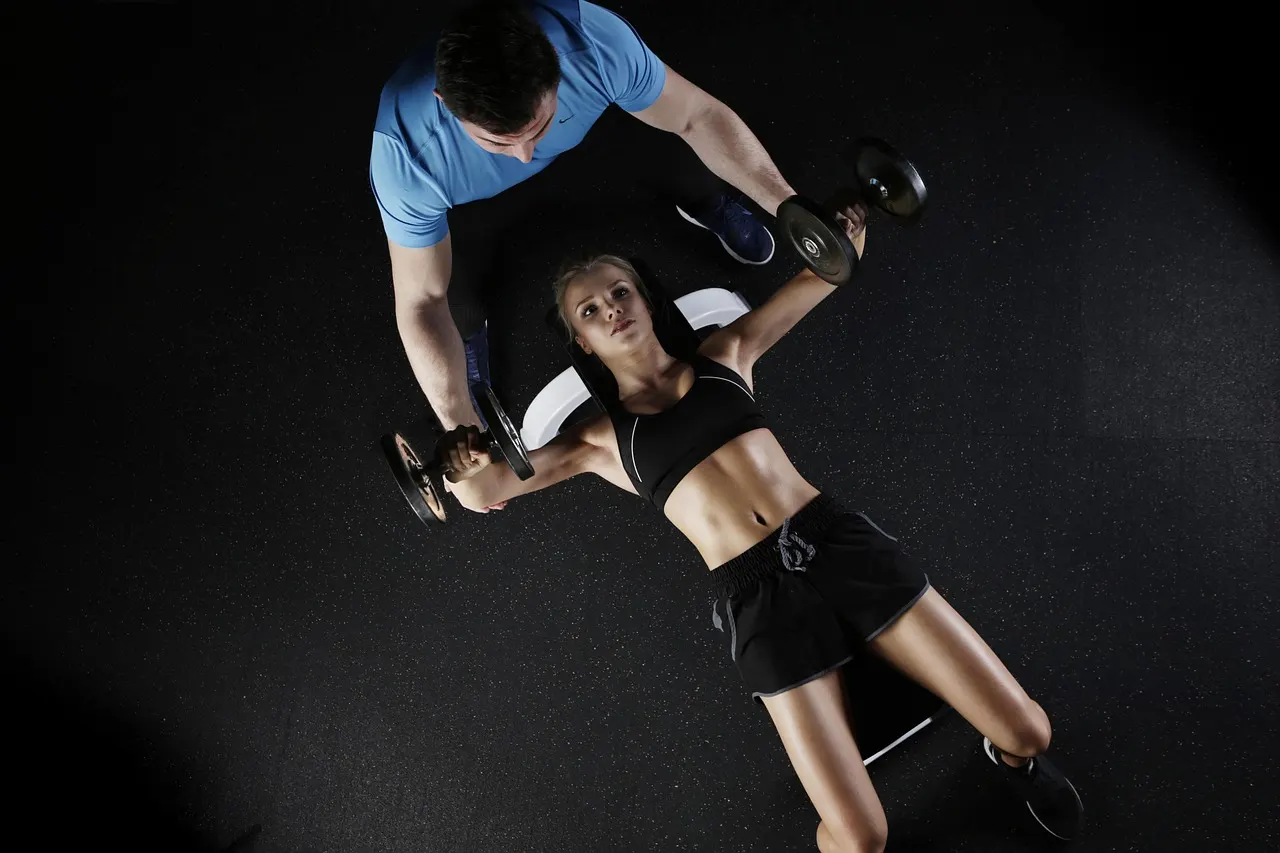
Common Ordering Mistakes That Stall Progress — and What to Do This Week
Most plateaus are not caused by the exercises you choose. They are caused by how you arrange and execute them. Four mistakes account for most stalled progress.
- Leaving the main lift until last, so your most important movement gets the most fatigued reps of the session.
- Chasing failure on every set and exercise, piling fatigue onto the accessories that matter least.
- Adding new exercises instead of adding load to main lifts — variety never replaces progressive overload.
- Reordering the whole session every week, so no arrangement ever gets enough weeks to show progress.
Fix it with one rule: keep the order identical for six to eight weeks and change only the numbers. This week, do exactly this.
- Write your next session as priority lifts first, then compound variations, then isolation and core.
- Choose two compound patterns and two to three exercises per muscle group, two to three sets each.
- Rest two to four minutes before every main-lift set and sixty to ninety seconds between isolation sets.
- Log the top-set weight and reps, and add roughly 2.5 to 5 percent when you hit your target reps with two to three in reserve.
- Repeat the same order next week. The exercise done first is the one that gets strongest — make it the one you care about.
The article shows the pattern. The app trains the response.
Continue in Tikva to turn the insight into a repeated response.
Open TikvaSources and educational notice
This article is educational. It does not provide a medical diagnosis or replace guidance from a qualified health, legal, tax, investment, or financial professional. Decisions about your health or finances should consider your individual circumstances.
- American College of Sports Medicine — the 2026 position stand: 137 reviews, 30,000+ participants, and the strength prescription (80%+ 1RM, 2-3 sets, priority lifts early)
- Conexiant — which prescription variables consistently enhanced strength (exercise order at session start) and which did not (failure, rest length, order for hypertrophy)
- Nunes et al., European Journal of Sport Science (2021) — meta-analysis showing exercise order favours strength in exercises performed first, with no significant effect on hypertrophy
- ACSM position stand, Progression Models in Resistance Training (2009) — classic sequencing guidance: large before small muscle groups, multi-joint before single-joint
- Examine.com — which exercise should be performed first, and why single-joint-first can impair multi-joint performance
- Physio-pedia — home-based and band training equivalence, and safety data from 38,000+ participants including 11,000+ older adults
FAQ
Does exercise order matter for muscle growth?
Mostly no. The 2026 ACSM evidence review found hypertrophy was not consistently affected by exercise order, and a 2021 meta-analysis by Nunes and colleagues agreed: muscles grew similarly whether compound or isolation work came first. What drives growth is enough hard weekly volume — 10+ sets per muscle group — taken close to failure.
Should you do compound or isolation exercises first?
Yes, compound first. Multi-joint lifts like squats, deadlifts and presses need the freshest nervous system for the heaviest loads and cleanest technique. Isolation first backfires: pre-fatiguing a small muscle, as curls do to the triceps before bench press, caps the load your compound can handle and weakens the overall stimulus.
Which exercises should you do first in a workout?
The two hardest, most important movements for your goal. For most lifters that means the squat, deadlift, hip hinge, or horizontal push and pull patterns, performed in the first part of the session. The 2026 ACSM review is explicit that placing priority exercises at the beginning of a session is one of the few variables that consistently improves strength.
Do warm-up sets count as working sets?
No. Warm-up sets prepare muscles and joints for heavy work but add almost nothing to the training stimulus, so they do not count toward your working sets. Keep them light and brief — a few ramp-up sets up to roughly 75 percent of your working weight — then save your effort for the sets that matter.
How many exercises should you do per muscle group?
Two to three exercises per muscle group per session is enough for most lifters. Work backwards from weekly volume: at 10+ sets per muscle group per week and two sessions a week, two exercises of three hard sets each hits the target. Add a third exercise only if you still have recovery capacity left.