Key takeaways
- In a 2026 British Journal of Nutrition crossover trial, the high-fiber diet produced 4.87 kg of weight lost versus 3.87 kg on high-protein (P = 0.002), while high-protein suppressed appetite significantly better (P = 0.003).
- The high-fiber arm (30+ g of fiber per day) increased bifidobacteria and the butyrate producers Faecalibacterium and Roseburia; the high-protein arm (15 g or less fiber) lost gut microbiome diversity.
- Daily targets that beat both extremes: 30–35 g of fiber (FDA Daily Value: 28 g) plus 1.2–1.6 g of protein per kg of body weight.
- Per-meal pairing rule: 25–40 g of protein with 8–10 g of fiber — roughly 3–4 g of protein per gram of fiber.
- More than 90% of women and 97% of men miss federal fiber targets, while 60% of Gen Z consumers say they want more fiber in their food.
The protein vs fiber for weight loss question has a definitive answer: it's a false choice. A 2026 randomized trial in the British Journal of Nutrition found a high-fiber diet produced 4.87 kg of weight lost versus 3.87 kg on high-protein, while protein curbed appetite significantly harder. The pairing rule that beats both extremes: roughly 30 g of fiber and 1.2–1.6 g of protein per kg of body weight daily, spread across every meal.
That claim isn't opinion; it's the pattern running through the newest head-to-head trial data. It matters because the internet spent the last two years turning this into a tribal war you're expected to pick a side in.
Why the Maxxing War Is Missing the Point
The past two years produced two consecutive food trends with opposite heroes. First came protein-maxxing: protein drinks, protein pasta, protein croissants — protein in everything. Then the pendulum swung. Datassential's January 2026 report “Fiber Is the New Protein” captured the flip, and the numbers back it up: 51% of consumers say they are increasing fiber, nearly matching the 52% still increasing protein, and 60% of Gen Z say they want high-fiber foods and drinks.
On social media, “fibermaxxing” turns every plate into a fiber-counting contest, and roughly 21% of Gen Z already knows the term. The name tells you the problem: maxxing means maximizing one input at the expense of everything else. The newest trial data shows why that's a mistake — each nutrient wins a job the other one can't do.
Protein vs. Fiber for Weight Loss: Which Wins?
The cleanest recent test of protein vs fiber for weight loss comes from the Rowett Institute at the University of Aberdeen, published in the British Journal of Nutrition. Nineteen adults with overweight or obesity ate two strictly controlled, calorie-restricted diets for 28 days each: one high-fiber (30 g or more of fiber per day, 15% of calories from protein) and one high-protein (30% of calories from protein, fiber capped at 15 g). All food was provided, so compliance wasn't a variable.
The results split cleanly down the middle:
- Weight: the high-fiber diet lost 4.87 kg versus 3.87 kg on high-protein (P = 0.002).
- Appetite: the high-protein diet suppressed hunger significantly better (P = 0.003).
- Gut: the high-fiber diet raised bifidobacteria and the butyrate producers Faecalibacterium and Roseburia, while the high-protein, low-fiber arm lost microbiome diversity.
- Metabolism: both diets lowered blood pressure, blood lipids and fasting glucose.
Does that make fiber the winner? Only if kilograms are your only metric. The fiber diet also cost more fat-free mass, and it controlled hunger less well — and appetite is the variable that predicts whether people stick with a diet long enough to keep the weight off.
Flip the comparison and the winner flips too. In a randomized trial published in the American Journal of Clinical Nutrition, 83 women at risk for metabolic syndrome lost more weight and more fat on a high-protein diet than on a high-fiber one over eight weeks (4.5 kg versus 3.3 kg). Same question, opposite outcome — because “better” depends entirely on which job you're asking the nutrient to do.
Two caveats keep the results honest. The Aberdeen trial was small (19 people, mostly men) and each arm lasted only 28 days. And both arms were calorie-restricted — the deficit itself drove much of the metabolic improvement, while the protein-fiber split shaped appetite and gut effects in distinct ways.
Should You Eat More Protein or More Fiber? Both — They Do Different Jobs
Stop asking which one is superior and ask what each one is for.
Protein's job is appetite and muscle. Protein is the most satiating macronutrient, and in a calorie deficit it protects lean mass while you lose fat. High-protein breakfasts specifically cut cravings and keep hunger quiet through the morning — which is exactly why the trial's high-protein arm won on satiety.
Fiber's job is gut health and a different kind of fullness. Fiber feeds the bacteria that make butyrate, the short-chain fatty acid that supports the gut lining and dampens inflammation. It also stimulates GLP-1 — the satiety hormone behind the “nature's Ozempic” nickname — and slows digestion so blood sugar stays steady.
Here's what each extreme costs you. In the trial, the high-protein arm ate 15 g or less of fiber per day, and its microbiome paid for it: beneficial butyrate-producers dropped, and the authors noted that very-low-carb, high-protein, low-fiber eating can dramatically reduce the protective short-chain fatty acids gut bacteria produce. Go hard on fiber alone and you get the mirror-image failure: better gut bacteria, but weaker appetite control and more lean mass lost.
How Much Protein and Fiber Should You Eat Per Day?
Concrete targets beat vibes. The numbers below are what mainstream authorities already agree on.
Fiber: the FDA's Daily Value is 28 g per day on a 2,000-calorie reference, and the Dietary Guidelines for Americans scale it at about 14 g per 1,000 calories — roughly 25–28 g for women and 31–34 g for men. Almost nobody gets there: more than 90% of women and 97% of men miss federal fiber targets. The trial's fiber arm (30 g a day) simply ate what the guidelines already recommend.
Protein: the RDA of 0.8 g per kg of body weight is the floor for preventing deficiency, not a weight-loss target. For losing weight while holding onto muscle, the widely cited range is 1.2–1.6 g per kg, with athletes often going to 1.6–2.2 g per kg. For a 75 kg adult, that works out to roughly 90–120 g of protein and 30–35 g of fiber per day. Both are reachable with food alone; neither requires a supplement.
What Is the Best Protein-to-Fiber Ratio in a Meal?
There is no published “ideal ratio” — treat anyone selling one as a marketer. What the evidence supports is a per-meal pairing target: 25–40 g of protein with 8–10 g of fiber at each main meal, which works out to roughly 3–4 g of protein for every gram of fiber.
The logic is simple. Appetite control is a meal-level effect: a bowl of plain oats digests fast and leaves you hungry by mid-morning, while the same calories with 25 g of protein keep you full until lunch. Gut benefits, by contrast, accumulate from consistent daily fiber. Pair both at every meal and you stack the two effects without chasing either fad.
A real day under the pairing rule:
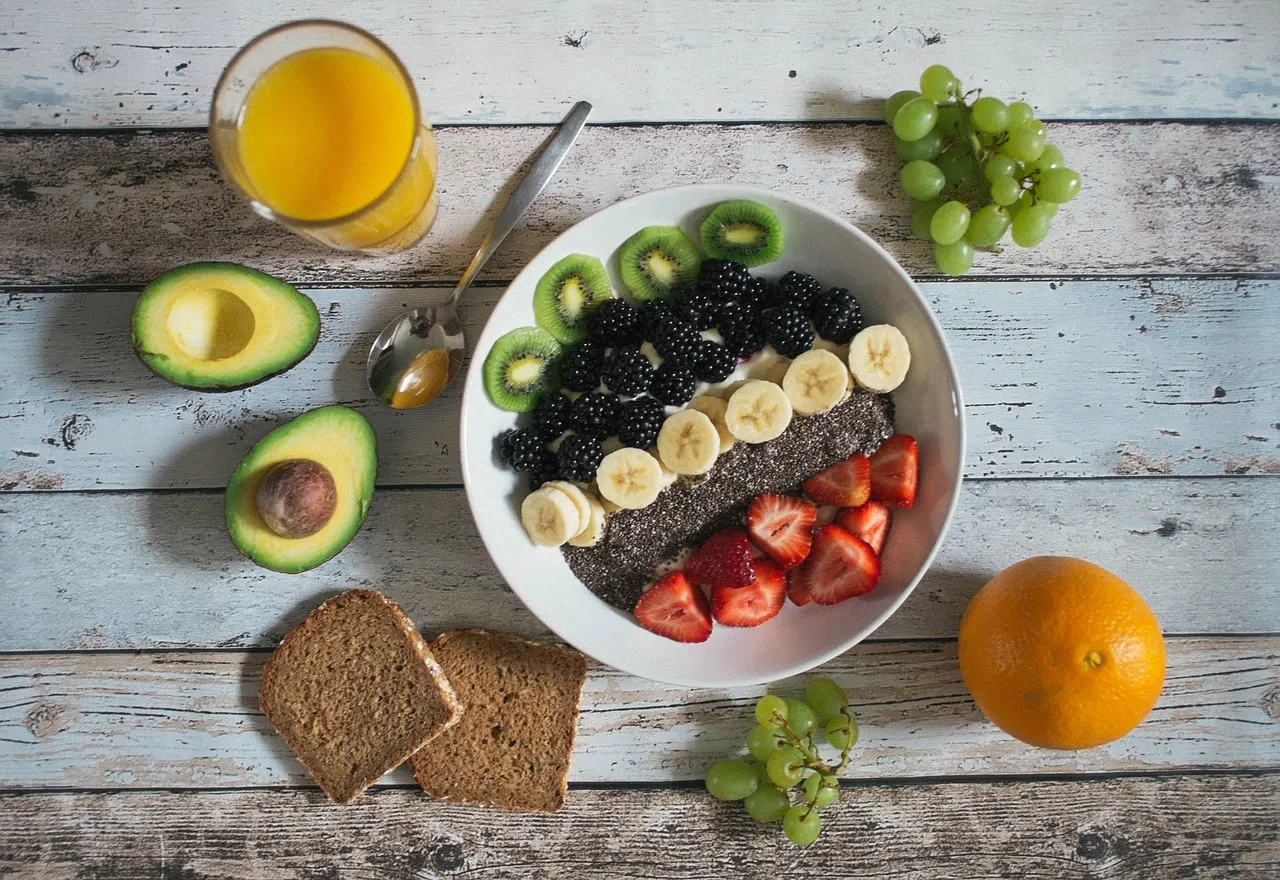
- Breakfast: Greek yogurt with oats, berries and chia — about 28 g protein, 10 g fiber.
- Lunch: grilled chicken over lentils and vegetables — about 30 g protein, 10 g fiber.
- Dinner: salmon with quinoa and roasted vegetables — about 30 g protein, 10 g fiber.
- Snack: apple with peanut butter — about 7 g protein, 4 g fiber.
Day total: roughly 95 g of protein and 34 g of fiber. No protein bars, no fiber powders.
One optional upgrade comes from the same trial: the “big breakfast” pattern, with 45% of daily calories at breakfast and 20% at dinner, produced strong weight loss and appetite control in both arms. You don't have to copy that exact split — but front-loading protein and fiber at breakfast is a low-cost, evidence-backed move.
Can You Eat Too Much Protein or Fiber?
Yes — and each has a different failure mode.
Too much fiber, too fast is the classic trap of fibermaxxing. Jumping from 15 g to 50 g overnight guarantees gas, bloating and cramping, which is why so many people abandon the approach. Ramp up by about 3–5 g every few days and drink plenty of water. And note that isolated fiber added to processed foods — inulin in a protein bar, resistant starch in white bread — doesn't replicate the effect of fiber inside a whole food.
Too much protein is less risky for healthy adults: intakes around 2 g per kg are well tolerated by normal kidneys. The real-world risk is crowding — protein replacing the plant foods that carry fiber and micronutrients, or protein-fortified junk with no other nutritional merit. If you have kidney disease or take medication that changes appetite or digestion, get a clinician's sign-off before doubling your intake.
If you have a medical condition, are pregnant or breastfeeding, or take medication (including GLP-1s), check with a clinician before making big dietary changes.
What to Do This Week
The pairing rule installs in about seven days.
- Audit one day. Write down everything you eat for 24 hours and tally protein and fiber. Most people discover they are over on protein and embarrassingly short on fiber.
- Add, don't subtract. Put a protein source and a fiber source on every plate: eggs plus oats, chicken plus lentils, fish plus vegetables. Nothing needs to be banned.
- Ramp fiber slowly. Increase by 3–5 g every few days and hydrate. Target 30–35 g by the end of the week.
- Keep the pace realistic. Sustainable fat loss runs about 0.5–1% of body weight per week. Faster is usually unsustainable or muscle-draining.
- Re-audit in two weeks. The habit is the goal; the scale is just feedback.
The article shows the pattern. The app trains the response.
Continue in Tikva to turn the insight into a repeated response.
Open TikvaSources and educational notice
This article is educational. It does not provide a medical diagnosis or replace guidance from a qualified health, legal, tax, investment, or financial professional. Decisions about your health or finances should consider your individual circumstances.
- British Journal of Nutrition — the 2026 randomized crossover trial comparing high-fiber and high-protein weight-loss diets
- News-Medical — summary of the trial's appetite, weight, thermic effect and microbiome findings
- PubMed — Te Morenga et al., American Journal of Clinical Nutrition — the earlier randomized trial where high-protein lost more weight than high-fiber
- Healthgrades (Medical News Today) — expert analysis of the trial and its limitations
- The Food Institute — IFT FIRST 2026 industry data on protein-fiber pairing and the “fiber is the new protein” trend
- Simplot — Datassential consumer statistics on fibermaxxing and fiber intake gaps
FAQ
Is fiber better than protein for weight loss?
Neither wins outright. In a 2026 British Journal of Nutrition trial, a high-fiber diet lost more weight (4.87 kg vs 3.87 kg) while high-protein suppressed appetite better; an earlier randomized trial found protein lost more. Choose based on your bottleneck — hunger control or gut health — or better, don't choose at all.
Should I eat more protein or more fiber?
Both. Protein at 1.2–1.6 g per kg of body weight manages appetite and protects muscle in a calorie deficit; fiber at 25–35 g daily feeds gut bacteria, boosts GLP-1 and adds food volume. Build every meal around one protein source and one fiber source and you get both effects without picking a side.
How much protein and fiber should I eat per day?
For a 75 kg adult: roughly 90–120 g of protein (1.2–1.6 g/kg) and 30–35 g of fiber. The FDA Daily Value for fiber is 28 g; the Dietary Guidelines suggest 14 g per 1,000 calories. Most people clear the protein bar and miss fiber, so prioritize fiber while keeping protein on target.
What is the best protein to fiber ratio in a meal?
There's no published ideal ratio, so treat anyone selling one with suspicion. The evidence-backed pairing is per-meal targets: 25–40 g of protein with 8–10 g of fiber, roughly 3–4 g of protein per gram of fiber. Chicken plus lentils plus vegetables hits it automatically.
Can you eat too much protein or fiber?
Yes. Sudden fiber jumps cause gas, bloating and cramps — increase by 3–5 g every few days with plenty of water. Healthy kidneys tolerate high protein (about 2 g/kg), but it can crowd out fiber. Kidney disease, pregnancy or GLP-1 medication means checking with a clinician first.