Key takeaways
- SK Hynix reported record Q2 2026 revenue of 79.32 trillion won and a 557% YoY jump in operating profit, but missed Wall Street consensus estimates, triggering a 10% stock selloff on July 29.
- Following its July 10 debut, SK Hynix's $26.5 billion US offering was the largest first-time listing for a foreign company in US stock market history, driven by insatiable demand for AI exposure.
- The company commands a dominant 57% revenue share of the critical High Bandwidth Memory (HBM) market required for advanced AI accelerators, making it a direct proxy for the AI hardware boom.
- Despite a post-IPO peak of $194.80, SKHY now trades heavily lower, with analysts issuing an average 12-month price target of $277.50.
- SK Hynix faces an existential threat from rivals Samsung and Micron, with the three companies collectively planning over $4.1 trillion in capacity investments to capture AI chip demand.
On July 29, 2026, SK Hynix delivered its first quarterly earnings report as a Nasdaq-listed company. The numbers were, by any historical standard, a massacre of records. The South Korean memory chip giant posted revenue of 79.32 trillion won (roughly $54.5 billion) and an operating profit of 60.54 trillion won—a staggering 557% jump from the same period last year. It was the company's fifth consecutive quarter of record-breaking highs.
The market's reaction? A brutal selloff. SK Hynix's US-listed shares (NASDAQ: SKHY) plunged roughly 10%, dragging the broader semiconductor sector down with it. The culprit was a classic case of impossible expectations: analysts had consensus estimates pegged at 84 trillion won in revenue and 64 trillion won in operating profit. In the high-stakes arena of artificial intelligence hardware, merely printing money is not enough. You have to print more money than the Street thought physically possible.
This is the reality check currently facing the millions of retail investors who piled into SK Hynix following its historic July 10 US listing. Priced at $149 per American Depositary Receipt (ADR), the company raised approximately $26.5 billion in an offering that was more than seven times oversubscribed. It marked the largest first-time listing for a foreign company in US stock market history. The $29 billion chip war isn't just a geopolitical headline anymore; it is now a highly volatile component of the everyday retail portfolio.
The Mechanics of a Mega-Listing
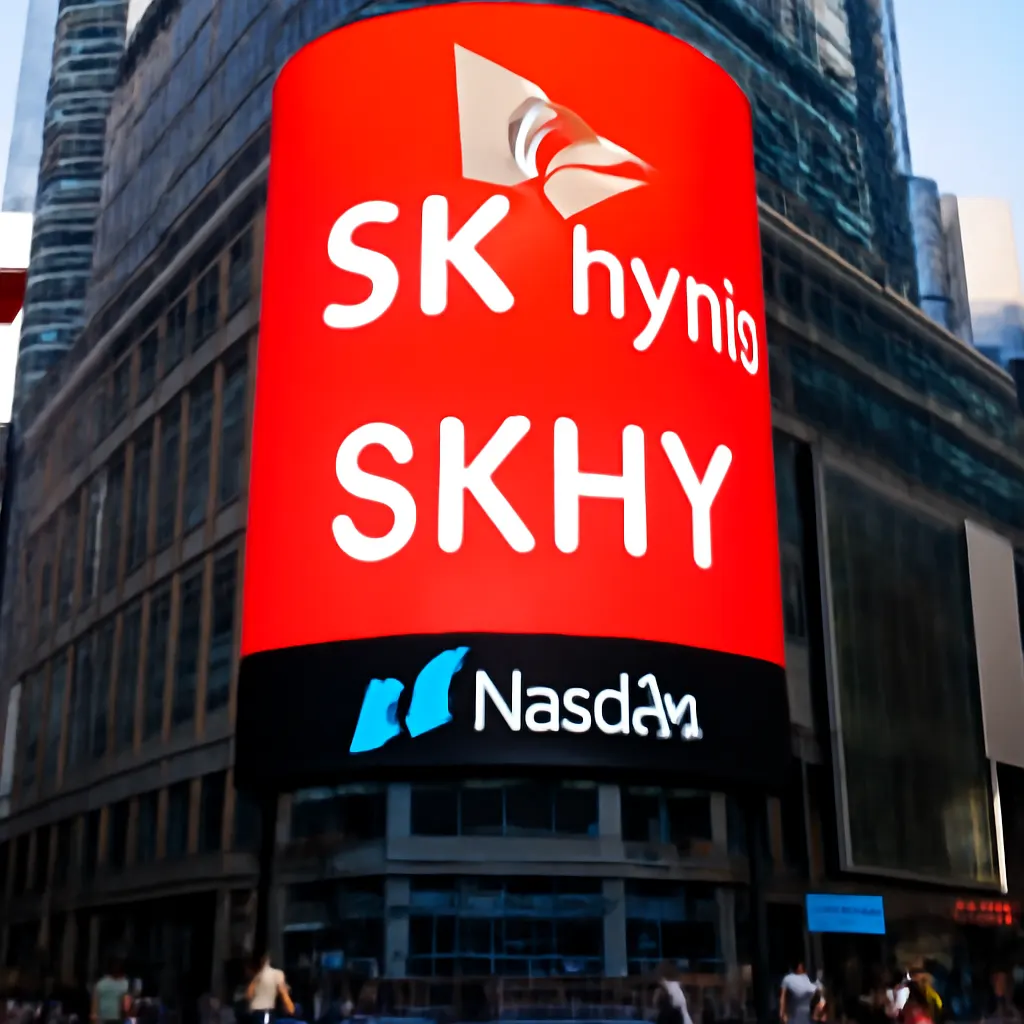
To understand the volatility, you have to understand what actually happened on July 10. SK Hynix was not a startup going public; it was already the world's second-largest memory chipmaker, commanding a massive presence on the Korea Exchange. The US listing took the form of a public offering of ADRs. This structure allows US investors to buy shares in the foreign company without dealing with cross-border brokerage logistics.
The demand was voracious. Reports indicated that the offering generated roughly $171 billion in orders for a deal initially targeting $24 to $28 billion. By the end of its first trading day, the stock had surged as much as 14%, pushing the company's market capitalization past the $1 trillion mark and making it just the third Asian company to join that exclusive global club. The debut was the culminating moment of a broader AI-driven rally that has sent South Korea's stock market up more than 70% year-to-date.
But the institutional enthusiasm was always tethered to the AI memory supercycle. According to Counterpoint Research, SK Hynix held a dominant 57% revenue share of the High Bandwidth Memory (HBM) market as of late 2025. HBM is the specialized, highly stacked memory architecture required to feed massive datasets into AI accelerators like Nvidia's GPUs. Without SK Hynix, the current AI hardware boom practically grinds to a halt. When the company's Chairman Chey Tae-won spoke to CNBC on the morning of the listing, his assessment of the AI landscape was blunt: "Demand is enormous."
The High-Water Mark of Expectations
Fast forward to July 29. The initial euphoria of the IPO had already been tested. After peaking at an intraday high of $194.80 on July 14—fueled by an Overweight initiation from Barclays with a massive $330 price target—the stock had been drifting downward as reality set in. The Q2 2026 earnings call was meant to arrest that slide. Instead, it accelerated the rout.
The selloff was not driven by weakness in the underlying business; it was driven by a slight miss against consensus and worrying signals about the forward outlook. While operating margins improved by 5 percentage points to an almost unfathomable 76%, company executives warned of rising SG&A (selling, general, and administrative) expenses in the second half of the year. Furthermore, there are growing fears of an air pocket in HBM pricing as competitors scramble to bring new capacity online.
This dynamic creates a dangerous environment for retail investors. When a stock is priced for absolute perfection, a 5.4% revenue miss against estimates isn't viewed as a slight variance; it is viewed as a structural failure in the bull thesis. The subsequent 10% decline wiped out billions in market capitalization overnight, proving that high-flying AI infrastructure plays carry extreme downside risk when sentiment shifts.

Samsung, Micron, and the Competitive Threat
SK Hynix's dominance in the HBM sector is not guaranteed in perpetuity. The company managed to leapfrog its historically larger rival, Samsung, by securing early, deep integration with Nvidia's supply chain. But Samsung is a formidable opponent with deep pockets. Samsung and SK Hynix are collectively betting an estimated $590 billion on expanding their AI memory production capacities over the coming years. Samsung will not cede the market without a brutal pricing war.
Then there is Micron Technology, the US-based memory maker eager to capture a larger slice of the domestic AI boom. The combined market capitalization of Samsung, SK Hynix, and Micron recently surpassed $4.1 trillion. Investors pouring into SKHY at $149 a share are betting that SK Hynix can maintain its technological edge and manufacturing yield rates in the face of an aggressive onslaught from competitors who are desperate to reclaim lost market share.
Furthermore, the macroeconomic backdrop is beginning to cloud the picture. After two years of relentless AI capital expenditure by hyperscalers like Microsoft, Amazon, and Google, there are growing whispers on Wall Street about a potential "AI digestion" period. If cloud giants begin to throttle their infrastructure spending in late 2026 or early 2027, the demand for HBM will soften. SK Hynix is the most leveraged play on this specific hardware cycle, meaning it will be the first to feel the pain if the cycle breaks.
The Leverage Point for Retail Investors
The addition of SK Hynix to the Nasdaq gave US retail investors unprecedented, frictionless access to the global memory supply chain. But navigating this stock requires a stomach for volatility and a clear-eyed view of what you are buying.
According to Zacks, the consensus average 12-month price target for SK Hynix's US-listed shares sits at $277.50, with a high estimate of $330. That represents a massive premium over its current trading levels in the $130 range. But as the Wall Street Journal noted shortly after the IPO, while analysts expect a phenomenal 2026 for the chipmaker, projected revenue increases slow down significantly after this year. The easy money in the AI memory supercycle has likely already been made.
For investors looking at the post-earnings dip, the calculus is straightforward: SK Hynix is a best-in-class operator generating record cash flow at incredible margins, but it operates in a deeply cyclical industry currently sitting at the peak of its valuation hype. Buying the dip here means accepting that you are stepping in front of a sector that just demonstrated a 10% downside swing on a single earnings report. It is a tactical bet on continued, unabated AI capital expenditure, not a value investment.
The $29 billion that flooded into the Nasdaq to buy SK Hynix shares is a testament to the belief that AI hardware is the defining technological shift of the decade. But today's earnings selloff is a stark reminder that even the most critical players in that revolution are subject to the merciless arithmetic of Wall Street expectations.
The article shows the pattern. The app trains the response.
Continue in Tikva to turn the insight into a repeated response.
Open TikvaSources and educational notice
This article is educational. It does not provide a medical diagnosis or replace guidance from a qualified health, legal, tax, investment, or financial professional. Decisions about your health or finances should consider your individual circumstances.
- Reuters — SK Hynix Q2 profit jumps 557% but misses forecasts, shares slump 10%
- CNBC — SK Hynix shares fall as record earnings jump fails to satisfy AI expectations
- Al Jazeera — SK Hynix raises $26.5bn in record-breaking US IPO
- SK hynix Newsroom — Official Q2 2026 Financial Results Announcement
- Zacks Investment Research — SKHY Analyst Consensus Estimates and Price Targets
- SK hynix Newsroom — 2026 Market Outlook and HBM Market Share Data
FAQ
Why did SK Hynix stock drop after reporting record Q2 2026 earnings?
The stock plunged roughly 10% because, despite revenue growing 257% year-over-year, the actual results fell short of Wall Street's consensus estimates. Analysts had forecasted revenue of 84 trillion won and operating profit of 64 trillion won, but SK Hynix delivered 79.32 trillion won and 60.54 trillion won, respectively.
What was the significance of SK Hynix's July 2026 Nasdaq listing?
SK Hynix raised $26.5 billion through its July 10 ADR offering, marking the largest first-time listing for a foreign company in US history. The offering was seven times oversubscribed, highlighting massive institutional and retail demand for companies powering the AI hardware boom.
How does SK Hynix fit into the broader AI chip market?
SK Hynix is the world's leading manufacturer of High Bandwidth Memory (HBM), holding a 57% revenue share. HBM is a specialized type of memory required to process massive datasets in AI accelerators like Nvidia's GPUs, making SK Hynix an indispensable part of the global AI supply chain.
Is SKHY stock a buy after the earnings dip?
While Wall Street maintains an average 12-month price target of $277.50 (ranging up to $330), the stock is highly volatile. It represents a leveraged bet on the continued AI hardware supercycle, but investors must weigh the risk of rising competition from Samsung and Micron, as well as the potential for a broader slowdown in AI capital expenditure.