Key takeaways
- The July 23, 2026 BMJ study of roughly 50,000 adults with type 2 diabetes found GLP-1 users had a 37% higher relative risk of alopecia versus SGLT-2 inhibitor users (6.91 vs. 5.04 cases per 1,000 person-years) and a 68% higher risk versus DPP-4 inhibitor users.
- Absolute risk remains low—roughly 0.7% of GLP-1 users per year developed hair loss—but multiplied across an estimated 10 million U.S. users, that translates to tens of thousands of affected patients annually.
- The hair loss identified was primarily non-scarring alopecia, including telogen effluvium (often triggered by rapid weight loss) and androgenetic alopecia, with evidence suggesting the drugs may have direct follicular effects beyond weight change alone.
- Proactive steps—maintaining protein intake (0.8 g/kg), monitoring iron and ferritin, and using topical or low-dose oral minoxidil—can help mitigate risk; biotin supplementation is not recommended without a confirmed deficiency and can interfere with lab tests.
By the time Maria Chen noticed the hair collecting around her shower drain in the spring of 2025, she had already lost 38 pounds on tirzepatide. The 47-year-old marketing executive from Chicago had embraced the drug—prescribed under the brand name Mounjaro—with the enthusiasm of someone given a second chance at health. Her blood sugar had stabilized. Her joints stopped aching. She could keep up with her teenagers. And then her hair began to fall out.
Chen is not alone, and now she has the data to prove it. On July 23, 2026, The BMJ published one of the largest studies to date examining the link between GLP-1 receptor agonists and alopecia, analyzing outcomes from roughly 50,000 adults with type 2 diabetes. The findings were stark: patients taking GLP-1 medications like Ozempic, Wegovy, and Mounjaro had a 37% higher relative risk of developing hair loss compared to those on SGLT-2 inhibitors, and a 68% higher relative risk compared to those on DPP-4 inhibitors.
With roughly one in eight U.S. adults—about 12% of the population—now reporting current use of a GLP-1 medication, according to recent KFF polling, the implications are enormous. The drugs have reshaped the landscape of obesity and diabetes treatment, but the BMJ study forces a difficult reckoning: how much hair loss is an acceptable trade-off for metabolic health?
The Study That Changed the Conversation
The BMJ study, authored by researchers at the University of Pennsylvania and George Washington University, used a rigorous “target trial emulation” design—a method that mimics a randomized clinical trial using real-world electronic health record data. The research team identified nearly 50,000 adults with type 2 diabetes who had initiated either a GLP-1 receptor agonist, an SGLT-2 inhibitor, or a DPP-4 inhibitor between 2018 and 2024. They then tracked hair loss diagnoses over a median follow-up period of 3.5 years.
The absolute incidence rates tell a more nuanced story than the headline-grabbing relative risk percentages. GLP-1 users experienced 6.91 cases of alopecia per 1,000 person-years, compared to 5.04 cases per 1,000 person-years for SGLT-2 inhibitor users and 4.11 cases for DPP-4 inhibitor users. In other words, out of every 1,000 patients treated for a year, GLP-1 drugs were associated with roughly two additional cases of hair loss compared to DPP-4 inhibitors.
“The absolute risk is still quite low,” said Dr. Hui-Jie Chen (no relation to Maria), a dermatologist at Stanford Health Care who was not involved in the study. “But when you multiply that across millions of users, you’re talking about a significant number of people who are experiencing this side effect. And for those individuals, the psychological impact can be devastating.”
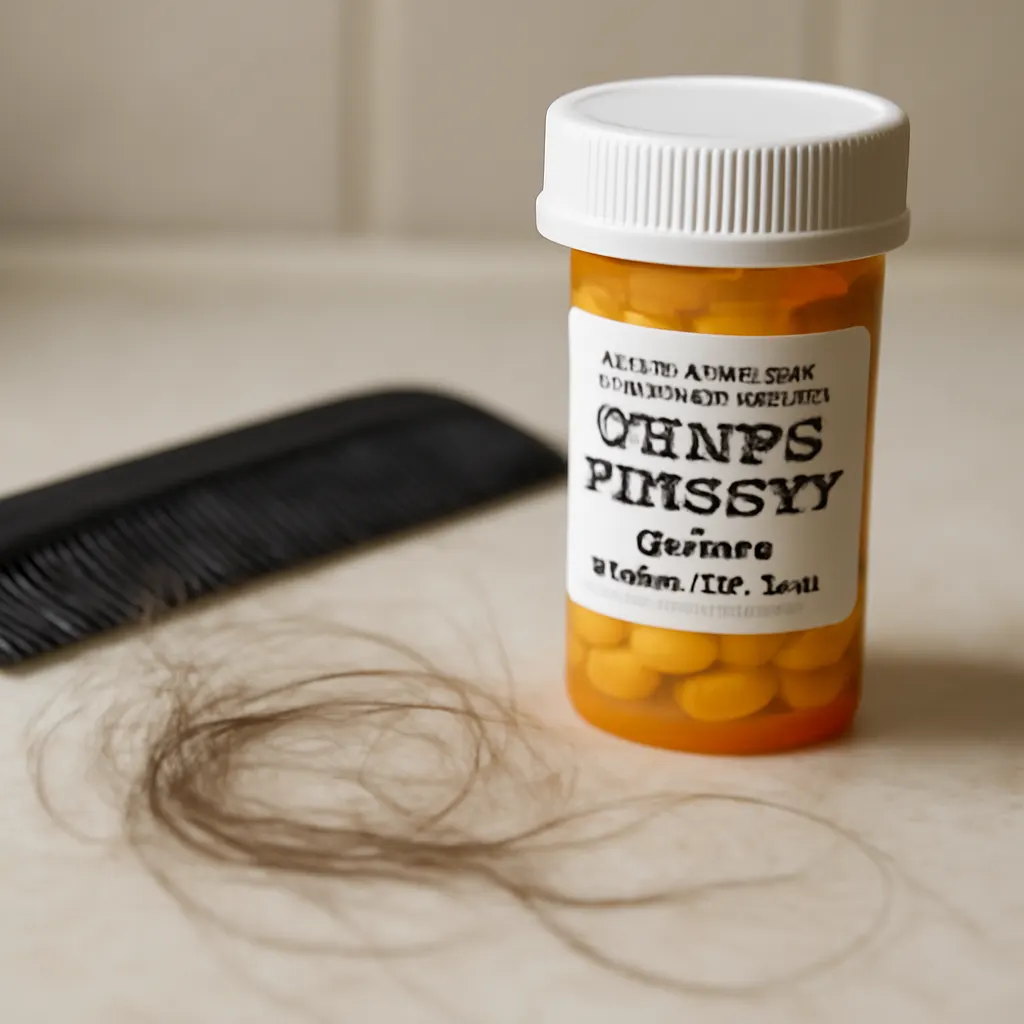
The study identified the hair loss primarily as non-scarring alopecia—a category that includes telogen effluvium (temporary shedding caused by stress or rapid weight loss) and androgenetic alopecia (pattern baldness). This distinction matters: telogen effluvium is typically reversible once the underlying trigger is addressed, while androgenetic alopecia is progressive and often permanent without intervention.
The Telogen Effluvium Question
For years, dermatologists and endocrinologists have debated whether the hair loss reported by GLP-1 users is caused by the drugs themselves or by the rapid weight loss they produce. The BMJ study doesn’t definitively answer that question, but it provides the strongest evidence yet that the medications are an independent risk factor—even after adjusting for weight changes.
The leading hypothesis centers on telogen effluvium, a condition in which a physical stressor—such as rapid weight loss, nutritional deficiency, hormonal shift, or severe illness—pushes a large percentage of hair follicles into the resting (telogen) phase simultaneously. Two to three months later, those hairs shed en masse. The condition is distressing but usually self-limiting, resolving within six to nine months once the trigger is removed.
However, the BMJ study found that the increased risk persisted even after the initial weight-loss period, suggesting that other mechanisms may be at play. Semaglutide and tirzepatide have been shown to alter levels of insulin-like growth factor 1 (IGF-1), androgen signaling, and inflammatory cytokines—all of which can influence the hair growth cycle. GLP-1 receptors are also present in human hair follicles, raising the possibility of direct pharmacological effects.
“It’s too simplistic to say this is just about weight loss,” said Dr. Susan Massick, an associate professor of dermatology at The Ohio State University Wexner Medical Center, in an interview with MedPage Today. “The drugs may be having a direct effect on the hair follicle that we don’t fully understand yet.”

The Numbers in Context
To understand the scale of the problem, consider the demographics. According to Gallup polling data from 2026, approximately 11% of U.S. adults now take a GLP-1 medication specifically for weight loss, up from 3% just three years ago. JPMorgan Chase projects that by 2030, as many as 30 million Americans could be on GLP-1 therapy. Apply the BMJ study’s incidence rates to those numbers, and the potential public health impact becomes clear: tens of thousands of additional cases of clinically significant hair loss each year.
The risk is not evenly distributed. Women, who make up the majority of GLP-1 users seeking weight loss, are also more likely to report and seek treatment for hair loss. Patients over 50, those with a history of thyroid disorders, and individuals with nutritional deficiencies—particularly iron, zinc, and vitamin D—are at elevated risk. The study also found that patients on higher doses of semaglutide (1.0 mg or above) and tirzepatide (10 mg or above) had higher rates of alopecia, though the dose-response relationship was not statistically significant.
A separate 2026 study published in the Journal of the American Academy of Dermatology, using the TriNetX research network, corroborated these findings. That analysis of over 200,000 patients found that both semaglutide and tirzepatide were associated with increased rates of new-onset hair loss compared to non-GLP-1 weight loss interventions.
What Patients Should Actually Do
For the millions of people currently on GLP-1 medications, the BMJ study raises urgent questions. Should they stop? Switch drugs? Start preventative treatments? The answers depend on individual risk factors, treatment goals, and the severity of any hair loss already experienced.
First, context matters. For patients with type 2 diabetes, uncontrolled blood sugar, or significant obesity-related health conditions, the benefits of GLP-1 therapy overwhelmingly outweigh the risk of hair loss. Cardiovascular disease, kidney failure, and severe sleep apnea carry consequences far more serious than temporary shedding. No responsible physician would recommend discontinuing an effective metabolic medication solely to prevent alopecia.
However, for patients using GLP-1s primarily for cosmetic weight loss—particularly those at or near a healthy body weight—the risk-benefit calculus shifts. If hair loss becomes a significant source of distress, it may be worth discussing alternative approaches with a healthcare provider.
Second, prevention is possible. Several dermatology practices now recommend proactive measures for GLP-1 patients, particularly those starting therapy or escalating doses. Maintaining adequate protein intake—at least 0.8 grams per kilogram of body weight—is essential, as amino acid deficiency is a major contributor to telogen effluvium. Regular monitoring of iron, ferritin, zinc, vitamin D, and B12 levels can catch nutritional gaps before they trigger shedding.
Topical minoxidil (Rogaine and generics) remains the most evidence-based treatment for pattern hair loss and may help with GLP-1-associated shedding, particularly if there’s an underlying androgenetic component. Oral minoxidil, prescribed off-label at low doses (0.25 to 2.5 mg daily), has gained traction among dermatologists for patients who don’t respond to topical formulations. A 2024 clinical review in the Journal of the European Academy of Dermatology and Venereology found low-dose oral minoxidil effective in promoting regrowth in both male and female pattern hair loss.
What about biotin? The data is underwhelming. Despite aggressive marketing, biotin supplementation has not been shown to improve hair growth in individuals who are not deficient. The American Academy of Dermatology does not recommend biotin for hair loss unless a deficiency has been confirmed through testing—a caveat often lost on consumers stocking up at the supplement aisle.
One critical note on testing: biotin can interfere with laboratory assays used to measure thyroid function, troponin, and other markers. Anyone taking high-dose biotin should inform their physician before bloodwork, as false results can lead to misdiagnosis and inappropriate treatment.

The Bigger Picture on GLP-1 Side Effects
Hair loss joins a growing list of recognized GLP-1 side effects that includes nausea, vomiting, diarrhea, gastroparesis, pancreatitis, gallbladder disease, and—more recently—muscle loss and bone density reduction. Each of these risks is now being quantified as the drugs move from clinical trials, which tend to enroll healthier and more closely monitored populations, into real-world use among millions of diverse patients.
None of this means GLP-1 medications are unsafe or should be avoided. The clinical evidence for their efficacy in treating type 2 diabetes, obesity, and cardiovascular disease is overwhelming, and the drugs have genuinely transformed lives. But the BMJ study is a reminder that no medication is without cost, and that cost must be weighed honestly—especially when the medication is being used by a significant portion of the adult population.
For Maria Chen, the decision was straightforward. After consulting with both her endocrinologist and a dermatologist, she continued tirzepatide, added low-dose oral minoxidil, increased her protein intake, and had her ferritin levels checked. Her hair shedding slowed after about four months and has since largely resolved. She has kept 35 of the 38 pounds off and her HbA1c remains in the normal range.
“It was terrifying at first,” she said. “I thought I was going to go bald. But my doctor helped me understand that this was probably temporary and manageable, and that the alternative—going back to where I was—was worse. I’m glad I stayed on it, but I’m also glad I asked the questions.”
The Path Forward
The BMJ study is unlikely to be the last word on GLP-1 medications and hair loss. The authors noted several limitations, including the reliance on electronic health records (which may under-capture mild cases of hair loss that patients never report to a doctor) and the focus on adults with type 2 diabetes (meaning the results may not fully generalize to patients using GLP-1s for weight loss alone). Longer-term studies tracking hair loss outcomes over five to ten years are needed, as are investigations into whether different GLP-1 molecules carry different risks.
For now, the message for patients and providers is one of awareness, not alarm. Hair loss is a real and documented risk of GLP-1 therapy—one that is usually temporary and manageable, but that deserves to be discussed openly before starting treatment and monitored throughout. The trade-off, for most patients, remains strongly in favor of the drugs. But the days of treating GLP-1 medications as consequence-free miracles are over.
The article shows the pattern. The app trains the response.
Continue in Tikva to turn the insight into a repeated response.
Open TikvaSources and educational notice
This article is educational. It does not provide a medical diagnosis or replace guidance from a qualified health, legal, tax, investment, or financial professional. Decisions about your health or finances should consider your individual circumstances.
- The BMJ — Risk of hair loss associated with GLP-1 receptor agonists in adults with type 2 diabetes
- BMJ Group — GLP-1 diabetes drugs linked to increased risk of hair loss (incidence rates, study design)
- MedPage Today — New study links GLP-1s to hair loss (absolute rates, expert commentary)
- ScienceDaily — Ozempic and Mounjaro linked to a surprising hair loss risk (University of Pennsylvania / George Washington University research)
- KFF — 1 in 8 adults say they are currently taking a GLP-1 drug (prevalence data)
- PubMed — Risk of new-onset hair loss with semaglutide and tirzepatide: A TriNetX cohort study (J Am Acad Dermatol, 2026)
FAQ
Does everyone on Ozempic or Mounjaro lose their hair?
No. According to the 2026 BMJ study, the absolute risk is roughly 6.91 cases per 1,000 person-years—approximately 0.7% per year. The large majority of GLP-1 users do not experience clinically significant hair loss. However, the relative risk is elevated compared to other diabetes and weight-loss medications.
Is GLP-1-related hair loss permanent?
In most cases, no. The BMJ study identified the hair loss primarily as non-scarring alopecia, which includes telogen effluvium—a temporary shedding condition triggered by physical stress such as rapid weight loss. Telogen effluvium typically resolves within six to nine months. If the hair loss is androgenetic (pattern baldness), it may be progressive and require ongoing treatment.
Should I stop my GLP-1 medication if I start losing hair?
Do not stop without consulting your prescribing physician. For patients with type 2 diabetes, obesity, or cardiovascular risk, the metabolic benefits of GLP-1 therapy typically far outweigh the risk of hair loss. A doctor can help assess the severity of shedding, check for nutritional deficiencies, and discuss options such as dose adjustment, topical or oral minoxidil, or switching to a different medication class if appropriate.
Can I prevent hair loss while taking a GLP-1 drug?
You can reduce your risk. Maintain adequate protein intake (at least 0.8 grams per kilogram of body weight), have your iron, ferritin, vitamin D, zinc, and B12 levels checked regularly, and consider a slower titration of your GLP-1 dose to moderate the rate of weight loss. Topical minoxidil or low-dose oral minoxidil may be prescribed proactively by a dermatologist for patients at elevated risk.