Key takeaways
- Strength gains plateau at about 2 hard, direct sets per exercise per session — the point of undetectable outcome superiority (PUOS) identified by the Florida Atlantic University dose-response research.
- 4–6 hard sets per muscle group per week, split across 2–3 sessions, is the effective weekly dose for strength; a 2017 Sports Medicine meta-analysis found 5 or fewer weekly sets substantially increase strength.
- Training frequency drives strength: the 2026 Sports Medicine meta-regression of 67 studies (2,058 people) reported a 100% probability that more weekly frequency improves strength gains.
- You don't need failure: stopping sets 1–4 reps short of failure builds strength as well as training to failure, with less fatigue (Grgic et al., 2022).
- Progress requires overload: add 2.5–5 lb or one rep when you hit the top of your rep range, and prioritize 7–9 hours of sleep plus about 1.6 g of protein per kg daily.
The short answer to how many sets per week for strength: 4–6 hard sets per muscle group, spread across 2–3 sessions, is all you need — not 12–20, and not in one workout. New dose-response research from Florida Atlantic University finds strength gains plateau at about 2 hard, direct sets per exercise per session, and that lifting the same lifts more often each week beats piling on sets.
For decades the fitness mainstream told you the opposite: more sets, more volume, more time under the bar. That advice grew out of hypertrophy research, and muscle growth and raw strength respond to volume very differently. A wave of meta-analyses published between 2025 and 2026 — including the most detailed dose-response analysis of resistance training to date — has changed the math on how much lifting you actually need.
If you are not chasing the last fraction of muscle growth, the takeaway is simple: your strength ceiling for the week is reachable in two hard sets per exercise, done two or three times a week.
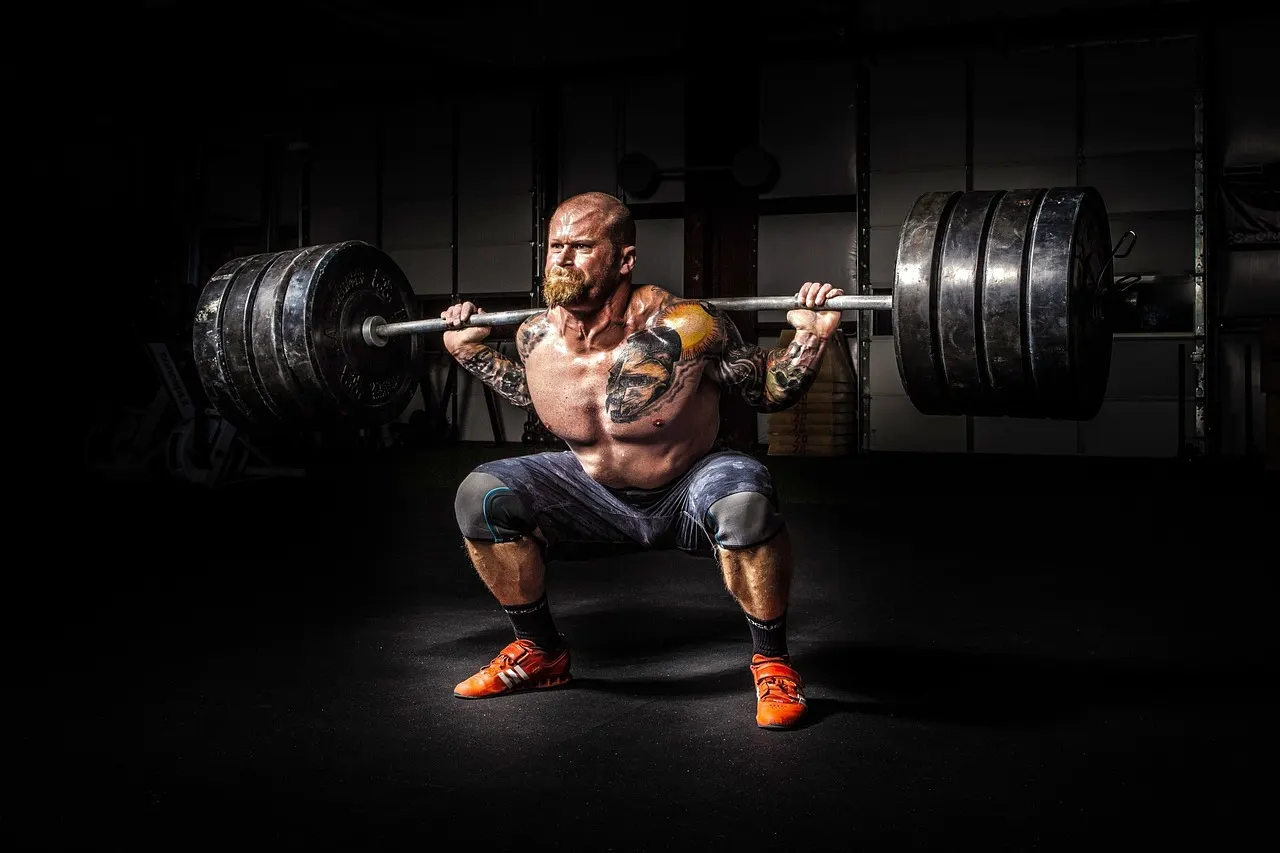
How Many Sets per Week for Strength Is Optimal?
The most rigorous dose-response analysis of resistance training volume and frequency to date — a systematic review and meta-regression of 67 studies with 2,058 participants, published in Sports Medicine in 2026 — found that strength gains increase with volume, but with diminishing returns so steep that the curve goes nearly flat after the first few hard sets. The authors counted sets fractionally: a set counts in full for the muscle it directly trains and half a set for a muscle it only assists.
That group's per-session analysis (Remmert, Pelland, Robinson, Hinson and Zourdos, first posted to SportRxiv in 2025 and presented at the American College of Sports Medicine's annual meeting) introduced a metric called the Point of Undetectable Outcome Superiority (PUOS) — the point where adding more sets stops producing a detectable gain. For strength, the PUOS landed at roughly 2 direct sets per exercise per session. For muscle growth it was about 11 fractional sets per session, which is where the common 10–20 weekly set advice comes from.
In plain numbers, for strength:
- Per session: 1–2 hard, direct sets per exercise capture nearly all of the available strength benefit.
- Per week, per muscle: 4–6 hard sets is the effective zone. A 2017 Sports Medicine meta-analysis found that 5 or fewer weekly sets substantially increased strength, with only a small effect-size advantage (0.18) from doing far more.
- Per set quality: loads at or above 80% of your 1-rep max in the 1–6 rep range, stopping 1–4 reps short of failure — the dose Examine.com's review of the research recommends.
This is why the question "sets for strength vs hypertrophy" has two different answers: strength is built on a narrow base of heavy, high-quality sets repeated across the week, while hypertrophy tolerates — and to a degree rewards — much larger weekly volume.
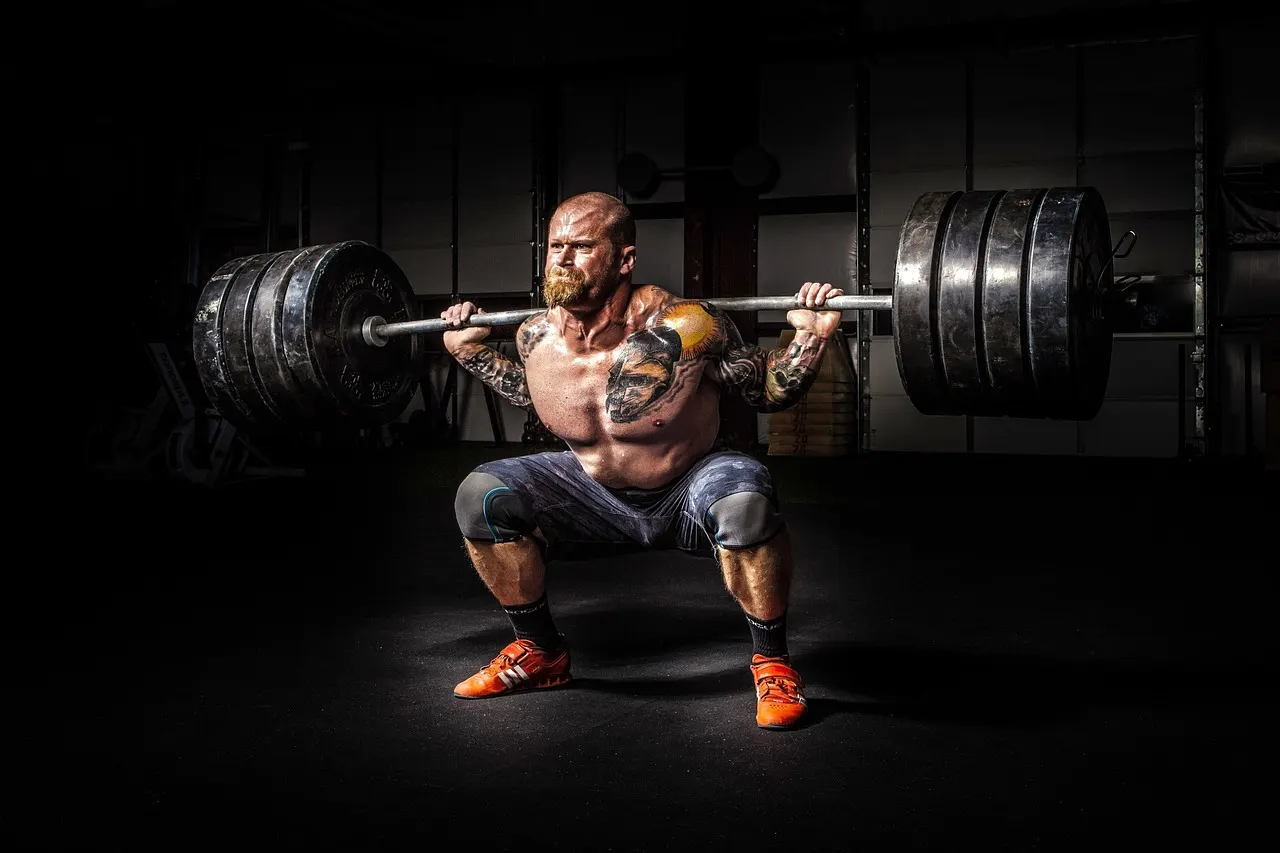
Is It Better to Do More Sets or Train More Often to Get Stronger?
Train more often. The 2026 Sports Medicine meta-analysis reported a 100% posterior probability that training frequency improves strength gains — effectively unanimous evidence — while frequency's effect on muscle growth was compatible with zero. Volume and frequency are different levers, and strength is the one that responds to frequency.
That fits the mechanism. Strength is a skill as much as a tissue adaptation: practicing the squat or bench press more often per week teaches your nervous system to produce more force, and each session stays fresh instead of drowning in accumulated fatigue.
The study's authors make the practical point directly. Lead author Jacob Remmert, a PhD candidate at FAU, said that people aiming for strength gains "may get more out of increasing training frequency — choosing shorter, more frequent sessions instead" of stacking more sets into one workout. Senior author Michael Zourdos, a professor of exercise science at FAU, added that past the tipping point, extra volume "may even work against you when considering fatigue, time and so on."
The same pattern showed up in an older experiment from Edith Cowan University: people who did a tiny daily dose of arm exercise gained about 10% strength in a month, while the group that saved all its volume for one weekly session gained none.
How Many Days a Week Should I Lift Weights to Get Stronger?
Two to three days per week, per muscle group, is the evidence-backed answer. The World Health Organization and the American College of Sports Medicine both recommend muscle-strengthening activity at least twice a week. A 2018 meta-analysis in Sports Medicine (Grgic et al.) found that training a muscle two to three times weekly produces modestly greater strength gains than once weekly, with the benefit flattening beyond that.
What this looks like in practice:
- Three full-body sessions (Monday, Wednesday, Friday) hitting every major movement pattern each day — the most efficient structure for beginners and intermediates.
- Two upper/lower sessions per week — a solid option when three sessions do not fit your schedule.
- At least 48 hours between sessions for the same muscle group, because strength adaptation happens during recovery, not during the workout.
Once a week per muscle is the most common scheduling error. You can maintain strength on it, but you will build it faster at two to three exposures.

Do I Need to Train to Failure to Gain Strength?
No — and most lifters get stronger faster by not doing it. A meta-analysis by Grgic and colleagues in the Journal of Sport and Health Science (2022) found that training to failure and stopping short of failure produce similar strength gains, while non-failure training leaves more energy for additional sessions and less systemic fatigue.
Stop your sets with 1–4 reps left in the tank — an 8 or 9 on the RPE scale. The last rep should be hard but technically clean. Grinding to failure on every set inflates fatigue, drags down every subsequent set, and slows the recovery between sessions that, as covered above, matters most for strength.
Why Am I Not Getting Stronger Even Though I Lift Regularly?
If you train consistently and the weights are not going up, one of five things is usually wrong:
- No progressive overload. Strength requires a load that increases over time. Add 2.5–5 lb (1–2.5 kg) or one rep as soon as you hit the top of your rep range with clean form on the final set.
- Junk volume. Ten sets of an exercise when two would do produces fatigue without proportionally more strength. Cut sets, raise quality.
- Too little frequency. Once a week per muscle is the floor, not the plan. Move to 2–3 sessions.
- Technique leaks. Poor bracing, shallow range of motion, or a wandering bar path caps how much load your body will tolerate. Fix form before adding weight.
- Broken recovery. Strength is built between sessions. Seven to nine hours of sleep and about 1.6 g of protein per kg of body weight daily — the middle of the ISSN's 1.4–2.0 g/kg guideline for exercising adults — are the minimum conditions for progress.
What to Do This Week: The 2-Set Strength Protocol
Here is a concrete, research-backed week that applies everything above. Do three full-body sessions — Monday, Wednesday, Friday — and for every exercise, perform 2 working sets of 5 reps at a load that leaves 2–3 reps in reserve, resting 2–3 minutes between sets.
Session A: Back squat 2×5, bench press 2×5, barbell row 2×6–8.
Session B: Trap-bar or conventional deadlift 2×5, overhead press 2×5, chin-up 2×6–8.
Session C: Repeat Session A.
The gym is not required. With adjustable dumbbells, a kettlebell, or a loaded backpack for squats and push-ups, the same protocol works at home — progressive overload is the point, not the equipment. Start lighter than you think for the first week to lock in technique, then add 2.5–5 lb or one rep when you complete the top of your range on the final set.
If you have a medical condition, are pregnant, or take medication (including GLP-1s), check with a clinician before making major changes to your training.
The article shows the pattern. The app trains the response.
Continue in Tikva to turn the insight into a repeated response.
Open TikvaSources and educational notice
This article is educational. It does not provide a medical diagnosis or replace guidance from a qualified health, legal, tax, investment, or financial professional. Decisions about your health or finances should consider your individual circumstances.
- Sports Medicine — 2026 meta-regression of weekly volume and frequency on strength and hypertrophy
- HealthDay — coverage of the FAU per-session dose-response research and the PUOS finding
- BarBend — how the per-session set research translates into training prescriptions
- Examine.com — effective strength volume (3–6 sets, ≥80% 1RM, RIR 1–4)
- Ralston et al., Sports Medicine 2017 — weekly set volume and strength gain
- Frontiers in Aging — tripling training volume provided no additional strength benefit in older adults
FAQ
How many sets per week is optimal for strength gains?
About 4–6 hard, direct sets per muscle group per week is optimal for most lifters. Per-session research puts the strength plateau at roughly 2 direct sets per exercise, and a 2017 meta-analysis found that 5 or fewer weekly sets substantially increase strength. More volume adds little for strength.
Is it better to do more sets or train more often to get stronger?
Train more often. A 2026 Sports Medicine meta-regression of 67 studies found training frequency had a 100% probability of improving strength gains, while extra volume showed sharp diminishing returns. Spreading 2 hard sets per exercise across 2–3 weekly sessions builds strength faster than one marathon session.
How many days a week should I lift weights to get stronger?
Two to three days per week per muscle group. The WHO and ACSM both recommend strength training at least twice weekly, and meta-analytic evidence shows 2–3 sessions beat one session for strength gains. Allow at least 48 hours between sessions for the same muscles to recover.
Do I need to train to failure to gain strength?
No. A 2022 meta-analysis in the Journal of Sport and Health Science found similar strength gains whether sets ended at failure or 1–4 reps short of it. Stopping short builds strength with less fatigue and faster recovery, so you can train more often — which matters more for strength.
Why am I not getting stronger even though I lift regularly?
Usually one of five things: no progressive overload (the load never increases), too much junk volume draining your recovery, training each muscle only once a week, technique that caps your load, or poor sleep and protein intake. Fix those before adding more sets.