Key takeaways
- A genuine plateau is a flat or rising 3+ week trend despite adherence; the evidence-backed fix is a 14-day diet break at maintenance calories, not a bigger deficit.
- In the MATADOR trial (Int J Obes, 2018), men who took 2-week diet breaks lost 14.1 kg versus 9.1 kg for continuous dieters over the same 16 dieting weeks — and stayed about 8 kg lighter at 6-month follow-up.
- Diet breaks blunt metabolic adaptation: the drop in resting energy expenditure was roughly halved with breaks (about 90 vs 180 kcal a day), while NEAT — the biggest casualty of dieting — recovers within days of eating at maintenance.
- A plateau typically emerges 6–8 months into a program (Health Sci Rep, 2026), and realistic fat loss is 0.5–1% of body weight per week (JISSN, 2014).
- Expect 1–3 kg of water-weight gain in the first days of a break — glycogen and water, not fat — then resume a 300–500 kcal deficit on day 15.
How to break a weight loss plateau: stop cutting and eat at maintenance for 14 days. When the scale stalls for three weeks or more, a bigger deficit makes it worse — it deepens metabolic adaptation, suppresses the movement calories known as NEAT, and amplifies hunger. A two-week diet break at maintenance calories resets those systems, so the next cut works again.
The instinct when fat loss stalls is to eat less and push harder. That instinct is backwards. A narrative review published in Health Science Reports in July 2026 found that weight-loss plateaus typically emerge six to eight months into a program — even in people who adhere — because calorie restriction lowers every component of daily energy expenditure, and the largest single drop is in non-exercise activity thermogenesis (NEAT): the calories burned living, fidgeting, walking and working. Keep cutting and the body keeps adapting. Feed it at maintenance for two weeks and the adaptation reverses.
How to Break a Weight Loss Plateau: The 14-Day Reset
A diet break is not a cheat week and it is not a binge. It is a deliberate, structured 14 days of eating at maintenance calories — the amount that keeps your current weight stable — with protein kept high and training maintained. The strongest evidence comes from the MATADOR trial, a randomized study of 51 men with obesity published in the International Journal of Obesity in 2018. Both groups dieted for 16 weeks at 67% of maintenance calories; one group dieted continuously, the other interrupted dieting with 2-week breaks at energy balance every two weeks.
The break group lost 14.1 kg versus 9.1 kg for the continuous group — five more kilograms of fat from the same 16 weeks of dieting — and lost about the same amount of muscle. Their weight barely moved during the maintenance blocks, and the metabolic slowdown of dieting was roughly halved: resting energy expenditure fell by about 90 kcal a day in the break group versus about 180 kcal a day in the continuous group, after adjusting for body composition. Six months after the trial, the break group was still about 8 kg lighter.
Why Am I Not Losing Weight Even Though I'm in a Calorie Deficit?
Because the deficit you started with is not the deficit you have now. As you lose weight, three things happen at once: resting metabolism falls, NEAT falls harder, and appetite rises. The 2026 review calls the result an "energy gap" — your intake no longer creates the shortfall it once did, even when your food has not changed. A plateau is not a failure of willpower; it is your physiology catching up.
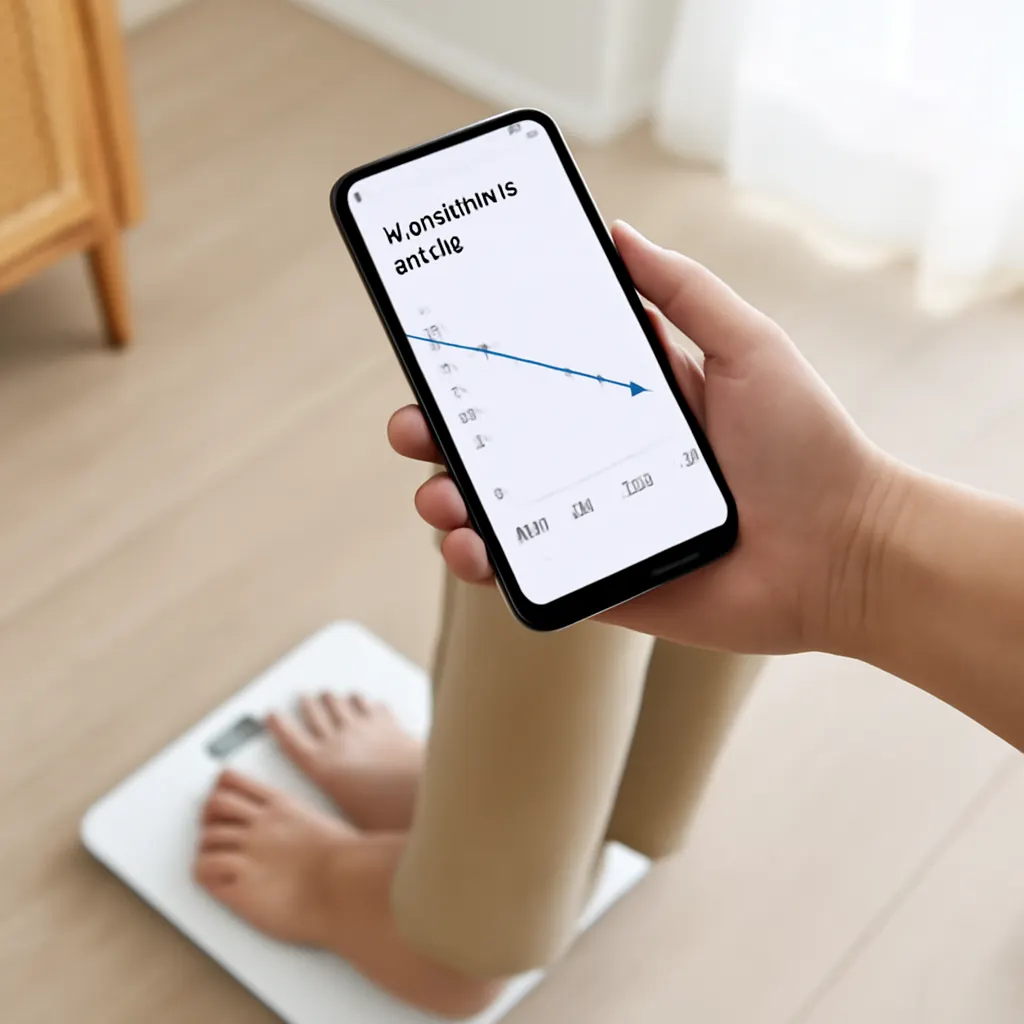
Before you act, confirm the plateau is real. Weigh daily, average the week, and judge the trend across three weeks or more. Day-to-day water swings of one to two kilograms are normal and meaningless. Only a flat or rising trend over 3+ weeks with honest adherence qualifies. If adherence is the problem, fix that first; a diet break will not rescue a plan you are not following.
Do Diet Breaks Help You Lose More Weight?
Yes — but not because you burn extra calories on the break. They help because they make the next dieting block work again. The MATADOR data is the cleanest demonstration: identical total weeks of dieting, and the break group lost 5 kg more fat, kept more off at follow-up, and saw a blunted drop in resting metabolism.
The mechanisms are concrete. Sustained restriction suppresses triiodothyronine (T3) and sympathetic nervous system activity, and a 2010 review in the International Journal of Obesity documents that both move back toward baseline when you return to energy balance. Hunger hormones that spike during a deficit settle at maintenance, which is why the post-break cut feels easier, not harder. NEAT — the largest casualty of dieting — recovers within days of eating at maintenance, and the 2026 review lists "planned overfeeding" and "nonlinear dieting approaches" among the strategies that prevent and manage plateaus.
How Long Should a Diet Break Last? The 14-Day Protocol
One to two weeks is the evidence-backed window, and 14 days is the sweet spot tested in MATADOR. A single day at higher calories is a refeed, not a break; it takes roughly a week of maintenance eating for hunger hormones and energy expenditure to reset meaningfully. Longer than two weeks adds drift risk for little benefit.

- Confirm a true plateau: no downward trend for 3+ weeks despite honest adherence.
- Set maintenance calories for your current weight. Use a TDEE calculator or add roughly 300–500 kcal to your current daily intake, then adjust from daily weigh-ins so weight stays stable within a kilogram or two.
- Eat at maintenance for 14 days. Keep protein at the top of the evidence-based range — about 1.8–2.7 g per kg of body weight daily — to hold muscle while metabolism resets.
- Keep training as usual (resistance work 2–4 days a week) and add walking. NEAT recovers fastest when you deliberately move more.
- Expect 1–3 kg of water-weight gain in the first days as glycogen and water refill. That is not fat, and it does not mean the break is failing.
- On day 15, resume a modest deficit of 300–500 kcal a day — enough for a realistic 0.5–1% of body weight per week — and watch the scale move again. If your deficit lands below roughly 1,200 kcal a day, your maintenance estimate is too low; recalculate.
How often should you repeat this? A practical rule: every 8–12 weeks of continuous dieting, or the moment the scale is flat for three weeks despite adherence. Dieters who cycle breaks in, rather than pushing one endless cut, stay more consistent and avoid the starvation-response spiral that ends most diets.
Does Eating More Boost Your Metabolism? (Refeed Day vs Diet Break)
Temporarily, yes. Permanently, no. Eating more does not raise metabolism above the level your body size and muscle mass support; it reverses the suppression a long deficit created. That is the whole point: you are not supercharging anything, you are undoing a slowdown.
The distinction matters. A refeed day is one day at maintenance or a slight surplus, usually higher in carbs — useful for training performance and a psychological reset, but too short to reverse metabolic adaptation. A diet break is 7–14 days at true maintenance with normal macros, long enough for NEAT, T3 and hunger hormones to move. If you have a day, refeed. If you have a plateau, diet break.
What to Do This Week: The Plateau-Breaking Plan
Start by auditing your data, not your resolve. Average your last three weeks of weigh-ins; if the trend is flat or up while food and training have been honest, you have a genuine plateau and the protocol above applies. If adherence slipped, tighten that first.
- Days 1–14: eat at maintenance, keep protein at 1.8–2.7 g/kg, train normally, and add 2,000–4,000 steps a day over your current baseline.
- Protect sleep: in a 2022 JAMA Internal Medicine trial, adults who extended sleep from about 6.5 to 8.5 hours cut energy intake by roughly 270 kcal a day with no other changes. Sleep is the cheapest metabolic lever you have.
- Day 15 onward: resume a 300–500 kcal deficit and track the weekly trend. You should be back to 0.5–1% of body weight per week within two weeks.

If you have a medical condition, are pregnant, or take medication — including GLP-1 drugs — check with a clinician before changing your plan. A diet break is not a fast and it is not punishment; it is the most efficient way to make the next block of fat loss work.
The article shows the pattern. The app trains the response.
Continue in Tikva to turn the insight into a repeated response.
Open TikvaSources and educational notice
This article is educational. It does not provide a medical diagnosis or replace guidance from a qualified health, legal, tax, investment, or financial professional. Decisions about your health or finances should consider your individual circumstances.
- Ashtary-Larky et al., Health Science Reports (2026) — plateau timing, metabolic adaptation, and NEAT as the largest energy-expenditure drop
- Byrne et al., International Journal of Obesity (2018) — the MATADOR trial on 2-week diet breaks
- Helms et al., Journal of the International Society of Sports Nutrition (2014) — realistic fat-loss rates and protein ranges
- Rosenbaum & Leibel, International Journal of Obesity (2010) — adaptive thermogenesis and thyroid restoration at weight maintenance
- Tasali et al., JAMA Internal Medicine (2022) — sleep extension and reduced energy intake
- Mayo Clinic — why weight-loss plateaus happen and how to reassess your plan
FAQ
How long should a diet break last?
Seven to 14 days at maintenance calories is the evidence-backed window. The MATADOR trial used 2-week breaks, which blunted the metabolic slowdown and improved fat loss. A single day is a refeed, not a break; it takes about a week of maintenance eating for hunger hormones and energy expenditure to meaningfully reset.
Do diet breaks help you lose more weight?
Yes, indirectly. In the MATADOR trial, men who took 2-week breaks lost 14.1 kg versus 9.1 kg for continuous dieters over the same 16 dieting weeks, and stayed about 8 kg lighter six months later. Breaks restore suppressed energy expenditure, so the next cut produces results again.
Why am I not losing weight even though I'm in a calorie deficit?
Because the deficit you started with is not the deficit you have now. Calorie restriction lowers resting metabolism and NEAT — the largest drop — while raising hunger, narrowing or closing the energy gap. Confirm a flat 3+ week trend before changing anything, then run a 14-day maintenance break.
Does eating more boost your metabolism?
Temporarily, yes; permanently, no. A maintenance break reverses the deficit-driven suppression of resting metabolism — MATADOR found the drop was roughly halved after breaks — and restores T3 toward baseline. It does not raise metabolism above what your body size and muscle mass support.
How often should you take a diet break when cutting?
A practical rule is every 8–12 weeks of continuous dieting, or the moment the scale is flat for 3+ weeks despite honest adherence. MATADOR cycled 2 weeks of dieting against 2 weeks of maintenance; most people need fewer breaks than that to protect metabolism and stay consistent.