Key takeaways
- Read the article, then choose one concrete next action.
- This content is educational and does not replace qualified medical, legal, or financial advice.
On July 1, 2026, Medicare flipped the economics of weight-loss drugs. Its GLP-1 Bridge program caps the monthly copay for drugs like Wegovy and Zepbound at about $50 for Part D beneficiaries — roughly an 82% net price drop, in effect through December 31, 2027. For millions of seniors, the $1,000-a-month wall is gone.
Here is the uncomfortable part: it probably won't change who succeeds.
Real-world data have shown for years that about half of people who start a GLP-1 stop within a year, and some analyses push that number past 60%. Cost was always the easy explanation. Now that the easy explanation is being removed, the harder truth is exposed. The bottleneck was never just the pharmacy bill. It was behavior — what you eat on the drug, whether you keep your muscle, how you ride out the weeks the scale stops moving, and whether you have a plan for coming off. A cheap shot still has to be the right shot, taken consistently, supported by the right habits. Otherwise it changes your receipt and not your body.
The price fell. The dropout rate didn't.
Discontinuation is the single most consistent finding in GLP-1 research, and it shows up across payers and populations. Pharmacy-claims analyses published in JAMA Network Open and Obesity have found that around half of patients discontinue their GLP-1 within a year of starting. Newer data from the past two years show persistence dropping sharply after the first three to six months — exactly when side effects ease and the early dramatic losses slow down.
People stop for reasons that have nothing to do with the list price. Side effects early on. The injection itself. A doctor's visit that gets skipped and a refill that never happens. A plateau that reads as failure. A belief that once the weight is off, the job is done. None of those are solved by a lower copay.
That is the real meaning of the Medicare announcement. It removes one barrier — a big one — but it does not remove the ones that actually predict whether you finish. The deciding factors are still on you. Here they are.
What a GLP-1 does (and what it doesn't)
GLP-1 receptor agonists — semaglutide (Wegovy, Ozempic) and tirzepatide (Zepbound, Mounjaro) are the common ones — mimic a gut hormone that regulates appetite and slows stomach emptying. They turn down the volume on hunger and the urge to eat. In phase 3 trials published in the New England Journal of Medicine, they produce weight loss in the 15% to 22% range over roughly a year and a half, plus real cardiovascular and metabolic benefits for the right patients.
What they do not do is decide what you eat, build your muscle, or teach your body what to do when the drug comes off. They are leverage, not a plan. People who treat them as leverage plus a plan get a different body. People who treat them as the plan get a smaller body that is weaker, hungrier the moment they stop, and primed to regain.
The four things that actually decide your outcome
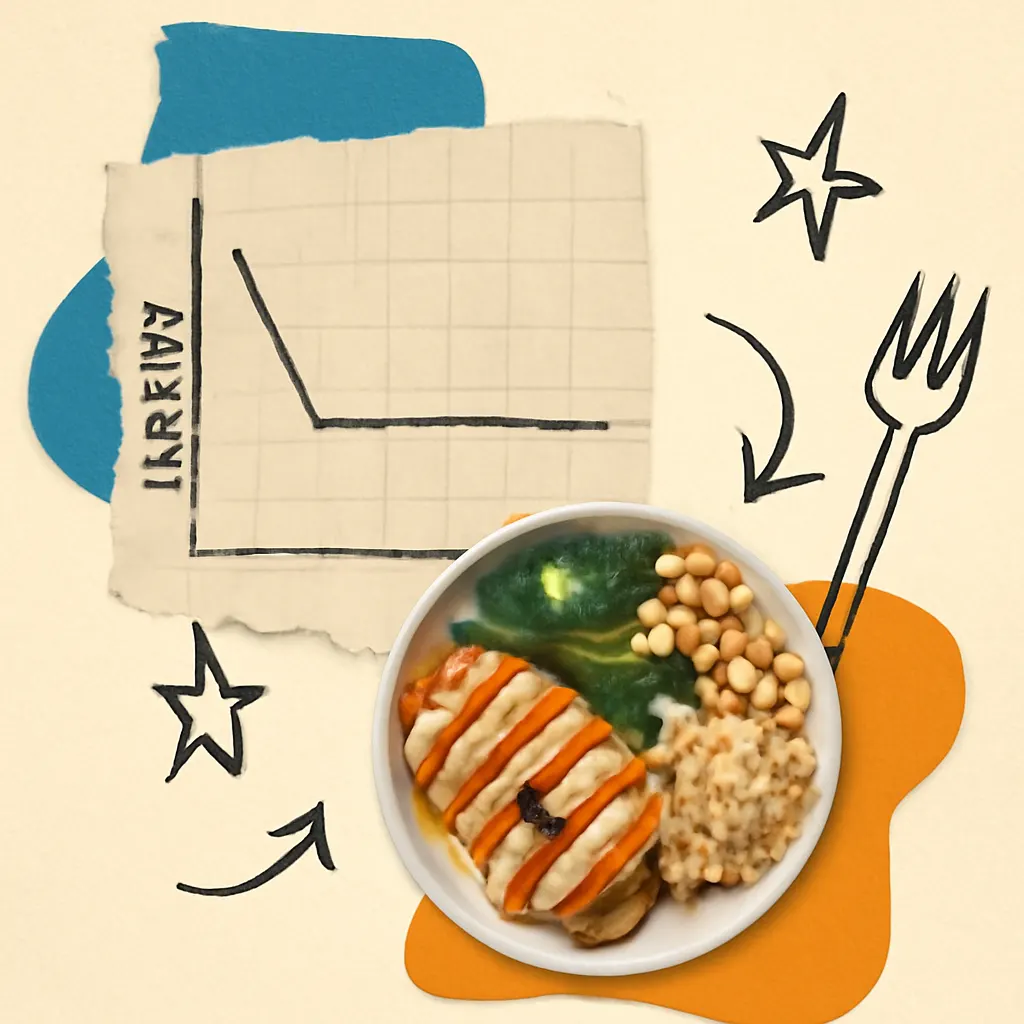
Strip out the marketing and four variables decide whether a GLP-1 rebuilds you or just runs up a cheaper tab:
- Adherence — taking the drug as prescribed, week after week, including the weeks you don't feel like it.
- Protein — eating enough to keep your body from burning muscle alongside fat.
- Strength training — giving your body a reason to hold onto muscle through rapid weight loss.
- An off-ramp — a taper and a maintenance plan so the weight doesn't come back the day the drug stops.
Price touches only the first one, and only indirectly. The other three are pure behavior, and they are where the outcome is actually made.
Adherence: the boring variable that matters most
The single biggest lever is also the dullest: not quitting. That sounds obvious until you look at the data, which show people drifting off the drug in the months when nothing dramatic is happening anymore.
Practical adherence looks like this:
- Take it the same day each week. Tie the shot to an existing habit so it doesn't depend on memory or motivation.
- Follow the titration schedule. Doses are stepped up for a reason. Jumping ahead trades short-term results for nausea and quitting.
- Manage side effects early. Eat smaller, slower meals, hydrate, and call your clinician rather than ghosting the prescription.
- Refill before you run out. A two-week gap restarts the clock — and restarts side effects.
If this reads like logistics rather than inspiration, good. The people who finish treat the drug like a standing appointment, not a project they need to feel motivated about.
Protein: the weight you lose that you actually need
This is the part most people miss, and it matters more than any headline about the scale. When you lose weight fast, you do not lose only fat. You lose lean mass too, and muscle is a big part of that. A 2024 body-composition analysis in JAMA Network Open found that roughly 39% of the weight lost on semaglutide was lean mass. Other analyses of GLP-1 trials put lean-mass losses in the 25% to 40% range. That is muscle, bone density, and the metabolically active tissue that keeps your body burning calories and holding itself upright.
Losing muscle on the way down is not a cosmetic problem. It is the difference between finishing leaner and stronger versus finishing smaller and weaker, with a slower metabolism and a higher risk of regaining the weight. The drug suppresses your appetite for everything, including protein — so unless you are deliberate, you eat less protein exactly when you need it most.
The fix is concrete:
- Target about 1.0 to 1.2 grams of protein per kilogram of body weight per day (roughly 0.5 to 0.55 g per pound), and many clinicians go higher — up to 1.6 g/kg — during active loss.
- Spread it across meals. Getting 25 to 40 grams at breakfast, lunch, and dinner does more than one giant dinner.
- Prioritize protein at every meal: eggs, dairy, fish, poultry, lean meat, beans, tofu. If appetite is low, a protein shake is a legitimate tool, not a shortcut.
Strength training: the cheapest insurance you can buy
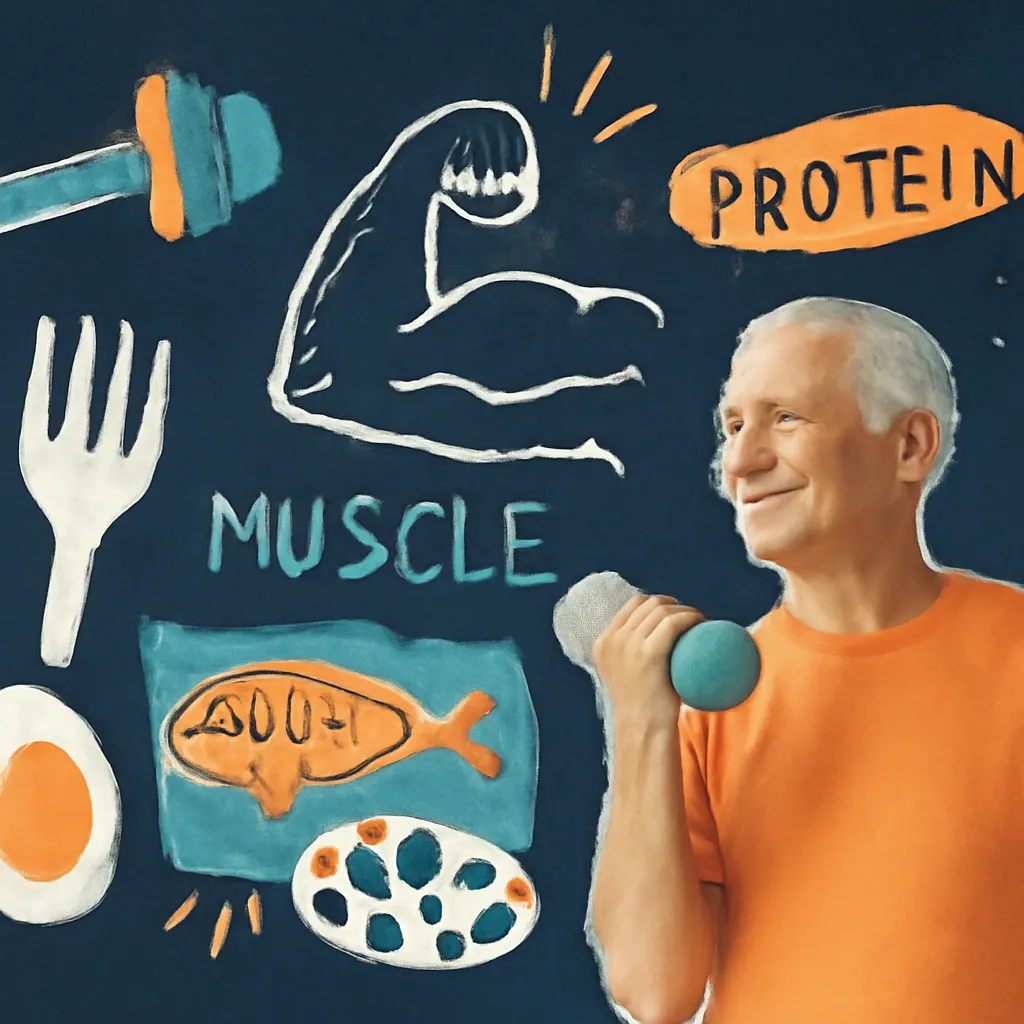
Protein gives your body the raw material to keep muscle. Resistance training gives it the reason. Without a signal that says this tissue is load-bearing, your body happily burns it during a rapid cut. With that signal, it holds on.
You do not need a gym membership or a program tuned for a 25-year-old. You need consistent, progressive load on the major muscle groups — twice a week, three times if you can manage it.
- Two full-body sessions a week covering squats, hinges, pushes, pulls, and carries.
- Bodyweight is a fine start: sit-to-stands from a chair, wall push-ups, step-ups, rows with a resistance band.
- Progressive overload. When a movement gets easy, add reps, then add weight. The body adapts to what you keep asking it to do.
- Get a clinician's sign-off if you have joint, cardiac, or balance issues, and start lighter than your ego suggests.
The strength you build during the loss phase is the strength you keep after it. People who skip this step arrive at their goal weight weaker than they started, and that weakness is a setup for regain.
The plateau: when the scale stops and it isn't a failure
Almost everyone on a GLP-1 hits a stretch where the scale doesn't move for two, three, four weeks. This is where a lot of people quit — reading a normal stall as proof the drug stopped working.
It didn't. Plateaus are expected. Weight loss is not linear; the body adjusts, water shifts, and fat is sometimes replaced by fluid before it shows on the scale. The people who succeed are not the ones who never plateau; they're the ones who don't change the plan the moment it stops being exciting.
During a stall, do this instead:
- Track something other than the scale. Waist circumference, how clothes fit, a photo every two weeks, strength in the gym. The scale lies during recomp.
- Audit the inputs, not your willpower. Are protein and resistance training still on track? Has eating less because you're less hungry quietly drifted into barely eating?
- Give it three weeks before you change anything. If nothing moves, talk to your clinician — not the internet.
A stall is information, not a verdict. Treat it that way and it stops being the moment people give up.
The off-ramp: coming off without giving it all back
Here is the part nobody likes. GLP-1s work while you take them, and the data on stopping are sobering. In extension studies published in JAMA, people who came off semaglutide regained a large share of the weight within a year. Obesity behaves like a chronic condition — the biology that drove the weight in the first place is still there when the drug is gone.
That doesn't mean you stay on the maximum dose forever. It means you need a plan for the off-ramp instead of a cliff.
- Build the maintenance diet while you're still on the drug. The habits that hold the weight — protein, structure, regular meals — have to be in place before the appetite comes back.
- Taper with your clinician; don't cold-turkey. Stepping down the dose lets you test whether your habits can hold before the full effect is gone.
- Keep the strength training. Muscle and protein are what make maintenance possible after the dose is reduced.
- Set a weight ceiling — a number that triggers action before five pounds becomes twenty-five.
The people who keep the weight off aren't the ones with the most willpower. They're the ones who used the time on the drug to build a body and a routine that can survive without it.
The real play
A $50 monthly GLP-1 is a genuine opportunity, and for the right Medicare beneficiary it removes the last financial excuse. But the people who turn that opportunity into a stronger body will be the ones who treat the shot as one piece of a four-part plan: take it consistently, eat enough protein, lift something twice a week, and have a real plan for coming off. Price never decided who finished. Behavior does.
Next step: if you're eligible, book the conversation with your clinician this week — and before that appointment, write down your protein target, your two strength-training days, and the date you'll review your plan. The drug lowers the cost. The rest is still on you, and it's the part that actually works.
The article shows the pattern. The app trains the response.
Continue in Tikva to turn the insight into a repeated response.
Open TikvaSources and educational notice
This article is educational. It does not provide a medical diagnosis or replace guidance from a qualified health, legal, tax, investment, or financial professional. Decisions about your health or finances should consider your individual circumstances.